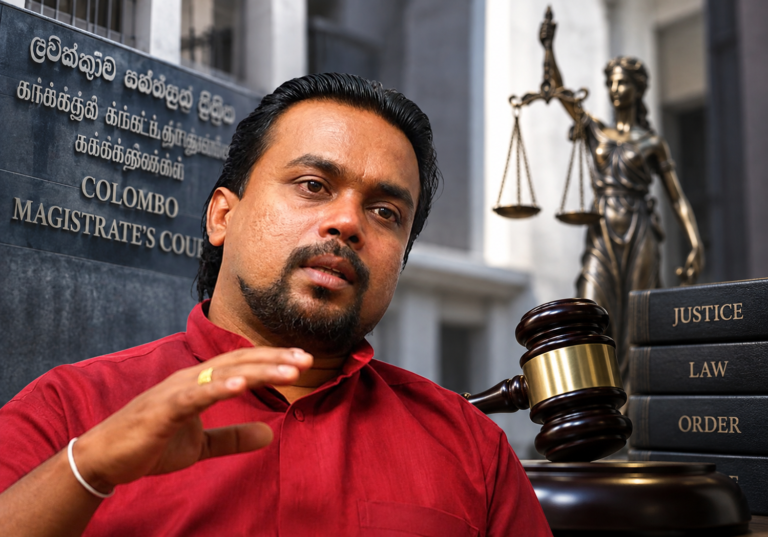
Sri Lanka’s Supreme Court has delivered a billion-dollar judgment in the X-Press Pearl disaster, marking a historic win for environmental justice. But as legal tides shift in Singapore, this hard-won verdict may never be enforced beyond Sri Lanka’s shores. Can justice survive the complexities of international maritime law?
In what is being celebrated as a groundbreaking environmental ruling, Sri Lanka’s Supreme Court has ordered the operators of the MV X-Press Pearl to pay USD 1 billion in compensation for the devastating 2021 maritime disaster that scorched its coastline. Yet, as Sri Lanka moves to enforce this judgment in Singapore, where the vessel’s operators are based, a wave of legal and logistical hurdles threatens to render the verdict more symbolic than substantial.
At the heart of the legal storm is the intricate clash between Sri Lanka’s constitutional laws, Singapore’s enforcement statutes, and deeply embedded norms of international maritime law. Legal experts warn that while this ruling is a momentous legal and moral triumph, the billion-dollar verdict may never translate into actual reparations if Singaporean courts resist its enforcement.
A Catastrophe Redefined in Law
The MV X-Press Pearl, a Singapore-flagged container ship, caught fire and sank off the coast of Colombo in May 2021, releasing massive quantities of toxic chemicals and plastic pellets into the sea. The result was Sri Lanka’s worst-ever marine disaster. On July 24, 2025, the Supreme Court issued a landmark judgment, not as a civil lawsuit, but as a constitutional ruling driven by public petitions from citizens and environmental advocates.
This distinction is crucial. The court ruled that the ship’s operators, its captain, and its local agent had infringed upon the fundamental rights of Sri Lankans. The $1 billion award was categorized as “interim compensation” under the widely recognized “polluter pays” principle, with funds directed to the national treasury for environmental restoration and economic repair. However, the public-interest foundation of this award creates a significant legal roadblock for its execution in Singapore.
The REFJA Barrier: Singapore’s Enforcement Gateway
To enforce this judgment in Singapore, Sri Lanka must rely on the Reciprocal Enforcement of Foreign Judgments Act (REFJA). As of 2023, Sri Lanka qualifies as a reciprocating country, allowing for judgments from its highest courts to be considered for enforcement in Singapore.
Superficially, the X-Press Pearl ruling fits the criteria, a final, monetary judgment from Sri Lanka’s Supreme Court. But REFJA includes specific exceptions that may allow Singapore’s courts to reject the registration. The X-Press Pearl’s legal team is expected to use these defenses vigorously.
Obstacle 1: Public Law vs Private Debt
The first major obstacle is the nature of the award itself. Singapore’s legal system, like many common law jurisdictions, does not enforce foreign public, penal, or revenue laws. REFJA specifically excludes judgments perceived as penalties or public law enforcement actions.
X-Press Feeders is likely to argue that the $1 billion award is not civil compensation for private losses but a punitive measure stemming from a constitutional rights violation. Since the payment is directed to the state and aims to remedy harm to the public, it could be interpreted as a public penalty, thus ineligible under REFJA.
Moreover, the company may invoke a strong public policy defense, contending that the constitutional process in Sri Lanka lacked the adversarial rigor of a civil trial. Without elements like cross-examination and witness scrutiny, Singaporean courts may view the judgment as lacking procedural fairness.
Obstacle 2: London’s Conflicting Maritime Ruling
A more formidable challenge emerges from a conflicting judgment issued by a London maritime court. Soon after the disaster, the shipowners sought protection under the 1976 Convention on Limitation of Liability for Maritime Claims (LLMC), which allows shipowners to cap liability based on tonnage. Both the UK and Singapore are parties to this treaty.
In London, the court capped the vessel owner’s liability at approximately USD 25–27 million. This vastly contradicts Sri Lanka’s billion-dollar claim. Under the principle of res judicata, a Singaporean court is likely to view the UK ruling as a final and binding determination, especially since Sri Lanka participated in those proceedings.
Singapore, a global shipping hub, has a vested interest in maintaining consistency with the LLMC regime. Enforcing the full Sri Lankan judgment would violate Singapore’s treaty commitments and legal framework, offering a further public policy basis for rejection.
Even the Sri Lankan Supreme Court anticipated this risk, noting that enforcement abroad could be limited to the LLMC compensation ceiling.
Obstacle 3: Corporate Shield and Dissolution
A third complication lies in the legal structure of the companies held liable. While the Sri Lankan verdict lists several parties including X-Press Feeders and the local agent Sea Consortium Lanka (Pvt.) Ltd. the entity that owned the vessel has reportedly been dissolved.
This tactic is common in shipping, where special-purpose companies own individual vessels, shielding the parent corporation from broader liability. While X-Press Feeders remains solvent and publicly acknowledges the ruling, pursuing its assets would involve the rare legal process of “piercing the corporate veil.”
This maneuver demands compelling proof that the corporate structure was a façade designed to evade responsibility an extremely difficult standard to meet in court.
Enforcement at Home: Sri Lanka’s Best Option
Faced with these obstacles, Sri Lanka’s clearest path to justice lies within its own borders. The judgment is immediately enforceable against domestic assets held by the named parties.
Sea Consortium Lanka (Pvt.) Ltd., headquartered in Sri Lanka, may be a primary target. Furthermore, X-Press Feeders vessels frequently dock at the Port of Colombo. This opens the door for Sri Lanka to potentially seize assets or even detain vessels under maritime law, an aggressive but legally viable move.
The government may also freeze local bank accounts, seize land, or initiate asset auctions to fulfill the judgment.
A Verdict in Danger of Becoming “Just a Piece of Paper”
Ultimately, despite its legal and symbolic significance, Sri Lanka’s billion-dollar environmental victory could be impossible to realize abroad. With REFJA limitations, conflicting rulings, treaty barriers, and legal complexities shielding the liable parties, the Supreme Court’s landmark decision may offer little more than moral vindication on the international stage.
Unless negotiations or targeted asset seizures within Sri Lanka yield results, the ruling risks becoming what the court itself feared: “only a piece of paper” beyond its borders.