A high-stakes political confrontation unfolds as corruption complaints, legal battles, and shocking allegations place Sri Lanka’s Parliament leadership under intense scrutiny.
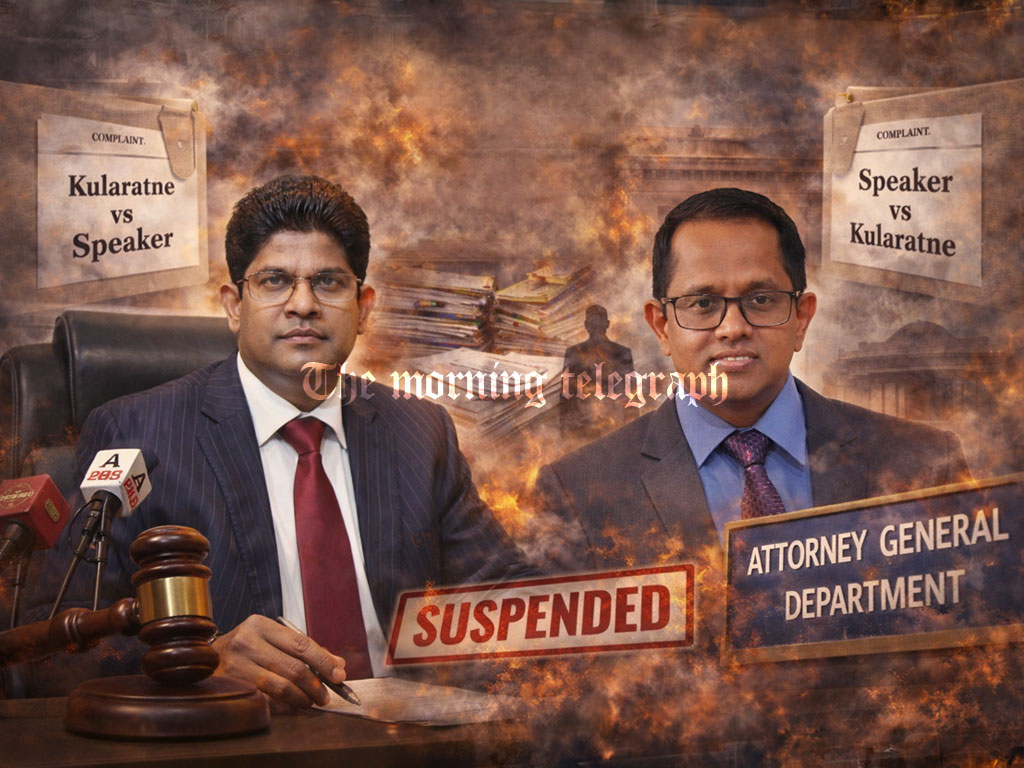
The Commission to Investigate Allegations of Bribery or Corruption has confirmed that formal investigations are underway into multiple complaints involving suspended Deputy Secretary General of Parliament, Chaminda Kularatne, as well as counter allegations he has lodged against Speaker Dr. Jagath Wickramaratne, escalating a growing governance controversy.

According to the Commission, inquiries have already commenced into the complaints filed against Kularatne, alongside the counter complaints he has submitted targeting the Speaker. In addition, a separate third complaint has been lodged against Kularatne by an individual identified as S. Kannan, further expanding the scope of the investigation.
As part of its investigative process, the Bribery Commission has formally requested Parliament to submit Kularatne’s personal files, interview records, and other relevant administrative documents. These materials are expected to play a crucial role in determining the validity of the corruption allegations and ensuring accountability within parliamentary administration.
Meanwhile, the legal battle has intensified, with Chaminda Kularatne filing a writ petition before the Court of Appeal in February. In his petition, he has claimed that his suspension from Parliament was unlawful and carried out with malicious intent by the Speaker, raising serious constitutional and administrative questions.
During the court proceedings, a significant development emerged when the Attorney General’s Department informed the Court of Appeal that it would no longer represent Speaker Jagath Wickramaratne in this matter. This decision has added further intrigue to the case, signaling a shift in legal dynamics surrounding the dispute.
Following this, the Speaker has appointed President’s Counsel K. Kanag-Eswaran to represent him in his personal capacity, marking a notable departure from the usual state legal representation and highlighting the seriousness of the allegations involved.
At the center of the controversy are a series of detailed complaints filed by Kularatne against the Speaker with the Bribery Commission. These include allegations related to misuse of official vehicles, irregular receipt of fuel allowances, and improper use of resources within the parliamentary media division.
Additional accusations point to the alleged receipt of food from Parliament without proper payment, misuse of government allocated official residences, and what has been described as malicious interference in the internal administration of Parliament. Furthermore, Kularatne has raised concerns regarding the alleged irregular rejection of Right to Information requests linked to corruption related matters.
These allegations collectively paint a troubling picture of governance practices within Sri Lanka’s Parliament, bringing issues of transparency, accountability, and ethical conduct to the forefront of public discourse.
The Bribery Commission has now decided to record statements from both parties in the coming days, a move that is expected to bring further clarity to the competing claims and counterclaims. As the investigation progresses, the outcome could have far-reaching implications for political accountability and institutional credibility in Sri Lanka.