A quiet but powerful transition is unfolding inside Sri Lanka’s Catholic Church, with leadership questions, Vatican signals, and succession battles now coming into sharp focus.
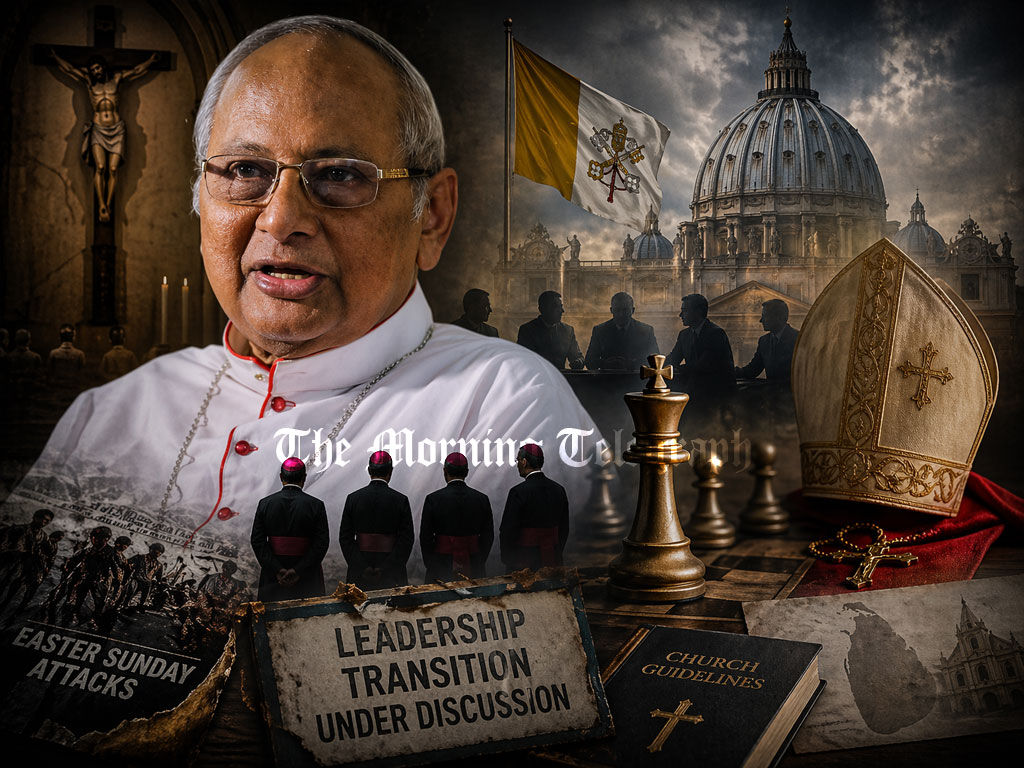
A significant leadership shift appears to be taking shape within Sri Lanka’s Catholic Church, as multiple senior sources indicate that Malcolm Cardinal Ranjith could step down as Archbishop of Colombo before the end of the year. The development, reportedly backed by insights from Vatican circles and confirmed by church-linked sources in Colombo under anonymity, comes amid intensifying speculation over succession planning, governance concerns, and internal Church dynamics.

Cardinal Ranjith, who has served as the 9th Archbishop of Colombo since 2009, remains one of the most influential religious figures in Sri Lanka. Born on November 15, 1947, in Polgahawela, he built a long and distinguished ecclesiastical career. His early education was at Roman Catholic Boys’ School and De La Salle College in Mutwal, before he entered St. Aloysius Seminary in Borella and later pursued higher studies at the National Seminary in Ampitiya, Kandy.
Sources familiar with ongoing developments suggest growing unease within certain Vatican circles regarding both the Archbishop’s conduct and the broader direction of Church leadership in Colombo. However, those close to Cardinal Ranjith maintain that he has expressed a personal willingness to step down upon reaching his 79th birthday later this year, signaling that any transition may ultimately be voluntary rather than enforced.
Under established Church norms, bishops are generally expected to submit their resignation at the age of 75, although extensions are frequently granted. As a Cardinal, Ranjith retains voting rights in a papal conclave until the age of 80, a milestone he will reach in November 2027, preserving his relevance within global Church decision-making processes.
Throughout his tenure, Cardinal Ranjith has remained a vocal and influential figure, especially in the aftermath of the Easter Sunday attacks in Sri Lanka, which claimed nearly 300 lives. He consistently called for justice for the victims and maintained that deeper conspiracies may have been at play. His strong public stance placed him at the center of both political and social discourse, earning him significant support as well as criticism.
While many within the Catholic community have backed his efforts, there are indications that concerns have been raised regarding the long-term impact of his approach on the Church’s image and institutional stability. Individuals familiar with the situation suggest that certain decisions and public statements by the Archbishop and his close circle have contributed to unease among senior clergy.
Recent remarks by Monsignor Andrzej Józwowicz, the Vatican’s ambassador to Sri Lanka, have further intensified the conversation. Addressing the Easter Sunday attacks, he emphasized reconciliation over retaliation, suggesting that forgiveness should follow once truth is established. His remarks, promoting healing and justice rather than vengeance, were interpreted by some observers as reflecting a tone distinct from that of the Archbishop.
As discussions about a possible transition gather pace, attention has increasingly shifted toward potential successors. Church insiders indicate that four key figures are currently being considered for the position of Archbishop of Colombo.
Among the leading names is Anton Pillainayagam Ranjith, an Auxiliary Bishop of Colombo and Apostolic Administrator of Batticaloa. Born in Jaffna in 1966, he possesses a strong academic and pastoral background, with qualifications spanning theology, mathematics, and education. His appointment would mark a historic first, as he would become the first Archbishop of Colombo of Tamil origin, a move that has gained quiet support among certain segments of the clergy.
Another potential candidate is Maxwell Silva, also an Auxiliary Bishop of Colombo. Born in 1953, he brings extensive experience in pastoral work and education. However, sources suggest he may be hesitant to accept the role, reportedly favoring a quieter retirement after decades of service.
Anthony Jayakody is also considered a strong contender, having served in several important roles within parish ministry and seminary education. Born in 1958, his academic grounding in theology and philosophy, including studies in Rome, has shaped his reputation as a steady and experienced Church leader.
The fourth name under discussion is Quintus Fernando, currently serving as Rector of the National Seminary of Our Lady of Lanka in Ampitiya, Kandy. Although not a bishop, his leadership in priestly formation and theological education has brought him into serious consideration as a potential candidate.
Ultimately, the appointment of a new Archbishop of Colombo will rest with the Vatican, following a process of consultation, evaluation, and discernment. The decision will take into account pastoral experience, leadership qualities, theological grounding, and the evolving needs of the Sri Lankan Catholic Church.
SOURCE :- SRI LANKA GUARDIAN