A growing political storm is raising urgent questions about democracy, power-sharing, and whether Sri Lanka’s leadership is deliberately avoiding elections to maintain control.
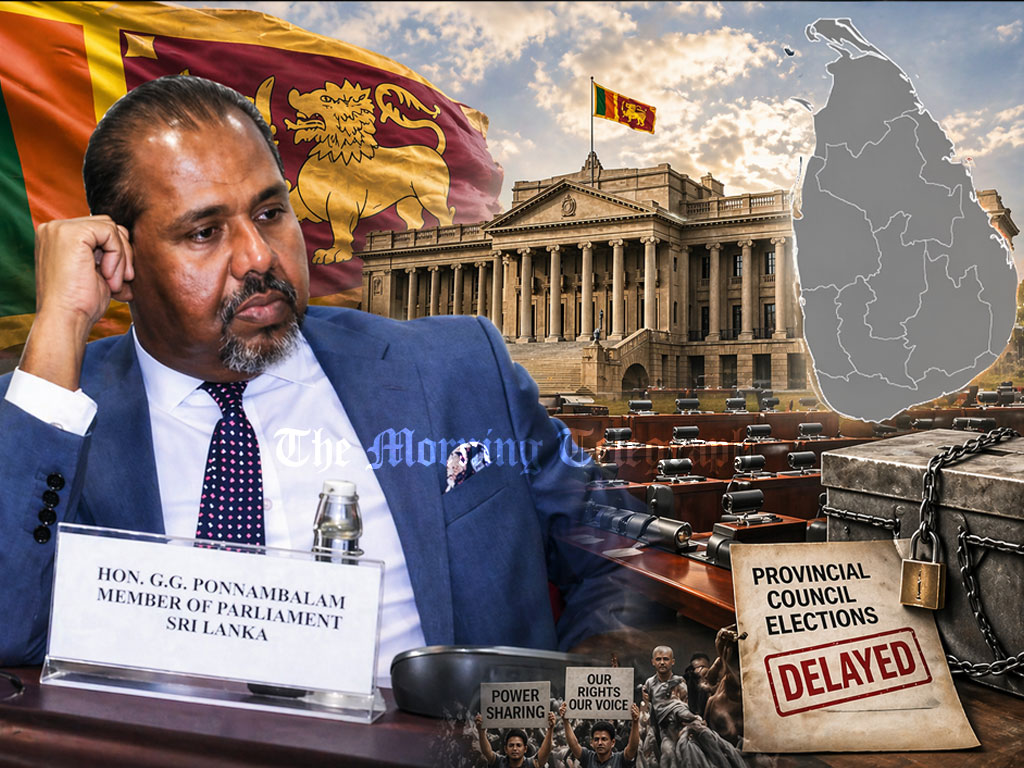
Political tensions in Sri Lanka have intensified after Gajendrakumar Ponnambalam, a prominent lawmaker and leader of the All Ceylon Tamil Congress, alleged that the government is deliberately avoiding Provincial Council elections and resisting meaningful power-sharing. Speaking at a media briefing in Colombo, he claimed that the administration led by President Anura Kumara Dissanayake is intentionally delaying the electoral process to retain centralized authority and limit regional autonomy.

According to Ponnambalam, the continued absence of Provincial Council elections cannot be explained purely by administrative or logistical challenges. Instead, he argued that it reflects a deeper political reluctance rooted in fear. The Provincial Council system, originally established to promote regional governance and address ethnic imbalances, has remained inactive for several years. He stressed that the government’s unwillingness to revive these institutions signals a broader resistance to devolving power, particularly in regions with significant Tamil populations.
He further pointed to what he described as a failure by the current administration to honor commitments made to the Tamil community during the election campaign. Despite taking office with promises of progress and reform, he noted that there has been little to no meaningful advancement on long-standing political issues. Ponnambalam emphasized that President Dissanayake, given his extensive political background, is fully aware of the challenges facing the country and must either act decisively or clearly communicate the limitations preventing action.
The remarks reflect a wider sense of frustration among Tamil political leaders, who have consistently called for greater autonomy and inclusive governance. The question of power-sharing continues to dominate Sri Lanka’s political discourse, especially in the post-conflict era. Provincial Councils were designed to facilitate decentralization, but delays and limited authority have significantly weakened their effectiveness over time.
Addressing concerns surrounding federalism, Ponnambalam clarified his party’s stance, particularly in the context of discussions involving India. He highlighted that there remains a persistent misconception among segments of the Sinhala majority that Tamil political demands are aimed at dividing the country. Rejecting this notion, he argued that a properly structured federal system could protect Tamil rights while preserving national unity and stability.
He added that this position is not isolated but is shared across multiple Tamil political groups, including the Ilankai Tamil Arasu Kachchi. There appears to be a growing consensus that achieving political rights does not require separation, but rather meaningful devolution of power within a united Sri Lanka. This shared understanding, he suggested, could form the basis for a more constructive national dialogue.
Ponnambalam also criticized the government’s increasing reliance on Provincial Governors, who are appointed by the central administration. He argued that these governors wield significant authority in the absence of elected councils, effectively allowing the central government to manage regional affairs without democratic accountability. This arrangement, he warned, undermines the original purpose of decentralization and concentrates power at the center.
He maintained that such an approach weakens democratic institutions and raises serious concerns about governance standards. By avoiding elections and continuing to operate through appointed officials, the government is limiting the ability of local communities to participate in decisions that directly impact their lives. This, he said, not only erodes trust but also damages the credibility of democratic processes in the country.
The prolonged delay in holding Provincial Council elections has also triggered a broader debate about constitutional responsibility and political will. While authorities have previously cited technical and legal obstacles, critics argue that these explanations do not justify the extent of the delay. Instead, they believe the inaction reflects a calculated political strategy aimed at avoiding power-sharing and maintaining centralized control over governance.