A sacred journey meant for silence and reflection is now at the center of controversy, as critics accuse media intrusion, cultural insensitivity, and the erosion of a globally admired peace initiative.
There are certain moments in public life where, no matter how carefully something is presented, the artificial nature behind it becomes impossible to ignore. The recent developments surrounding the Peace Walk in Sri Lanka appear to reflect exactly that tension between authenticity and spectacle.
Not long ago, the world witnessed a remarkable event when Buddhist monks walked silently along quiet roads in the United States. That Peace Walk drew global admiration for its simplicity, discipline, and absence of branding. It resonated deeply with audiences because it remained true to its spiritual purpose and avoided unnecessary noise or attention.

However, as this concept gradually took root in Sri Lanka, observers argue that it has evolved into something very different. What was once a peaceful, meditative journey is now being criticized as a disorganized and overly publicized event that resembles a celebrity-driven charity walk rather than a spiritual exercise.
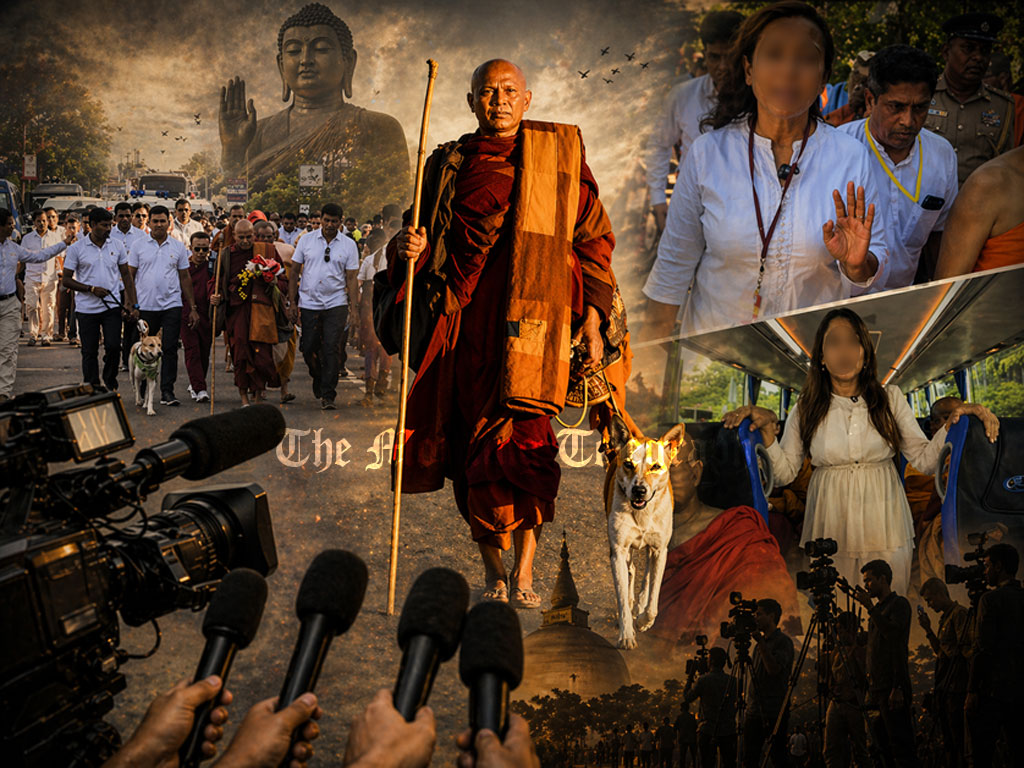
The Venerable Pannakara had reportedly made a clear and direct request that the walk be conducted in silence without unnecessary following or disturbance. Despite this, media coverage has intensified, with some outlets treating the event as a live spectacle rather than a moment of reflection. Critics point out that microphones are being pushed into the midst of monks, with loud commentary replacing the intended silence of the journey.
This approach has raised concerns about cultural sensitivity and respect for monastic traditions. In Buddhist teachings, particularly those highlighted by the Most Venerable Rerukane Chandawimala Maha Thera in his work on monastic discipline, interactions between monks and others are expected to be handled with mindfulness and restraint. Observers argue that such principles are being overlooked in the current coverage.
One incident that has drawn particular criticism involves the decision to place a female journalist in close proximity to fully ordained monks within a confined space for an interview. Questions have been raised about whether proper consideration was given to religious customs and whether alternative arrangements could have been made.
Beyond issues of etiquette, the overall environment surrounding the walk has also come under scrutiny. Heavy security presence, road closures, and traffic congestion have led some to question whether the conditions align with the peaceful message the walk intends to convey. Instead of calm and reflection, the atmosphere is described by critics as chaotic and disruptive.
Comparisons with the earlier Peace Walk abroad have further intensified the debate. The gentle, composed expressions seen on the faces of monks during the international walk are now contrasted with a more strained and controlled appearance in the current setting. This shift has not gone unnoticed by international audiences.
Feedback on social media platforms, including the official Peace Walk pages, indicates that some global observers who once admired the initiative are now expressing disappointment. They argue that the essence of the original concept is being overshadowed by excessive media presence and lack of discipline.
Critics also question the decision-making behind media partnerships for the event. With state media already available, concerns are being raised about the motives and impact of granting exclusive or prominent coverage rights to specific organizations.
The broader concern is that such developments may harm not only Sri Lanka’s image but also the integrity of the Peace Walk itself. A concept that once symbolized simplicity, humility, and unity now risks being perceived as commercialized and mismanaged.
At its core, the message from critics remains clear. Peace cannot be achieved through noise, disruption, or forceful visibility. It is not a performance or a race, and it does not require constant updates or dramatization. The call is for restraint, respect, and a return to the original purpose of the journey.
As the walk continues toward key destinations such as Kandy, there is growing hope that those involved will reconsider their approach. Allowing the monks to proceed without interference and presenting the event with dignity could help restore the meaning behind the initiative.
Ultimately, the Peace Walk is a reminder that true peace is found in quiet reflection, not in spectacle. Preserving that principle may be the only way to ensure that the journey retains its value both locally and in the eyes of the world.