A fierce political clash unfolds as the government admits a Treasury fraud while rejecting corruption claims, vowing accountability and daring critics to prove otherwise.
Deputy Minister Mahinda Jayasinghe has issued a strong and direct challenge to opposition parties, urging them not to judge the current Malima government based on the corrupt practices and political culture associated with previous administrations. His remarks come amid growing controversy surrounding an alleged financial fraud linked to the Ministry of Finance, which has triggered intense political debate across the country.

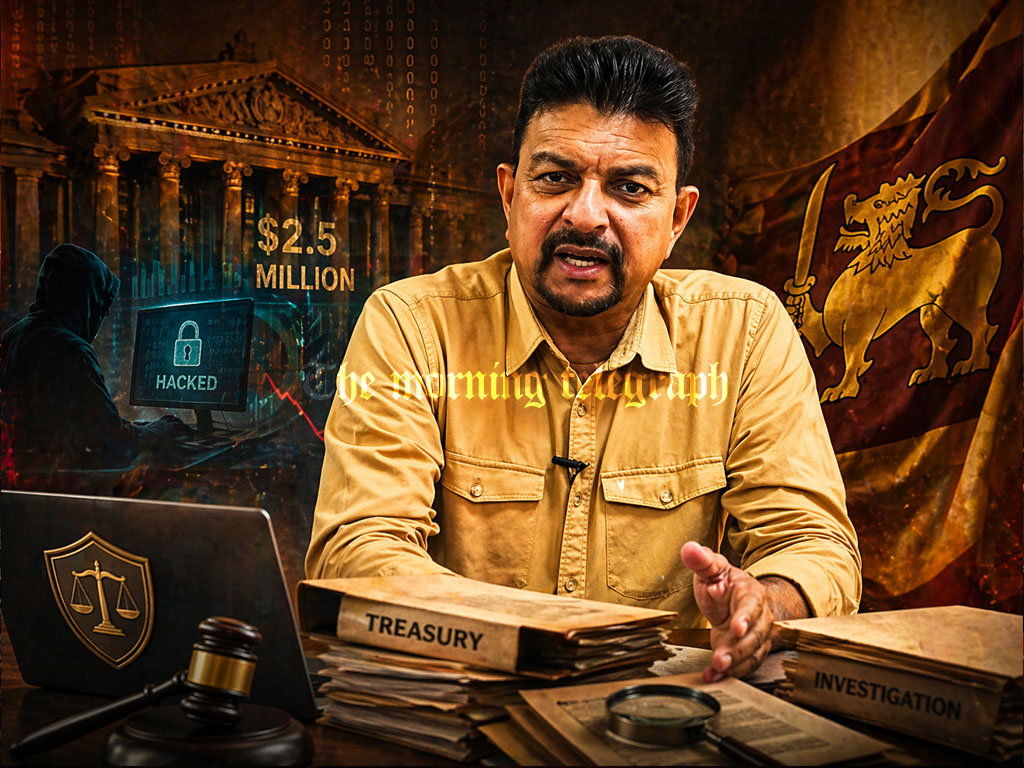
The Deputy Minister emphasized that the government itself uncovered the fraudulent activity, which he described as a cyber-related incident involving unauthorized access to the Ministry of Finance website. He stressed that the act was not carried out with the knowledge or approval of the government, firmly rejecting claims that the administration was complicit in any wrongdoing. According to him, this Treasury fraud incident is being misrepresented by political opponents attempting to gain leverage.
He further stated that there has been no attempt to conceal any details regarding the financial irregularity. On the contrary, he noted that once the fraud was identified, immediate legal steps were taken and investigations were launched without delay. Authorities, including law enforcement agencies, have already begun probing the matter, with a focus on identifying those responsible for the cyber intrusion and financial misappropriation.
Responding directly to allegations made by political figures such as Udaya Gammanpila and Namal Rajapaksa, Jayasinghe accused them of projecting their own past experiences onto the current administration. He argued that these critics are attempting to label the present government as corrupt because of the standards set during their own time in power. He reiterated that such comparisons are both unfair and misleading, given the government’s stated commitment to transparency and accountability.
“They assume that because they operated within systems marked by corruption, this government must be the same,” he said, adding that the public should not be misled by such narratives. He urged the opposition to refrain from applying outdated political lenses to a government that claims to be pursuing clean governance and institutional reform.
The Deputy Minister also referenced past financial scandals, including the Central Bank bond issue, pointing out that there were clear indications of manipulation and interference at the highest levels during that period. He contrasted those incidents with the present situation, asserting that no such directives or alterations have been made by the current leadership in handling Treasury operations or financial systems.
He assured the public that the administration is maintaining a strict policy of non-interference in investigative processes and is committed to ensuring that justice is served through proper legal channels. The government, he said, remains focused on upholding integrity within public financial management and strengthening systems to prevent future breaches.
In addition, Jayasinghe highlighted that a special Presidential Commission has already been appointed to investigate broader corruption issues, including the controversial coal procurement scandal. He noted that parallel investigations are being conducted by the Criminal Investigation Department, demonstrating the government’s willingness to address allegations across multiple sectors.
While acknowledging that political attacks and mudslinging campaigns are intensifying, the Deputy Minister maintained that these efforts are aimed at undermining public confidence in the government. He challenged opposition leaders to present concrete evidence if they claim that the current administration has enabled or tolerated corruption in any form.
He concluded by reaffirming that the Malima government will not tolerate fraud, whether within the Treasury or any other state institution. According to him, accountability remains a central pillar of governance, and any individual found guilty of misconduct will face the full force of the law, regardless of their position or influence.