A major narcotics scandal erupts as top police officers face court action, exposing alleged ties to international drug networks and raising serious questions about law enforcement integrity.
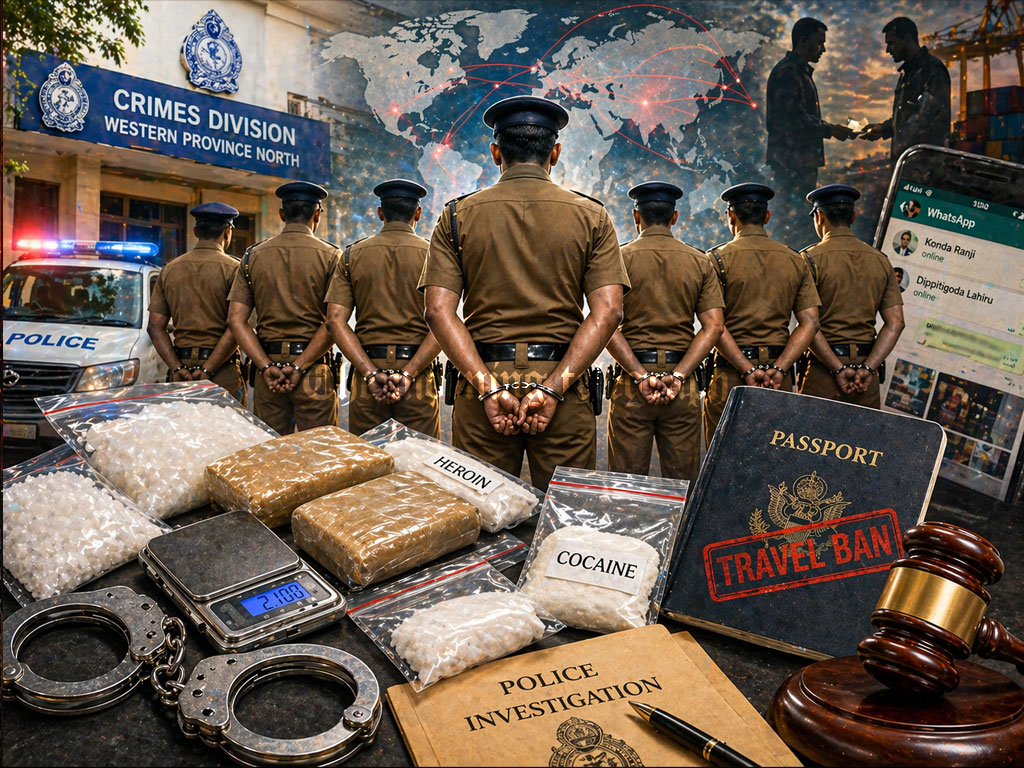
Gampaha Chief Magistrate Bandula Gunaratne has imposed a travel ban on seven police officers, including a former Officer in Charge of the Western Province North Crimes Division, over serious allegations linking them to drug trafficking and associations with overseas narcotics networks. The move has intensified public scrutiny over internal corruption within Sri Lanka’s law enforcement system and the growing influence of organized crime.
The officers affected by the travel restriction include Linton Leonard Silva, Kasun Subhashana, Ranjith Ranasinghe, Manoj Priyadarshana Hewawasam, Tharaka Madhuranga Abeykoon, Kolitha Lakmal Rajapaksa, and Terance Cedric Peiris, all of whom were attached to the relevant crimes division. The order was issued following a formal request made by the current Officer in Charge of the Western Province North Crimes Division, Chief Police Inspector R G C Padumasiri, who raised concerns about their possible involvement in criminal activities.

The case stems from a major drug raid carried out on April 7 in the Ganemulla Bollatha area based on intelligence gathered by Police Inspector Anjana. During the operation, officers arrested Mangala Suraj Perera and seized approximately nine kilograms of heroin, more than twelve kilograms of crystal methamphetamine known as Ice, and a motorcycle believed to be linked to the trafficking network. The scale of the seizure triggered further investigation into the conduct of officers involved in the operation.
Following the raid, a complaint received by the division’s OIC alleged that certain police personnel were themselves engaged in narcotics trafficking. This prompted the launch of a special internal investigation targeting eight officers connected to the operation. Evidence gathered from WhatsApp conversations and images recovered from a suspect’s mobile phone indicated that some of these officers maintained links with known traffickers operating overseas, including individuals identified as Ranjith Kumara Dissanayake, also known as Konda Ranji, and another figure known as Dippitigoda Lahiru.
Further revelations deepened the seriousness of the case. Investigators uncovered information suggesting that a quantity of cocaine, estimated at around three kilograms and originally taken into police custody during the raid of a house in the same area, had been illegally diverted and trafficked. The alleged involvement of Police Constable Hennayaka, who participated in the operation, has raised alarming concerns about the misuse of seized narcotics within the system.
Authorities also established that the cocaine had been transported using a rented vehicle, which has since been traced and recovered along with the relevant rental documentation. This discovery has strengthened suspicions of an organized internal network facilitating drug movement and highlighted the potential scale of the misconduct.
Considering the risk that the accused officers could flee the country and obstruct ongoing investigations, the Magistrate ordered the immediate imposition of a travel ban. The Controller of Immigration and Emigration has been formally notified, and the court has directed that progress reports on the investigation be submitted without delay.
This unfolding scandal has once again brought attention to the challenges faced by law enforcement agencies in maintaining accountability and integrity. As investigations continue, the case is expected to have significant implications for public trust, internal disciplinary measures, and the broader fight against drug trafficking in Sri Lanka.