A controversial Sinhala New Year celebration has ignited a nationwide debate after allegations of cultural distortion and indecent games triggered backlash from artists, influencers, and the public, raising urgent questions about preserving Sri Lanka’s heritage.
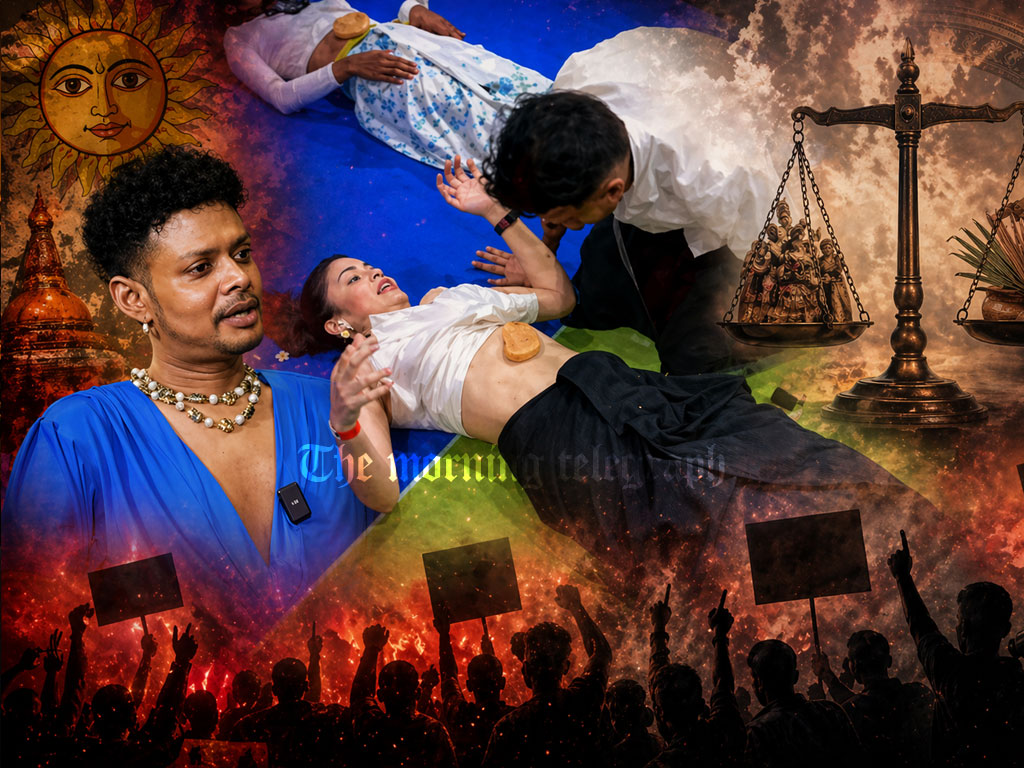
Chandimal Jayasinghe, a well known model and social media influencer, has come under intense criticism over allegations that a New Year festival he organized promoted distorted versions of traditional Sinhala New Year customs. The controversy quickly gained traction across social media platforms, with widespread outrage focusing on the nature of certain competitions introduced at the event.

The festival, held under the banner ‘Royal New Year Festival’, reportedly featured youth groups and several of Jayasinghe’s associates, including model personalities such as Piumi Hansamali. Public criticism centered heavily on what many described as inappropriate and culturally insensitive games, which deviated significantly from the spirit of traditional Sinhala New Year celebrations.
Actress Dilhani Ashokamala addressed the issue during a discussion on a popular YouTube platform, strongly criticizing the direction taken by the event. In contrast, actress Anoma Janadari expressed a differing perspective, adding further fuel to an already heated debate. The Sinhala New Year, often regarded as a deeply rooted cultural celebration, has now become a focal point of discussion as concerns grow about its transformation in modern settings.
Observers pointed out that the event introduced activities that many felt undermined cultural dignity, including games involving unconventional food challenges and alcohol related activities. Critics argue that such elements not only distort tradition but also risk influencing younger generations with the wrong cultural values. What was once a celebration of unity, ritual, and heritage is now being questioned as to whether it is being reshaped into entertainment that lacks cultural sensitivity.
Veteran actress Dilhani Ekanayake was among the first to publicly oppose what she described as a serious erosion of cultural values. Her firm stance received support from figures in the arts community, including musician Sarath de Alwis, along with widespread approval from the general public. However, her comments also drew criticism from fellow actress Anoma Jinadari, who responded by challenging Ekanayake’s professional credibility rather than addressing the broader issue.
This reaction sparked further backlash, with many questioning the relevance of such personal criticism in a debate focused on cultural preservation. The attempt to divert attention away from the main issue drew strong reactions online, as many defended the importance of protecting traditional values over engaging in personal disputes.
Meanwhile, actor and announcer Vishwa Lanka also voiced strong concerns regarding the event, emphasizing the negative example it could set for society, particularly for younger audiences. He highlighted the contrast between the global appreciation for Sri Lanka’s cultural identity and the apparent disregard shown in such events, questioning how such traditions are being represented locally.
Despite the growing public concern and social media pressure, the lack of a clear response from relevant authorities has become a major point of criticism. Cultural observers argue that there is an urgent need for regulatory oversight, especially when national festivals are being used for commercial or entertainment driven purposes that risk damaging cultural heritage.
Calls have been made for the Ministry of Cultural Affairs to introduce clear guidelines and legal frameworks to prevent the misuse of traditional celebrations. Reports suggesting that the Criminal Investigation Department has taken note of the situation have added further attention, with many urging authorities to take swift and appropriate action.
If meaningful intervention is not implemented, critics warn that future generations may witness a gradual erosion of authentic Sinhala New Year traditions, replaced instead by commercialized versions lacking cultural integrity. The ongoing debate underscores a deeper concern about balancing modern expression with the responsibility of preserving Sri Lanka’s rich and respected cultural identity.