Shammi resignation debate raises fresh questions over Anura, India, the ICC, and Sri Lanka Cricket’s turbulent power struggle.
For a year and a half, Shammi’s removal was not even discussed
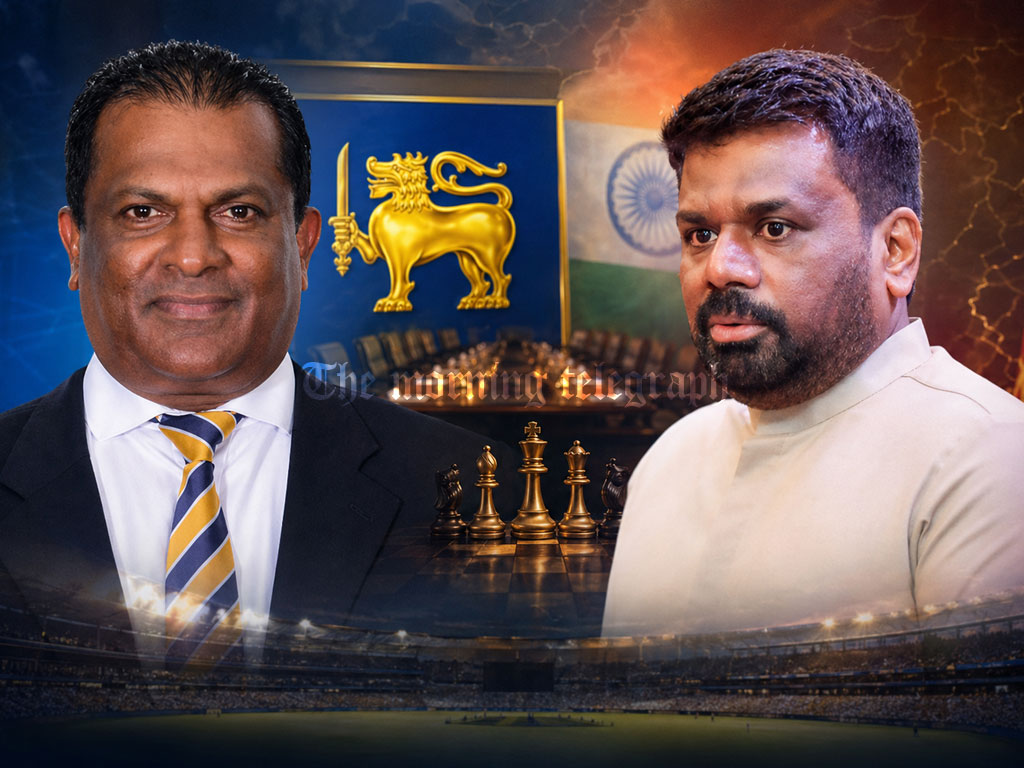
Shammi Silva’s resignation has reopened serious questions about Anura Kumara Dissanayake’s relationship with India, the ICC, and the future direction of Sri Lanka Cricket.
For a year and a half after Anura came to power, there was not even a serious discussion about removing Shammi Silva from the Cricket Board.

That silence now appears significant, especially after reports claimed that Anura summoned Shammi and asked him to step down. With Shammi now having resigned, the timing has raised fresh political questions because one of the strongest expectations among voters who brought the JVP-NPP to power in 2024 was the removal of Shammi Silva and the Cricket Board.
The controversy surrounding Shammi Silva did not begin under Anura’s government. It goes back to the period when Roshan Ranasinghe served as Sports Minister under Ranil Wickremesinghe’s government.
At that time, Ranasinghe removed the Cricket Board and its Chairman Shammi Silva. Shammi Silva and the Cricket Board then challenged the decision in court.
Subsequently, both the ruling party and the opposition joined forces to pass a motion in Parliament removing Shammi Silva and the Cricket Board.
Around the same time, the International Cricket Council banned the interim committee appointed by Minister Ranasinghe, which had replaced Shammi Silva and the Board, while recognising the legitimacy of the ousted board.
That ICC decision transformed what appeared to be a domestic cricket governance issue into a sensitive international dispute. It also placed Sri Lanka Cricket at the centre of a wider debate involving India, the ICC, and local political authority.
In response to the ban on the interim committee, Arjuna Ranatunga, the cricketer who brought Sri Lanka the World Cup, publicly alleged that ICC Chairman Jay Shah, son of Amit Shah, a powerful minister in India, had protected Shammi Silva to preserve his own influence over Sri Lankan cricket.
Ranatunga claimed that Jay Shah was effectively running Sri Lankan cricket through Shammi.
The allegation triggered a sharp political reaction. Then-President Ranil Wickremesinghe personally called Jay Shah to express his regret over the remarks.
Sports Minister Harin Fernando also framed Ranatunga’s allegations against Jay Shah as an affront to India that risked damaging Sri Lanka-India relations once again.
In effect, both Ranil and Harin appeared to be signalling that Shammi had India’s blessing.
When Harin Fernando later dissolved the interim committee and reinstated Shammi Silva and the Cricket Board, the ICC lifted the ban it had imposed on Sri Lanka.
This sequence of events strengthened the perception that the question of who controlled Sri Lanka Cricket was no longer only about cricket administration. It had become entangled with diplomacy, regional influence, and institutional power.
Although both the main opposition Samagi Jana Balawegaya and the ruling party had supported the motion to remove Shammi and the Board, Ranil succeeded in invoking the specter of Indian pressure to prevent the ruling party from following through on its opposition to Shammi.
Notably, the JVP remained conspicuously silent throughout this controversy. They did not even cast their votes in Parliament on the motion to remove Shammi.
That silence is now being reexamined because the JVP-NPP later came to power with strong public expectations of reform, anti-corruption action, and change in the way national institutions were managed.
Among those expectations was the removal of Shammi Silva and the Cricket Board.
For a year and a half after Anura came to power, there was not even a discussion about removing Shammi. However, as the government’s popularity began to wane, Anura found himself needing to act on Sri Lanka Cricket and satisfy voters who had brought him to power in 2024.
Reports in recent days indicated that Anura summoned Shammi and asked him to step down.
With Shammi now having resigned, those reports have become even more politically significant.
Sources within the government say India’s approval for Shammi’s removal had already been secured before the resignation took place.
This raises concerns about what changed behind the scenes. If India’s approval was in fact secured, why was Ranil unable to obtain that same approval when his government was under pressure over the cricket crisis?
The question now goes beyond Shammi Silva. It touches the political relationship between Anura and India, the balance of influence over Sri Lanka Cricket, and whether Colombo has quietly renegotiated the space to act on a matter that once appeared diplomatically sensitive.
However, questions remain over whether Shammi’s resignation was the result of genuine sports reform, shifting diplomatic calculations, or pressure caused by declining government popularity.
What happens next could be critical. With Shammi now gone, Anura may claim a major symbolic victory before voters who demanded cricket reform. But if the resignation is seen as a process shaped by outside approval rather than domestic accountability, the controversy may not end with Shammi’s exit. It may only deepen.
The unresolved question is simple but politically explosive: does Shammi’s resignation signal a stronger Anura-India bond than Ranil ever had, or does it reveal how deeply Sri Lanka Cricket remains tied to power struggles beyond the boundary line?
SOURCE:- SRI LANKA GUARDIAN