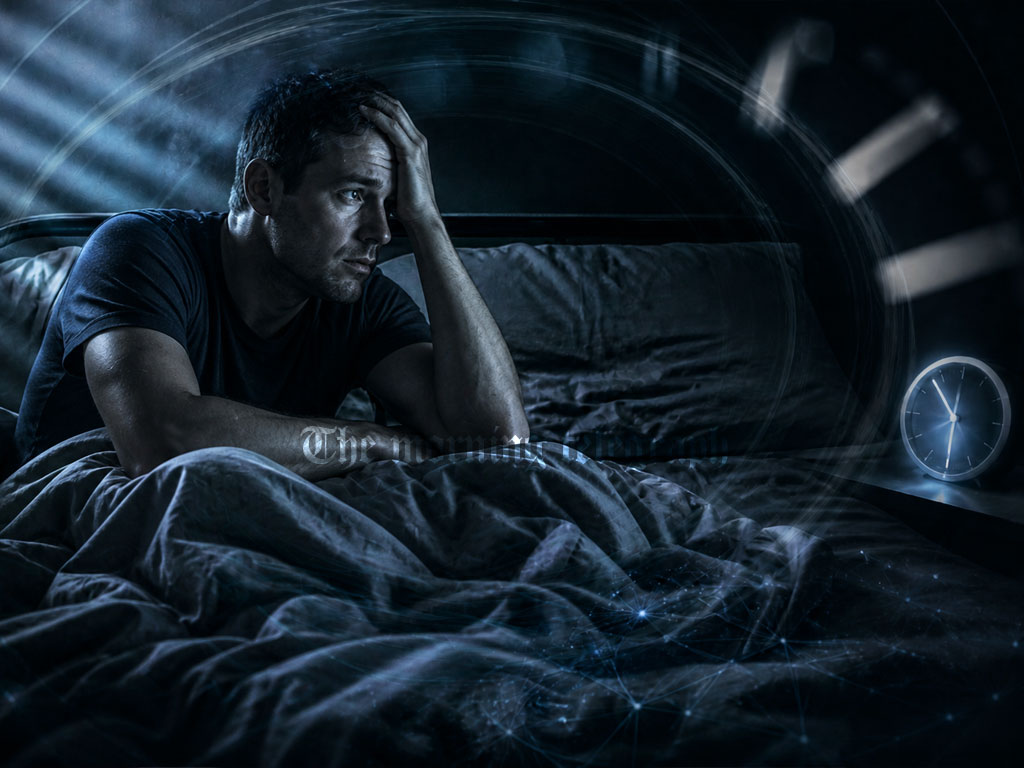
Insomnia affects millions by disrupting sleep, mood, heart health and daily life. Experts explain causes, risks and ways to break the cycle.
What insomnia really means
Insomnia affects millions of adults by turning sleep into a nightly struggle that can damage health, mood, memory, work performance and long-term wellbeing.
Almost everyone experiences a restless night at some point. It may happen before a major test, an important presentation, a stressful decision or the first night in a new time zone while travelling.

For most people, that rough night is frustrating but temporary.
For millions of others, however, poor sleep is not an occasional disruption. It becomes a repeated battle that follows them into the next day and, over time, into their physical and mental health.
Roughly 30 percent of adults report insomnia symptoms at any given time, while about 10 percent meet the criteria for chronic insomnia disorder.
Because sleep deprivation affects cardiovascular health, immune function, mood regulation and daily performance, insomnia is not simply a nighttime problem.
“Insomnia really is a 24-hour disorder, not just a nighttime challenge,” says Wendy Troxel, a senior behavioral sleep scientist at RAND Corporation.
A growing body of research also shows that insomnia can become self-perpetuating. Sleeplessness fuels more sleeplessness through anxiety, stress responses and the brain’s learned association between bedtime and frustration.
Clinically, insomnia is not merely getting too little sleep.
“It’s characterized by persistent difficulty falling asleep, staying asleep, or waking too early, along with daytime impairment,” explains Troxel. “That daytime impact is essential to the diagnosis.”
Another important factor is the distress caused by the sleep problem.
“If it takes you 30 minutes to fall asleep but it doesn’t bother you, you likely don’t have insomnia,” says Jamie Zeitzer, co-director of Stanford University’s Center for Sleep and Circadian Science. “But if it takes you 10 minutes and it causes anxiety, then you might.”
In other words, taking time to fall asleep is not always abnormal. But when the delay creates agitation, fear or repeated worry, it may signal a deeper sleep disorder.
Raj Dasgupta, a pulmonary and sleep medicine physician at Huntington Memorial Hospital in California, says symptoms of acute, short-term insomnia often include daytime fatigue, irritability, poor concentration, memory problems and mood disruption.
Chronic insomnia is more serious. It includes many of the same symptoms but can also lead to longer-term health consequences.
To be classified as chronic, insomnia symptoms must occur at least three nights a week for three months or longer.
They also “cannot be explained by another sleep disorder, medical condition, or substance use,” explains Meir Kryger, professor emeritus of medicine at Yale’s School of Medicine and author of The Mystery of Sleep: Why a Good Night’s Rest is Vital to a Better, Healthier Life.
Why chronic insomnia can damage health
Sleep is one of the body’s most important regulatory systems. When it is repeatedly disrupted, the effects can spread across the body and brain.
“The number one health risk of insomnia is the development of psychiatric disorders, particularly depression and anxiety,” Kryger says.
Long-term research supports that warning.
A landmark Johns Hopkins study followed more than a thousand sleep-deprived young men for over three decades and found that insomnia significantly increased the risk of developing clinical depression.
Other large studies have reached similar conclusions.
This connection is one reason insomnia is increasingly linked to reduced brain health, including impaired cognitive performance and a higher long-term risk of neurodegenerative conditions.
Chronic insomnia is also associated with cardiovascular and metabolic risks.
Research in 2025 linked insomnia to higher risks of hypertension and coronary heart disease. Other studies have associated insomnia with impaired immune function, increased systemic inflammation and a greater risk of type 2 diabetes.
Some of these effects occur because the body’s stress system stays switched on when it should be winding down.
“Physiologically, the stress system stays overactive as cortisol and sympathetic activity remain elevated when they should quiet down at night,” Dasgupta explains.
“In simple terms, insomnia means the body does not fully power off the way it should, which strains multiple systems over time.”
Because poor sleep affects the following day, insomnia can also interfere with social life, family responsibilities, work, school and decision-making.
“Insomnia can also cause impaired social, family, occupational, or academic performance as well as increased proneness for errors or accidents,” Kryger adds.
These risks help explain why large cohort studies have found that persistent insomnia is associated with increased mortality risk.
How one bad night becomes a sleepless cycle
A sleepless night should, in theory, make it easier to sleep the following night. But insomnia often refuses to follow that logic.
“Some individuals experience paradoxical hyperactivity in which the brain tries to compensate for feeling sleepy by overproducing wake-promoting neuromodulators, brain chemicals like norepinephrine that stimulate alertness, which then makes it more difficult to fall asleep the next night,” Zeitzer says.
For others, the problem becomes behavioral and emotional.
“Insomnia often becomes a feedback loop driven by physiological and psychological hyperarousal,” Troxel says.
Recent research highlights the self-perpetuating cycle between hyperarousal and insomnia symptoms.
Kryger notes that hyperarousal can be measured through brain imaging and cortisol levels.
People with chronic insomnia often show elevated nighttime brain activity and increased stress-hormone signaling compared to normal sleepers.
Irregular sleep schedules can make the problem worse by disturbing the circadian clock, the body’s internal 24-hour timing system that regulates sleep and wake cycles.
Zeitzer explains that this creates a mismatch between biological readiness for sleep and actual bedtime, similar to jet lag.
One of the most striking findings in insomnia research is how strongly the brain learns through repetition and association.
That learning can even change how a person feels about their bed.
“Our brains learn based on paired associations,” Troxel explains. “So, if night after night, you’re awake in bed feeling frustrated, the bed itself becomes associated with wakefulness rather than rest.”
In simple terms, the bed can stop feeling like a place of recovery and start feeling like a place of pressure.
“Insomnia usually starts with stress, but it becomes chronic when the brain learns to associate the bed with frustration or alertness,” Dasgupta says.
That negative association can become powerful.
Stuart Quan, a senior physician in the division of sleep and circadian disorders at Mass General Brigham, points to one study showing that 91 percent of individuals with insomnia showed anxiety, distress and maladaptive sleeping beliefs tied specifically to their sleep environment.
Over time, this connection may strengthen, which is one reason Kryger says the prevalence of chronic insomnia increases with age.
How to break the insomnia pattern
Insomnia is highly treatable, but the most effective advice can sound counterintuitive.
“If you can worry less about your insomnia,” Zeitzer says, “it will often go away.”
The gold-standard treatment is Cognitive Behavioral Therapy for Insomnia.
This structured, evidence-based approach targets both the behaviors and thought patterns that keep insomnia going.
Beyond formal therapy, Kryger says healthy sleep habits and a consistent sleep schedule are essential for people with sleep disorders.
“This helps to regulate the circadian rhythm, which is one of the processes that controls sleep,” Troxel adds.
Listening to the body is also important.
Research shows that going to bed only when genuinely sleepy can reduce the amount of time spent lying awake.
“If you cannot fall asleep within a short period of time, get out of bed and go to another room until you feel sleepy again,” Quan advises.
This helps retrain the brain to associate the bed with sleep instead of frustration.
For the same reason, Kryger says it is important “to use the bedroom only for sleep and for sex.”
Research shows that strengthening this association can significantly improve insomnia symptoms.
Zeitzer adds that a predictable and relaxing pre-bedtime routine can also help.
“Having a highly patterned relaxing pre-bedtime routine can also be very helpful,” he says.
That may include limiting screen use before bed, avoiding stimulating activities late at night, staying away from caffeine late in the day and using calming practices such as meditation or a warm bath.
However, questions remain for many people who continue struggling despite trying simple sleep habits.
Quan advises seeking medical care “when insomnia symptoms have been present for several weeks despite trying simple measures to try and improve sleep.”
What happens next could be critical for anyone trapped in the sleepless cycle. Insomnia may begin as a few bad nights, but once the brain learns fear, frustration and alertness around bedtime, recovery often requires deliberate steps to retrain both body and mind.