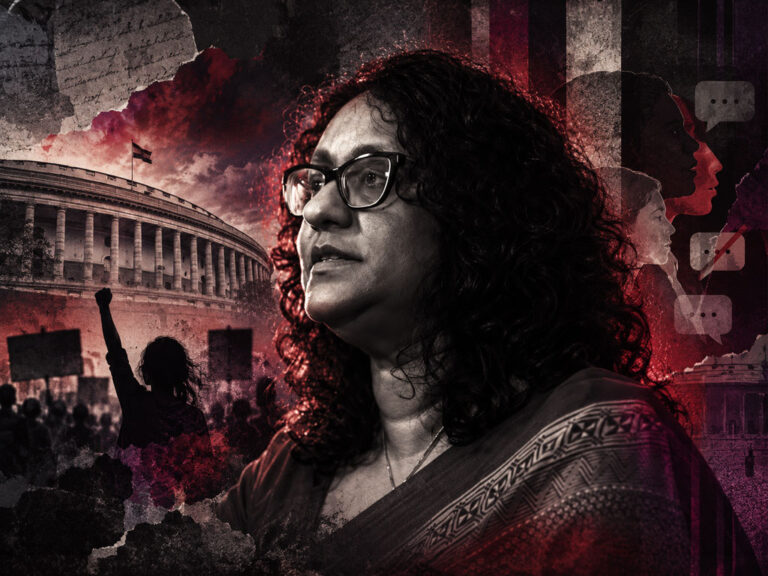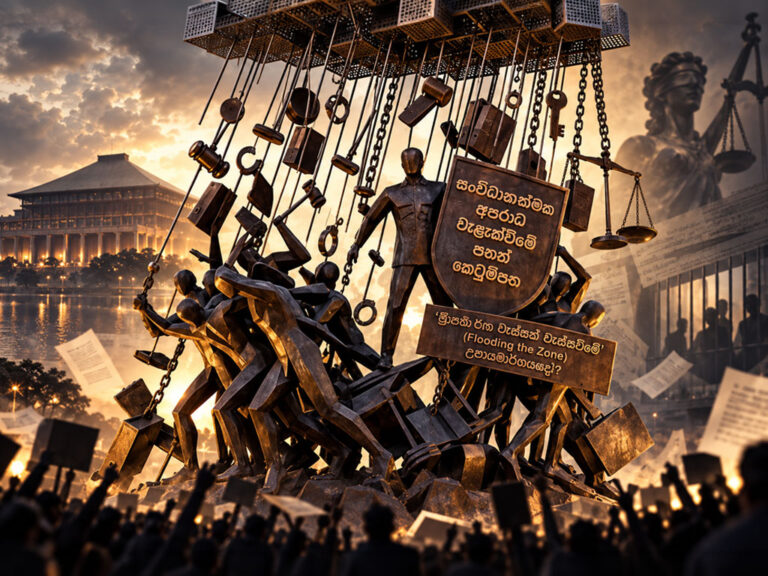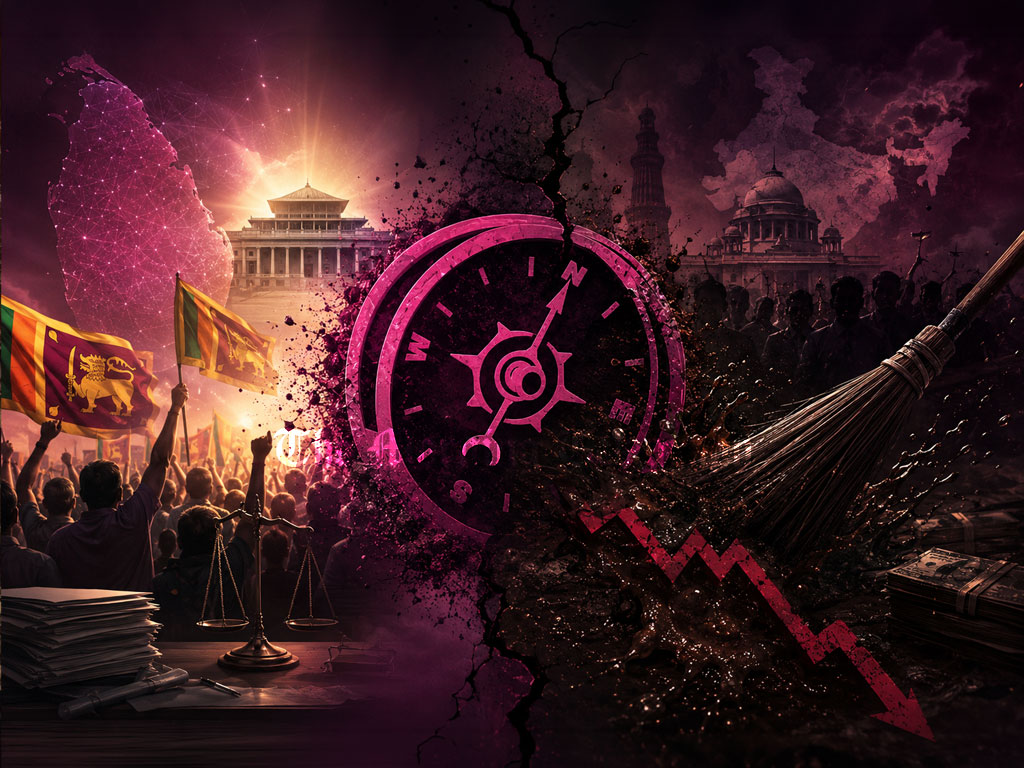
NPP warning from AAP’s collapse shows how anti-corruption mandates can fail when governance, unity and accountability weaken.
The NPP warning from India’s Aam Aadmi Party experience is stark: anti-corruption mandates can win historic elections, but they can also collapse if trust, competence, and accountability are not protected.
In September and November 2024, Sri Lanka’s National People’s Power government, led by President Anura Kumara Dissanayake, came to power on a historic wave of public anger. Voters who had grown exhausted by decades of corruption, family rule, political arrogance, and the devastating 2022 economic collapse turned to an outsider movement promising nothing less than a transformation of the country’s political culture.
Thousands of kilometres away, a similar political story had unfolded in India a decade earlier. In 2015, the Aam Aadmi Party, born from India’s mass anti-corruption movement, swept the Delhi Assembly with 67 out of 70 seats. It was a landslide that stunned the Indian political establishment and offered a new model for people-driven democratic politics.
Ten years later, in February 2025, the AAP won only 22 seats as the Bharatiya Janata Party swept Delhi. The AAP’s senior leaders had been jailed, its moral narrative badly damaged, and its parliamentary ranks left fractured from within.
The parallels between the rise and fall of the AAP and the present path of the NPP are not accidental. They are instructive. For those who still believe Sri Lanka’s NPP government represents a genuine chance for systemic change, the story of the AAP is not simply a warning from another country. It is a mirror held up to the present moment. The real question is whether Sri Lanka’s new government is willing to look into it honestly.

Outsiders Born From Broken Trust
Both the AAP and the NPP emerged from deep crises of public legitimacy. The AAP grew from the 2011 India Against Corruption movement, channelling public fury against political dynasties and patronage networks that had treated state resources as private property for far too long.
Its founder, Arvind Kejriwal, a former civil servant, came to represent the promise of clean, capable, citizen-centred politics. The party’s famous appeal was simple: governance for the common person, the Aam Aadmi.
The NPP, built around the Janatha Vimukthi Peramuna as its core, similarly presented itself as an outsider movement untouched by the corruption of the Rajapaksa era or the failures of the United National Party. Its long years in opposition, including its visible absence from the governments that presided over the 2022 economic disaster, gave it a moral authority that established parties could no longer claim.
President Dissanayake, with his humble rural background and personal history of surviving state repression, embodied a powerful narrative of integrity, authenticity, and political resilience.
In both cases, voters were not driven only by ideological loyalty. They were driven by a desperate search for something different. Many voters did not support the AAP or the NPP because they fully trusted them. They voted for them because they no longer trusted anyone else.
That distinction is crucial. It means the mandate was conditional, fragile, and highly vulnerable to the corrosive effects of perceived hypocrisy.
The BJP Playbook And Its Sri Lankan Echo
From the moment the AAP came to power in Delhi, the BJP, which controlled India’s Central Government, launched a sustained campaign to delegitimise, weaken, and ultimately destroy it.
The tools were familiar to anyone who has watched politics in South Asia: the use of central investigative agencies, the constant amplification of corruption allegations, whether real, exaggerated, or fabricated, the curbing of the Delhi government’s administrative powers through legislation, and an unending propaganda offensive across sympathetic media platforms.
The BJP used the Enforcement Directorate and the Central Bureau of Investigation to arrest and detain AAP’s top leaders, including Kejriwal himself and his deputy Manish Sisodia, over charges linked to the Delhi liquor policy.
Whatever the legal merits of those cases, the political effect was devastating. With its leadership imprisoned, the AAP was forced into permanent self-defence instead of governance. Its budgets were cut, its schemes obstructed, and its bureaucrats became answerable to an unelected Lieutenant Governor rather than elected ministers.
It must also be noted that the BJP itself had many politicians facing serious corruption allegations. The AAP correctly pointed this out. But voters, especially the urban middle classes who had once formed the party’s core base, did not respond to comparative moral accounting. They responded to the vivid, immediate image of AAP leaders in handcuffs.
In politics, perception often governs reality, sometimes brutally.
In Sri Lanka today, opposition forces, many drawn from the same political classes whose corruption helped produce the 2022 disaster, are now mounting a campaign against the NPP government that resembles the BJP’s strategy against the AAP.
The NPP is being framed as incompetent, corrupt, and hypocritical. Every procurement irregularity, every delayed reform, every administrative mistake is amplified and presented as evidence that the NPP is no different from the governments it replaced.
The key difference is structural. In India, the BJP was the central government attacking a regional Delhi government. In Sri Lanka, the NPP governs nationally and holds a two-thirds parliamentary majority. The opposition cannot use the machinery of central government in the same way.
But that structural advantage does not make the NPP immune to the dynamics that destroyed the AAP. It only means those dynamics will unfold differently.
Anti-Corruption: Promise, Performance And Danger
For both the AAP and the NPP, the anti-corruption mandate was never just another policy pledge. It was the foundation of their moral authority. It was what separated them from their predecessors. It was what persuaded sceptical voters to take a risk on political outsiders.
The NPP government has made genuine and notable efforts in this area. Under President Dissanayake, the Commission to Investigate Allegations of Bribery or Corruption has been reinvigorated, though not to the full extent required because of the prevailing socio-economic and political environment.
A retired High Court judge was appointed as its Director General. Investigations and indictments have been initiated against former ministers, senior officials, and members of the Rajapaksa family.
In February 2026, former intelligence chief Suresh Sallay was arrested in connection with the 2019 Easter Sunday bombings, a case many believed would never be seriously pursued.
Sri Lanka’s corruption ranking has shown modest improvement. The NPP also launched a comprehensive National Anti-Corruption Action Plan for 2025–2029, supported by UNDP and the Government of Japan. These are real achievements, and they deserve to be acknowledged.
Yet they are also under threat, and part of that threat comes from within.
The NPP’s decision to defend the Energy Minister, without allowing him to temporarily step aside, against a CIABOC indictment for alleged misappropriation of funds, was a serious blow to the government’s credibility. Anti-corruption activists, including prominent NPP supporters, responded with anger and a sense of betrayal.
The party that campaigned on the principle that no one is above the law suddenly appeared to be protecting one of its own.
This is precisely how the AAP lost its way. The party that rose on the promise of clean governance found itself defending its own leaders in court, with Kejriwal describing the corruption charges against him as political persecution.
Whether that description was accurate or not, the implication was politically fatal. The AAP’s anti-corruption narrative, once its greatest asset, became its greatest liability when its own leaders stood accused.
Corruption in Sri Lanka is not a minor administrative problem. It is a systemic disease that has hollowed out public institutions, damaged citizen trust, distorted economic policy, and contributed directly to the 2022 economic collapse.
The IMF’s governance diagnostic was clear: corruption and governance failures had imperilled Sri Lanka’s national well-being. If the NPP is to honour its mandate, it must hold its own members to the same standard it applies to its predecessors. That standard cannot be selective. It must be consistent.
Inexperience And The Bureaucratic Trap
One of the clearest parallels between the AAP and the NPP is the challenge of inexperience. Both came to power after spending their political lives in opposition. Both had developed powerful moral narratives but had limited experience in actually running government.
Both discovered, once in office, that the machinery of the state is complex, resistant, and often loyal to forces other than the elected government.
In Delhi, the AAP found itself governing a city-state where the bureaucracy effectively answered to the Lieutenant Governor rather than elected ministers. This was a situation the BJP had deliberately engineered through legislative changes that overturned a Supreme Court ruling.
The result was a paralysing nightmare. Government decisions were blocked, budgets were delayed, and the AAP’s flagship schemes, including mohalla clinics, free electricity, and public-school improvements, were starved of resources or obstructed.
In Sri Lanka, the NPP faces a different but equally difficult version of this problem. Decisions are being made by a small circle of ministers who appear reluctant to delegate.
The party’s suspicion of senior bureaucrats, many of whom are seen as loyal to the Rajapaksa-era establishment, has led to reliance on less experienced loyalists. That has created bottlenecks, delays, and inefficiencies.
The devastating impact of Cyclone Ditwah in November 2025 exposed these weaknesses painfully. Life-saving alerts were issued only in Sinhala and English, leaving Tamil-speaking communities in the worst-affected central hills without timely warning.
District-level officials hesitated to approve emergency relief spending because they feared later corruption investigations. These were not failures of intention. They were failures of institutional capacity and governmental competence.
The NPP’s isolation from outside expertise makes the problem worse. Unlike earlier governments that involved academics, professionals, and civil society leaders in reform planning, the NPP has remained largely insular.
Non-JVP members of the NPP coalition, including professionals, civil servants, and community activists who joined because they wanted to contribute to policymaking, reportedly feel sidelined by the larger and better-organised JVP.
As one discouraged supporter put it, there is a real danger that the JVP could damage what the NPP promised to build.
When Moral Authority Becomes A Liability
Both the AAP and the NPP fell into what may be called the moralism trap. After building their identities on claims of superior ethical standards, they became uniquely vulnerable to accusations of hypocrisy.
Any mistake, however small, could be presented, and often has been presented, as evidence of fundamental dishonesty.
The AAP’s rhetoric about clean governance made corruption allegations against its leaders especially damaging. Whether or not the charges were politically motivated, and there are serious reasons to believe at least some of them were, the sight of a party elected on an anti-corruption mandate with its leaders in jail on corruption charges became impossible to survive.
The NPP is moving through similar terrain. Its language of a clean Sri Lanka, system change, and a new political culture has created expectations that are extraordinarily difficult to meet.
Every allegation, even if baseless, is magnified by an opposition largely made up of figures whose own corruption records appear well known to the public. But that does not protect the NPP.
A voter who once backed the Rajapaksas and now votes NPP is not necessarily making a comparative moral judgment. That voter is demanding visible improvement. When that improvement does not arrive at the speed promised, disappointment comes quickly.
The NPP’s defensive response to criticism is also worrying. Ministers have repeatedly sought police investigations into alleged fake news instead of relying on established complaints procedures. Party leaders have suggested that opposition parties forming coalition councils is undemocratic.
This echoes the arrogance that eventually alienated the AAP’s middle-class base. Praise for elements of a one-party governance model and suggestions that the NPP may need fifteen to twenty-five years in power to achieve its vision have raised alarm among those who hoped for genuinely pluralist politics.
When Allies Become Critics
One of the most damaging features of the Aam Aadmi Party’s collapse was the speed at which its own ranks fragmented under pressure.
As corruption scandals grew and electoral defeats accumulated, former allies, MPs, and party functionaries abandoned the sinking ship. Many defected to the BJP. In the last week of April 2026, seven AAP MPs, including prominent figures, quit to join the BJP. Kejriwal reportedly tried personally to stop the defections. He failed.
The lesson for the NPP is sobering.
The NPP is a coalition, not a homogeneous party. It contains the JVP’s disciplined cadre structure, but it also includes civil society professionals, trade unionists, women’s activists, and community leaders who joined because they believed in the NPP’s manifesto, not necessarily the JVP’s ideology.
Reports from Sri Lanka suggest that many non-JVP members already feel marginalised. The NPP’s manifesto reflected the priorities of its newer and more liberal elements. In practice, however, the JVP dominates decision-making at almost every level.
If the NPP fails to honour its commitments to coalition partners, the alliance could fracture. If the JVP’s statist and nationalist tendencies continue to override manifesto commitments on devolution, constitutional reform, and ethnic reconciliation, the coalition will weaken.
The desertion dynamic that destroyed the AAP does not require visible defections to the opposition. It only requires the withdrawal of enthusiastic support, the demoralisation of activists, and the slow erosion of the broad popular mandate that made the NPP’s 2024 victory possible.
The Opposition’s Glass House
A crucial point must not be ignored. The forces accusing both the AAP and the NPP of corruption are not themselves models of clean politics.
The BJP, despite its anti-corruption rhetoric, has its own long list of politicians facing serious charges. In Sri Lanka, the opposition parties campaigning against the NPP, including remnants of the SLPP, the SJP, and several nationalist formations, include figures directly linked to the economic mismanagement and corruption that pushed the country to collapse in 2022.
The Rajapaksa family, whose misrule was found by the Supreme Court to have demonstrably contributed to the economic crisis and violated public trust, remains a political force.
Former President Ranil Wickremesinghe, who was briefly arrested in August 2025 on charges linked to the private use of state resources, drew the defence of parties across the political spectrum. It was a spectacle that showed, as the NPP correctly argued, the depth of the corrupt political class it is trying to displace.
But this context, while important, is not enough.
In the AAP’s case, pointing to BJP corruption did not save the party from defeat. Voters do not always decide based on comparative moral accounting between parties. They vote based on what they feel, what they experience, and what they expect.
A government that campaigns on cleaning up corruption but appears to apply that standard selectively, or governs incompetently, or responds to valid criticism with arrogance and legal threats, will lose public trust, regardless of how corrupt its opponents may be.
Sri Lanka’s Own Vulnerabilities
Sri Lanka’s political context differs from Delhi’s in ways that are both helpful and dangerous for the NPP. The NPP governs nationally, not as a regional administration trapped under a hostile central government. It commands a two-thirds parliamentary majority, which is rare in Sri Lankan political history. The opposition is fragmented and weak.
These structural advantages give the NPP room to act boldly.
But Sri Lanka also has vulnerabilities that Delhi did not. The ethnic and religious fault lines that have shaped Sri Lankan politics for decades, and that produced a devastating civil war, remain unresolved.
The NPP’s failure to set a clear timetable for provincial council elections, its silence on the specific shape of constitutional devolution, and the continued harassment of Tamil activists by counter-terrorism police have deepened disappointment in the north and east.
Tamil parties won most of the councils they contested in the May 2025 local elections. That result suggests the NPP’s claim to a pan-ethnic mandate may be more fragile than its 2024 parliamentary numbers implied.
The NPP also faces a more dangerous economic situation than the AAP ever did. Sri Lanka remains burdened by one of the highest debt loads of any middle-income country, with 49% of revenues projected to go toward debt service in 2026.
The government’s adherence to IMF conditionalities may be fiscally responsible, but it limits its ability to deliver the economic relief promised to voters.
The triple shocks of Cyclone Dithwah, Middle East conflict-driven fuel shortages, and the continuing effects of the 2022 crisis have added further pressure to living standards.
As has been repeatedly observed, Sri Lanka cannot afford to make the same mistakes twice. The window for genuine reform is narrow, and it will not remain open forever.
Sri Lanka’s recent political history also shows that several important political figures have damaged their own credibility through their own actions, whether through inexperience, poor situational awareness, or manipulation by political opponents.
These self-inflicted wounds have given critics easy ammunition, when otherwise they would have had to build attacks on much weaker grounds.
Lessons The NPP Must Learn Quickly
The AAP’s fall from 67 seats to 22 in a decade is not inevitable for the NPP. But it is possible. Several lessons emerge from the comparison and require urgent attention from the NPP leadership.
Accountability must be universal, not selective. The most damaging mistake the NPP can make is to apply anti-corruption standards unevenly, prosecuting opponents while protecting its own. The decision to defend the Energy Minister must either be reversed or convincingly explained. CIABOC and other oversight bodies must be fully resourced and made more efficient. Independent commissions such as the RTI must be funded and empowered, not weakened.
Tone matters as much as substance. The NPP must move away from moralism and defensiveness. President Dissanayake’s early speeches recognised that no single party could solve Sri Lanka’s problems alone and called for public scrutiny and constructive criticism. That spirit must be recovered. Calling for police investigations into critical journalists or opposition commentators, instead of using established media complaints mechanisms, is exactly the type of behaviour that cost the AAP its middle-class support.
The coalition must be truly inclusive. The strength of the NPP lies in its breadth. If the JVP’s organisational dominance continues to sideline professionals, civil society leaders, and community activists who joined in good faith, the coalition will fracture. The NPP manifesto belongs to all its members, not only to the JVP.
Governance capacity must be built urgently. The Cyclone Ditwah response was a warning. The NPP must overcome its mistrust of outside expertise and involve academics, civil society organisations, and international technical advisers in developing and implementing its reform programme. Decisions cannot remain trapped within a small circle of ministers.
Ethnic reconciliation cannot be postponed. Provincial council elections must be held without further delay. The harassment of Tamil activists by counter-terrorism police must end. A credible timetable for constitutional reform, including meaningful devolution, must be presented. The NPP’s long-term legitimacy depends on whether it can become a genuinely national government, not merely a Sinhala-majority government with national ambitions.
Economic relief cannot be delayed indefinitely. The IMF programme may be fiscally necessary, but it is politically dangerous if it is seen as placing creditor interests above the needs of Sri Lanka’s poor. The NPP must push harder for wealth taxes, a fairer distribution of the tax burden, and renegotiated debt terms that create room for social investment. Nearly a quarter of Sri Lankans are living in poverty. Their patience is not unlimited.
The government must prepare for intensifying opposition campaigns. The BJP’s anti-AAP campaign in India was relentless, sophisticated, and effective. Sri Lanka’s opposition, despite its weakness, will also try to amplify every NPP mistake, frame every procurement decision as corruption, and use any available institutional leverage to weaken the government’s credibility. The best defence is not counter-propaganda. It is genuine, visible, demonstrable good governance.
The Window Remains Open, But Not Forever
The Aam Aadmi Party’s story is not a story of unavoidable failure. It is a story of what happens when a movement built on anti-corruption promises fails to protect its integrity, governs without enough competence, and loses the trust of the voters who gave it a historic mandate.
The BJP’s campaign against it was ruthless and often cynical. But it succeeded because the AAP handed its enemies the weapons they needed.
Sri Lanka’s NPP government still has time to avoid the same fate. It governs with a majority the AAP never had. Its opposition is weaker than the BJP was in relation to Delhi. The international community, including Sri Lanka’s bilateral partners, has a genuine stake in Sri Lanka’s success and is prepared to offer support. The window for systemic reform, though narrowing, has not yet fully closed.
Still, the lessons of the AAP experience must be absorbed honestly and urgently. Anti-corruption mandates do not sustain themselves. They must be renewed again and again through consistent and universal application of the law.
Governance is not won by rhetoric but by results: in people’s daily lives, in the functioning of public institutions, in the fairness of the tax system, and in the safety of communities. Popular mandates, however overwhelming they appear at election time, are always conditional.
The broom that swept away Sri Lanka’s corrupt old order must also be used to clean the state itself, including its institutions and its government.
A house in constant use requires regular cleaning. A government is no different. Clear systems and methodologies must be developed and rigorously upheld.
Corruption can never be defeated once and for all. It must be continuously managed and led from the top. It cannot depend on a leader’s friendships, loyalties, or personal preferences.
If the NPP fails here, history will have only a familiar story to tell.