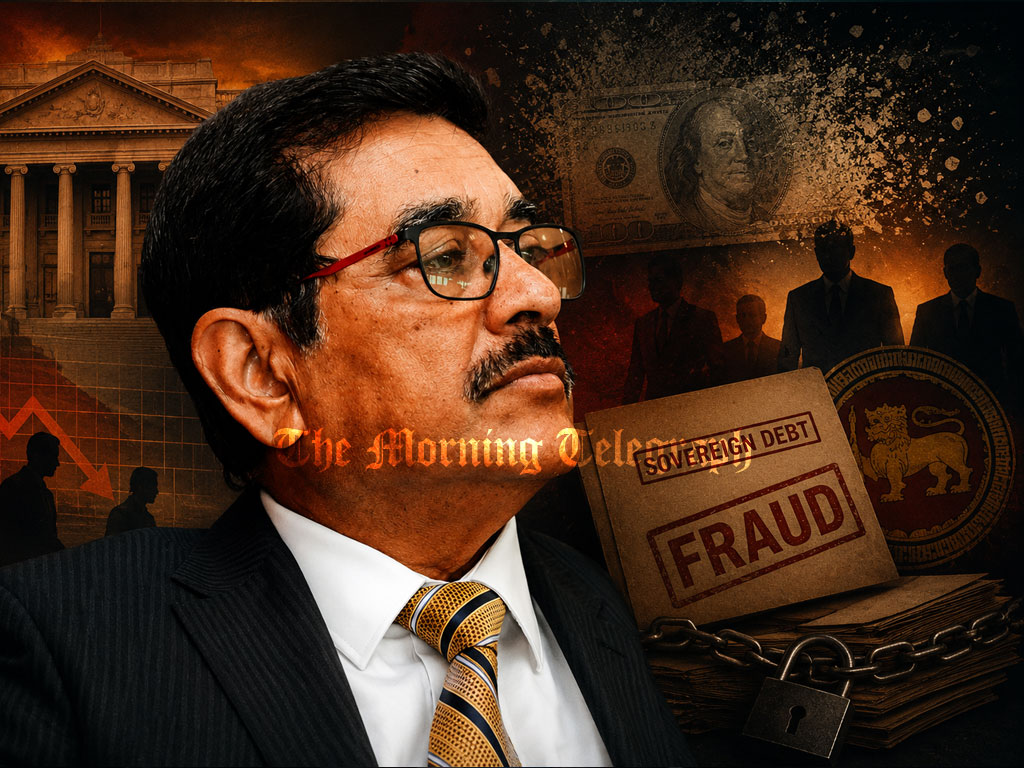
Nandalal Weerasinghe faces calls to resign after a sovereign debt payment scandal exposed serious questions over Central Bank accountability.
Nandalal Weerasinghe is now at the centre of a growing accountability crisis after millions allegedly vanished through a fraudulent sovereign debt transaction, while the Central Bank Governor responded not with remorse, urgency, or responsibility, but with excuses, arrogance, and a dangerous refusal to accept institutional failure.
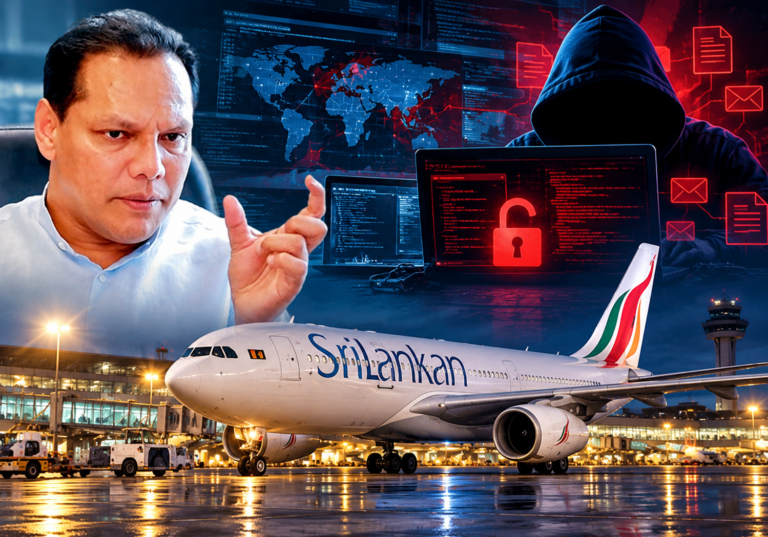
The death of the former Chief Executive Officer of SriLankan Airlines has sadly shifted public attention away from what should have become a national outrage demanding immediate resignations and criminal accountability. While the headlines moved elsewhere, those responsible for one of the most humiliating financial scandals in recent Sri Lankan history quietly attempted to bury the matter beneath bureaucratic explanations and carefully manufactured excuses. But no distraction can erase the fact that millions of dollars belonging to a bankrupt nation disappeared under the watch of the very officials who endlessly lecture the public about discipline, governance, compliance, and financial responsibility.

At the centre of this disgrace stands Nandalal Weerasinghe, who walked into a press briefing at the Central Bank in Colombo yesterday and delivered one of the most arrogant and tone-deaf explanations the Sri Lankan public has heard from a senior official in years. There was no urgency in his words. There was no anger. There was no visible embarrassment. There was no acceptance of institutional failure. Instead, the Governor calmly told journalists that the Central Bank had merely followed instructions, as though the disappearance of millions of dollars in sovereign debt payments was an ordinary clerical mishap.
His exact words exposed the frightening complacency at the heart of Sri Lanka’s financial leadership. “As a banker, we have no right to change those instructions,” he declared. He then went further and insulted public intelligence by comparing the transaction to a personal bank transfer between friends. “When I instruct the bank to pay from my bank account to the account of my friend, the only thing the bank has to do is make the payment.”
This is not merely an inadequate explanation. It is an outrageous one.
A sovereign debt transaction involving public money is not comparable to someone casually transferring funds to a friend. This is not private banking. This is not a routine retail transaction. This is the financial reputation of an entire nation. These are sovereign payments connected to international obligations, reserve management, and public accountability. The Governor reducing such a catastrophic incident into a simplistic example suitable for a village co-operative bank conversation demonstrates either astonishing incompetence or a calculated attempt to trivialise a national scandal.
The public must understand the real danger of what was revealed yesterday. The Governor effectively admitted that Sri Lanka’s apex financial institution sees itself as a mechanical payment processor with no meaningful responsibility beyond pressing buttons after receiving instructions. That statement alone should terrify every citizen, investor, lender, and international institution dealing with Sri Lanka.
What exactly is the purpose of having a Central Bank Governor if his office carries no responsibility during a multimillion-dollar fraud involving sovereign transactions? Is he merely a highly paid messenger? Is the Central Bank simply a transfer desk? If the institution cannot identify suspicious transactions, detect irregularities, question altered payment details, or maintain oversight during sovereign debt settlements, then what exactly are taxpayers funding?
For years, the Sri Lankan public has been subjected to endless sermons from financial technocrats about discipline and sacrifice. Citizens were crushed under taxes. Businesses collapsed. Families lost savings. Young people fled the country. Pensioners suffered humiliation. Ordinary people endured unbearable inflation and shortages because officials insisted that economic recovery required “hard decisions” and “strict financial management.” Yet when millions vanish through fraud, the same officials suddenly discover the language of helplessness.
This double standard is intolerable.
The Governor’s conduct yesterday revealed something far worse than institutional weakness. It revealed arrogance. There is a specific type of arrogance deeply rooted within Sri Lanka’s unelected elite: the belief that technical language can erase accountability and that the public is too uninformed to challenge them. Dr. Weerasinghe stood before journalists not as a leader accepting responsibility during a crisis, but as a bureaucrat trying to escape liability through semantics.
His statement that “the Central Bank merely carried out the payment in accordance with instructions issued by the government” may satisfy lawyers preparing defensive arguments, but it completely fails the standards expected from the head of a central bank in any serious country.
This arrogance did not begin yesterday. The public has already witnessed the Governor’s attitude when questions were raised about him purchasing government bonds while serving as Governor and renting out his personal properties to state banks. When concerns were raised over ethics and conflict of interest, the response was reportedly not one of humility or transparency, but arrogance. “File a case, we will see them in court,” was the message delivered to critics.
That response alone revealed the deeper sickness within Sri Lanka’s governing establishment.
The issue is not merely whether something falls within the technical boundaries of the law. Public office at that level demands ethical judgment, restraint, and moral credibility. A Central Bank Governor is not an ordinary public servant. He occupies one of the most sensitive positions in the country’s economic structure. Entire recovery programmes, investor confidence, sovereign negotiations, and public sacrifices are built upon trust in that office. The public therefore has every right to expect conduct that goes beyond legal minimums.
But Sri Lanka has become trapped in a dangerous culture where officials hide behind legality while abandoning ethics. “It is not illegal” has become the shield used to justify conduct that would never be tolerated in disciplined economies. This is precisely why public trust continues to collapse. People no longer believe that those managing the economy are acting with integrity. They increasingly see a class of insulated elites who know how to benefit personally while ordinary citizens carry the burden of national suffering.
While the country endured shortages, inflation, bankruptcy, and despair, those at the top appeared comfortable navigating opportunities within the very crisis they were tasked with resolving. The perception now growing among the public is deeply damaging: that some officials approached the nation’s tragedy not only as a responsibility, but also as an opportunity for influence, power, and personal enrichment.
No disciplined economy in the world would tolerate such a casual response after a scandal involving millions of dollars in sovereign payments. In functioning financial systems, resignations would already have occurred. Independent investigations would begin immediately. Parliamentary oversight committees would summon every responsible official. International counterparties would demand answers. Markets would react with concern. Most importantly, senior officials would understand that leadership requires accountability even when direct personal involvement cannot be proven.
Instead, Sri Lanka repeatedly produces the same culture of cowardice. Nobody is responsible. Everybody followed procedure. Everyone points elsewhere. Every scandal becomes a blame-shifting exercise until public anger fades and another crisis arrives.
The Governor also attempted to hide behind institutional restructuring, explaining that the Public Debt Department no longer operates under the Central Bank and now falls under the Ministry of Finance. That explanation only deepens public concern. If sovereign debt management has become fragmented to the point where nobody exercises meaningful oversight, then the entire system is dangerously broken. Passing responsibility between the Treasury and the Central Bank is not governance. It is organised irresponsibility.
Secretary to the Treasury Harshana Suriyapperuma and Governor Nandalal Weerasinghe cannot continue this game of institutional hide-and-seek. Both hold positions carrying immense national responsibility. Both were central figures during Sri Lanka’s economic collapse and subsequent restructuring process. Both repeatedly presented themselves as guardians of financial stability and reform. Therefore, both must also face accountability when catastrophic failures occur under their watch.
Dr. Weerasinghe should resign immediately.
Not because he personally entered fraudulent account details into a payment system, but because his response to this scandal proved he no longer understands the moral weight of the office he occupies. His remarks displayed detachment instead of leadership, excuses instead of responsibility, and arrogance instead of accountability.
Sri Lanka cannot recover while its top officials behave like detached consultants managing paperwork rather than custodians of national trust. A Central Bank Governor is not a spectator watching events unfold from a safe distance. He is one of the principal guardians of the country’s financial integrity. When millions disappear through fraud and the Governor’s first instinct is to explain why responsibility belongs elsewhere, he has already failed.
The country deserves better than polished excuses delivered from air-conditioned press rooms in Colombo. The people deserve leaders capable of shame, responsibility, and consequences. If this scandal ends with another round of explanations and no resignations, Sri Lanka will once again prove that its ruling financial establishment learned absolutely nothing from the economic catastrophe that brought the nation to its knees.
SOURCE :- SRI LANKAN GUARDIAN