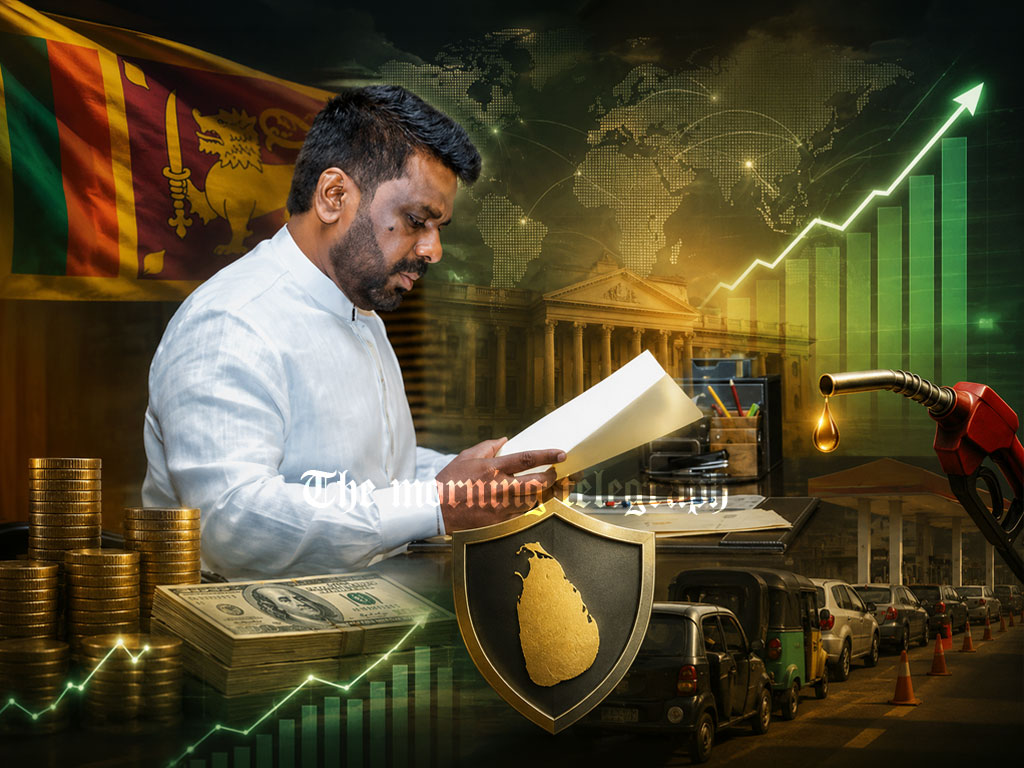
Sri Lanka crisis fears rise again as President Anura Kumara Dissanayake vows there will be no repeat of the 2022 collapse.
Sri Lanka crisis fears have resurfaced, but President Anura Kumara Dissanayake has vowed the country will never return to the economic collapse of 2022.
The president gave one of his strongest assurances yet as Colombo tightens fuel controls and rebuilds foreign reserves amid growing global uncertainty.
Speaking at a public event in the eastern district of Ampara, Dissanayake moved to calm public anxiety over inflationary pressure, fuel management measures, and the impact of global instability on Sri Lanka’s fragile recovery.
He was addressing the reopening ceremony of construction work for the Ampara Multi-Purpose Town Hall, also known as the Nintavur Cultural Centre.

Dissanayake said there was “absolutely no room” for a repeat of the economic meltdown that pushed Sri Lanka into its worst post-independence crisis.
His remarks come at a politically sensitive time, with memories of fuel queues, power cuts, medicine shortages, and mass protests still deeply etched in the public mind.
Sri Lanka’s economy collapsed dramatically in 2022 after years of rising debt, shrinking foreign currency reserves, and policy failures left the country unable to finance essential imports.
The crisis triggered nationwide unrest and forced former President Gotabaya Rajapaksa to flee the country and resign after protesters stormed his official residence.
That turmoil became a global symbol of how economic mismanagement, combined with external shocks, could rapidly destabilize a nation.
Nearly four years later, Dissanayake is now trying to reassure citizens and international observers that Sri Lanka’s financial foundations are far stronger.
He accused certain groups of trying to portray current economic conditions as similar to the crisis period, calling such narratives misleading and politically motivated.
According to the president, the government now has both the resources and planning mechanisms needed to prevent systemic shortages and maintain economic stability.
Drawing a sharp contrast with 2022, Dissanayake said the Treasury at that time had effectively run dry.
He said the banking system also lacked enough dollars to support imports or stabilize markets.
The country’s foreign reserves, he noted, had fallen to a dangerously low level of around US$50 million, leaving Sri Lanka exposed to sovereign default and supply chain paralysis.
Today, however, the president said the government’s financial position has improved significantly.
He revealed that Sri Lanka’s central bank now holds foreign reserves approaching US$7 billion.
He also announced that another US$700 million is expected to arrive in the coming week, along with a further US$600 million from the International Monetary Fund.
The IMF has played a central role in Sri Lanka’s economic recovery strategy since the country secured a bailout package to restore fiscal discipline and rebuild investor confidence.
Although IMF-backed reforms have included painful tax increases and austerity measures, officials argue they have restored macroeconomic credibility lost during the collapse.
Despite the improved reserve position, the government remains cautious over external pressures.
Dissanayake acknowledged that instability in the Middle East and rising global import costs continue to threaten vulnerable economies such as Sri Lanka.
The country remains heavily dependent on imported fuel and essential goods.
He warned that international market volatility could still increase financial pressure, especially in energy procurement.
However, the president insisted that the government has developed a structured dollar-management strategy to protect essential supplies.
He pledged that Sri Lankans would not again face queues for fuel, cooking gas, milk powder, or fertilizer.
That promise carries major political weight in a country where economic hardship reshaped the national political landscape.
Long lines outside petrol stations became one of the defining images of the 2022 collapse.
Many citizens waited for days to secure limited fuel supplies, while shortages crippled transport, disrupted agriculture, and intensified public anger toward the political establishment.
As part of preventive measures, the government is preparing to strengthen fuel distribution through QR code monitoring.
The system was first introduced during the height of the crisis to ration petrol and diesel purchases.
Dissanayake said he had requested fuel station owners to strengthen the QR-based distribution framework for about the next six weeks.
The move, he said, is aimed at safeguarding foreign reserves and regulating consumption patterns.
He described the measure as a temporary management strategy, not a sign of impending scarcity.
Still, the decision shows how deeply the memory of economic collapse continues to shape state policy and public behavior.
Even modest changes to fuel distribution can quickly trigger fear among citizens who lived through the chaos of the earlier breakdown.