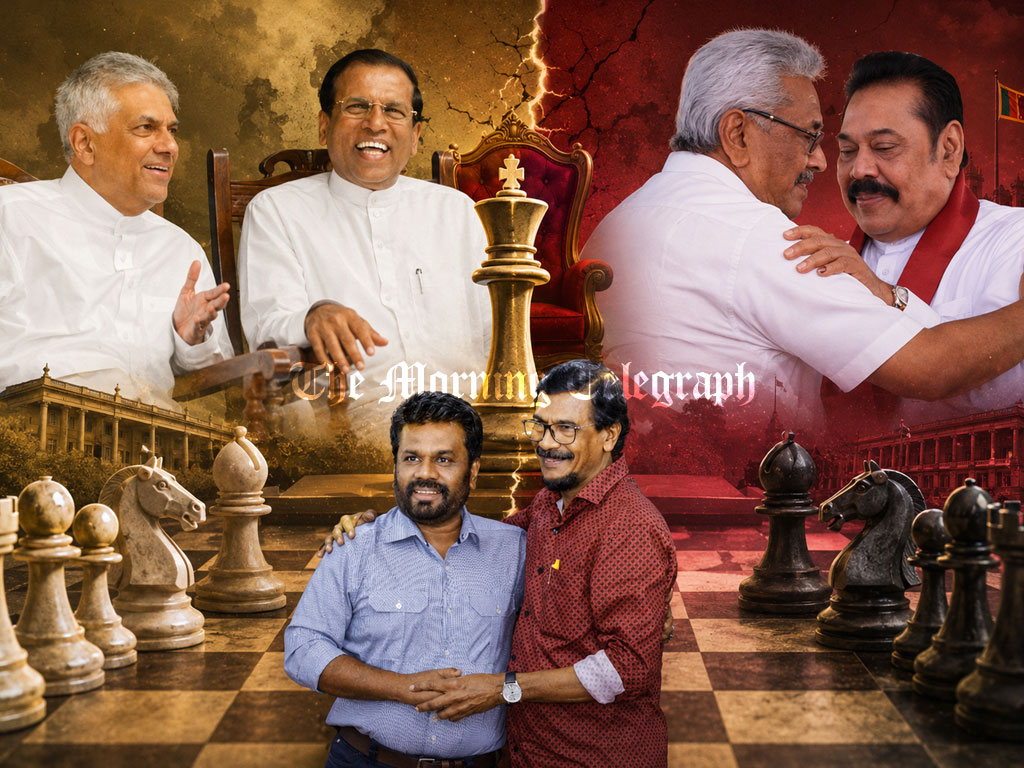
Anura-Tilvin power tensions echo past Sri Lankan leadership crises as party control and presidential authority collide again.
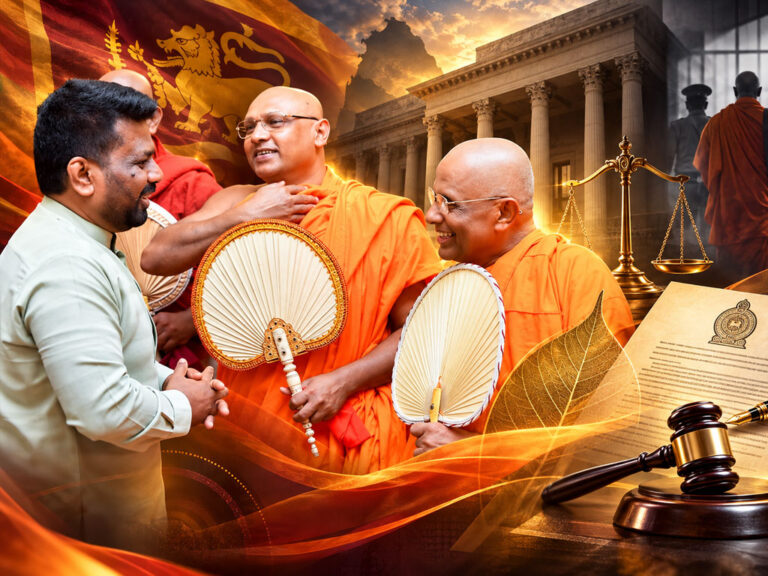
Anura-Tilvin power tensions are now being compared with Sri Lanka’s past leadership conflicts, where divided authority weakened governments from within.
“I have already made my decision. I have no alternative. If you agree, you may stay. If not, you may leave. The door is open — you can get up and walk out right now…”
J.R. Jayewardene did not say those words in anger.
He spoke calmly and deliberately after deciding to sign the Indo-Lanka Accord. He then summoned the parliamentary group and addressed them directly.

The MPs sat frozen like inflated balloons.
Not a single one stood up to leave.
How did J.R. have the confidence to speak that way?
After changing the country’s Constitution and introducing the Executive Presidency, J.R. also amended the UNP constitution.
Under that amendment, if a UNP member became Executive President of the country, he or she automatically became leader of the party as well.
Why did J.R. make that change?
Because he understood that no Executive President could govern a country without controlling the party machinery.
Maithripala Sirisena knew this arrangement very well.
Soon after becoming President, he laughed and made a memorable remark:
“If I take UNP membership, I automatically become the leader of the UNP…”
He was right.
During the presidencies of J.R., Premadasa, Wijetunga, Chandrika, and Mahinda, the country was governed smoothly because both the government and the party remained firmly in their hands.
Although Chandrika became President earlier, she officially obtained party leadership only in 2000.
Even before that, however, she effectively controlled the party because her mother, Sirimavo Bandaranaike, who remained the formal leader, had become physically frail.
Chandrika therefore functioned as the unofficial leader long before taking the title.
When Mahinda became President in 2005, he did not control the party leadership.
From the first day of his presidency, he worked relentlessly to secure it.
He politically cornered Chandrika from every direction, placed her under constant pressure, and eventually pushed her into political exile in London before taking control of the party.
In 2015, Maithripala became President with UNP backing.
But Ranil Wickremesinghe remained leader of the UNP.
Maithri had presidential power, while Ranil controlled the party that dominated the government.
The result was chaos.
Maithri had no real authority over the UNP parliamentary group or Cabinet ministers.
Ranil had government power, but not presidential authority.
Maithri undermined Ranil from behind the scenes.
Ranil did the same to Maithri.
Eventually, both began openly fighting each other.
Mahinda famously described them as “a bull and a buffalo pulling in opposite directions.”
Ironically, Mahinda repeated the same mistake in 2019 by making Gotabaya Rajapaksa President while he retained control of the SLPP leadership.
Few even knew whether Gotabaya was formally a member of the party.
He was not even part of its political council.
Real party power remained with Mahinda and national organizer Basil Rajapaksa.
Gotabaya had little say in party decisions.
He could not even independently appoint his own Cabinet.
It was Mahinda and Basil who selected P.B. Jayasundera, and later Gamini Senarath, as Presidential Secretary.
Though Gotabaya later brought P.B. Jayasundera closer under his own influence, he still lacked freedom to choose his own top officials.
Even the later move to replace P.B. with Gamini Senarath came under pressure from Mahinda.
Since Mahinda remained both party leader and parliamentary group leader, Gotabaya had little choice but to comply.
Over time, conflicts between Gotabaya and Mahinda, and between Gotabaya and Basil, became increasingly visible.
Like the Maithri-Ranil administration before it, the Gotabaya-Mahinda-Basil government also became a case of leaders pulling in opposite directions.
The biggest clash inside the Maithri-Ranil government erupted over the Finance Ministry.
Maithri strongly insisted that Ranil, who controlled the Central Bank, and Ravi Karunanayake, who headed the Finance Ministry, should both step aside because of the bond scandal.
He even used the opposition to bring a no-confidence motion against Ravi and pressured Ranil to give up control over the Central Bank.
Eventually, Ravi and Ranil stepped back.
The Finance Ministry was handed to Mangala Samaraweera.
That was where the government first began to crack.
Similarly, fractures inside Gotabaya’s government deepened after Mahinda left the Finance Ministry and Basil took over.
Basil’s appointment sidelined Mahinda and unsettled MPs loyal to him.
There was virtually no dialogue between Gotabaya and the parliamentary group.
To many MPs, Gotabaya remained an outsider.
Eventually, the government imploded and collapsed into economic crisis.
Today, the same pattern appears to be emerging inside Anura’s government.
Anura is the Executive President.
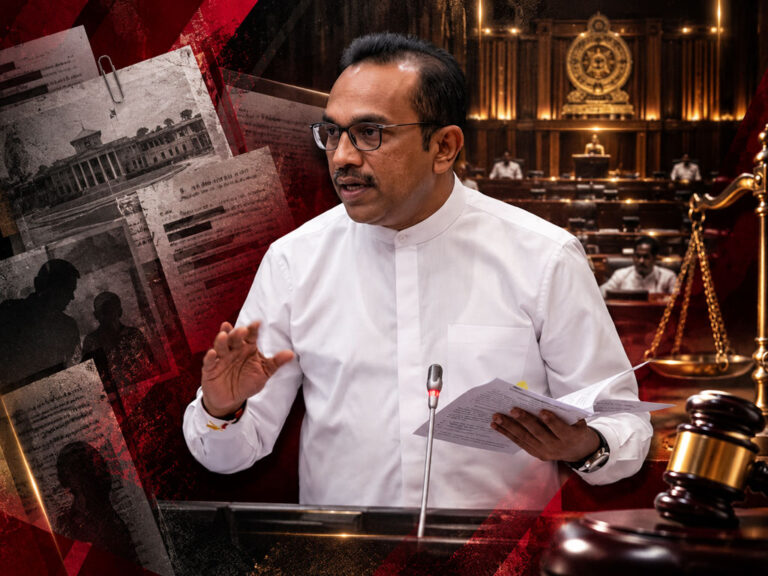
Yet the party and parliamentary group are effectively controlled by party secretary Tilvin Silva.
Unlike Maithri or Gotabaya, Anura is also the leader of the JVP and therefore naturally heads the parliamentary group.
But within the JVP’s organizational culture, real power traditionally lies not with the leader, but with the party secretary.
Unlike the UNP or SLPP, the JVP is a highly disciplined party.
Because of that, disagreements between President Anura and party secretary Tilvin have not openly surfaced.
Still, signs of differing views have emerged over the recruitment of opposition politicians into the government.
It was Anura who appointed opposition politician Eran to the Cricket Board.
Later, Wasantha Samarasinghe publicly invited opposition politicians to join the government.
Yet the JVP’s official Facebook page released a statement declaring that the government opposes crossovers and intends to introduce legislation against party defections.
The statement said:
“It is the policy of the Compass government not to absorb opposition MPs into the government. From the very beginning, we have maintained that a law must be introduced to prevent crossing over in Parliament. If a member changes sides, there must be provisions to cancel that MP’s parliamentary seat. This is the position of the Compass movement and is clearly stated in our policy framework.”
The statement was issued by the Media Unit of the Janatha Vimukthi Peramuna on 2025.05.18.
This is one indication that differences may exist between Anura and the JVP leadership regarding the inclusion of opposition politicians in the government.
“The two of us cannot rule the same kingdom…”
One wonders whether the song lyric once whispered by Maithri to Ranil, and later by Gotabaya to Mahinda, is now being quietly murmured by Anura to Tilvin as well.