IMF warns Sri Lanka growth may slow to 3% as Middle East tensions, fuel costs, tourism risks, and unmet criteria pressure reforms.
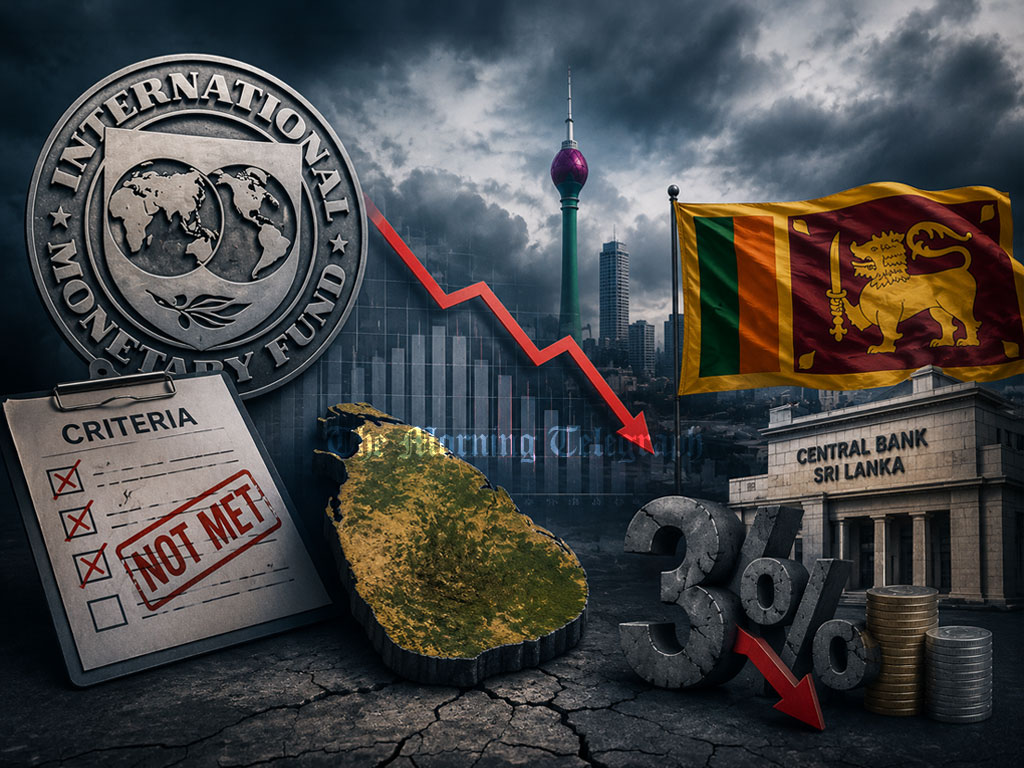
IMF has warned that Sri Lanka’s economic growth could slow to 3% this year as external shocks and unresolved reform conditions pressure the recovery.
The International Monetary Fund said Sri Lanka is strongly implementing the economic reform programme under the Extended Fund Facility, even under highly challenging conditions.
This was stated in the IMF’s latest report issued after the successful completion of the combined fifth and sixth reviews of Sri Lanka’s economic reform programme.

However, the report also warned that current global geopolitical conditions are negatively affecting Sri Lanka’s future economic path.
The IMF emphasized that the ongoing Middle East war situation presents serious risks and adverse effects for Sri Lanka’s future economic outlook and macroeconomic stability.
According to the Fund, the conflict could push global oil prices higher.
That could raise inflation and weaken Sri Lanka’s current account balance.
The report also warned that a decline in tourism revenue due to the Middle East crisis would further affect the economy.
The IMF noted that Sri Lanka has not fully met continuous criteria under its agreements relating to foreign payment deficit measures and import restrictions.
It said continuous criteria such as avoiding new external payment arrears and not further tightening import restrictions had not been properly observed.
The Fund said maintaining a flexible exchange rate system and phasing out balance of payments measures are crucial to strengthening foreign reserves.
In the report, the IMF forecast that Sri Lanka’s economic growth rate would slow to 3% this year because of external shocks and challenging conditions.
However, the Fund also said the tough economic reforms implemented in the past had increased the resilience of Sri Lanka’s economy.
It said this has created space for the government to provide relief to protect affected people.
In its latest staff report, the IMF emphasized that Sri Lanka should activate pricing formulas for electricity and fuel so that actual production and supply costs are immediately reflected.
The Fund said Sri Lanka has not yet succeeded, since January, in reaching the target of recovering the actual cost of generating one unit of electricity through consumer tariffs.
This is because electricity prices have not been revised upward in line with high production costs.
The report said even the 10.9% electricity tariff revision approved on March 31 did not fully cover increased fuel prices and changes in the energy mix.
Therefore, a new tariff revision proposal, calculated according to the existing formula, is expected to be submitted to the Public Utilities Commission in the third quarter.
That proposal is intended to recover financial losses incurred in the first quarter.
The IMF said the situation regarding fuel pricing is also serious.
Although global fuel prices have risen due to the Middle East regional crisis, Sri Lanka has operated since last April under a tariff system that does not cover the actual cost.
The report also noted that while the government is taking steps to compensate the Ceylon Petroleum Corporation for past losses, a Cabinet decision is expected to confirm that the current fuel subsidy is based only on a pre-estimated amount.
However, the IMF emphasized that the current fuel subsidy process will be completely terminated in September.
The Fund said a more transparent price control mechanism is needed to reduce price instability in the energy sector and protect the financial stability of electricity companies.
To support this, the IMF said its technical team will assist Sri Lanka in establishing clear electricity tariff criteria that cover actual costs.