Substandard drugs case exposes prosecution evidence gaps, chain of custody failures, and expert report flaws in High Court trial.
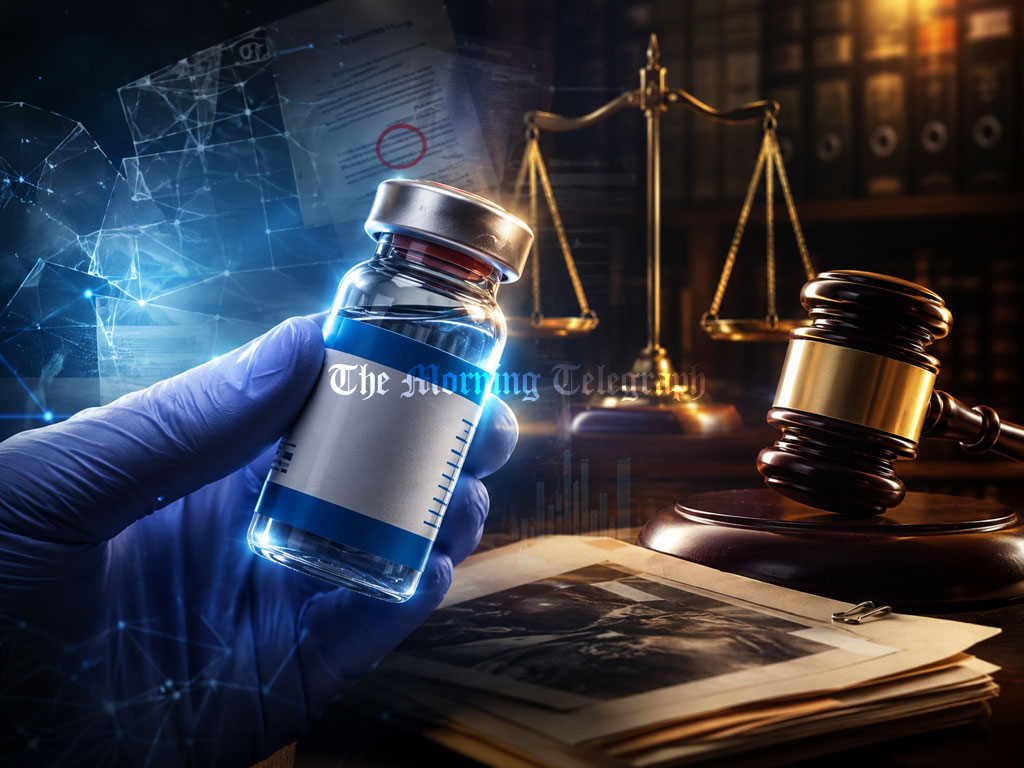
The substandard drugs case before the Colombo Permanent Three-Judge High Court has exposed serious weaknesses in the prosecution’s evidence filing process.
The case, heard on June 04, 2026, concerns the alleged purchase of substandard drugs and has become a turning point in Sri Lanka’s healthcare and legal systems.
The matter is being heard before a special High Court at major public expense because of the serious threat allegedly posed to public health.
However, on the fourth day of the trial, evidence given by Senior Assistant Government Analyst E.M.D.T.E. Udangamuwe, together with cross-examination by lawyer Priyantha Nawana, revealed several serious and surprising weaknesses in the prosecution’s case.
The day’s court record showed major concerns over how the investigation was conducted, how evidence was handled, and how expert material was submitted before court.

Expert Committee Preparation Questioned
When a court appoints an expert committee to investigate a crime or irregularity, the expectation is that the committee will conduct a thorough, independent, and technically sound inquiry.
However, answers given by witness E.M.D.T.E. Udangamuwe during cross-examination raised major questions about the preparation of the government analyst team before visiting the Medical Supplies Division.
The Medical Supplies Division is a key institution within the country’s health system.
Lawyer Priyantha Nawana asked the witness whether he had visited the Medical Supplies Division and whether he had studied the division before going there.
The witness answered: “No.”
The lawyer then asked whether the matter had been discussed as a committee before the visit.
Again, the witness replied: “No.”
Nawana then asked whether the witness knew who the Director of the Medical Supplies Unit was when he went there.
The witness again answered: “No.”
These responses raised a serious issue before court.
That a chief investigator in a case being maintained at great public expense could enter an investigation without even knowing the structure of the institution being examined, or who its heads were, is a major blow to the credibility of the prosecution’s evidence.
Court Duties Given To Outsiders
The most serious fact revealed during the evidence examination was that answers to important questions asked by the Maligakanda Magistrate had been provided by an external person.
Those questions, identified as questions 6, 7, 8, and 9, were reportedly answered by Nalaka Ranasinghe, a person connected to EWIS, who was not a member of the court-appointed committee.
Lawyer Priyantha Nawana asked whether answers to questions 6, 7, 8, and 9 in the fifth paragraph had been provided by Nalaka Ranasinghe.
He further questioned whether the witness could go beyond the Magistrate’s order and answer the Magistrate’s questions using information from someone who was not a committee member.
Witness E.M.D.T.E. Udangamuwe replied that he had compiled the report using the facts sent to him.
The lawyer then asked whether he admitted that a non-committee member had provided answers to questions 6, 7, 8, and 9.
The witness answered: “Yes.”
This admission created a serious problem for the prosecution.
A court-appointed committee including data from an external company official in its report, without that person being part of the committee, raises major questions about accuracy, impartiality, and legal responsibility.
If charges are filed based on such committee reports, the weakness can easily benefit the defence.
Chain Of Custody Concerns
In any criminal case, sealing case goods and maintaining the chain of custody are basic duties of the prosecution.
However, the testimony of E.M.D.T.E. Udangamuwe confirmed that this process had been seriously weakened when items, including a computer server, were obtained.
Lawyer Priyantha Nawana asked whether the computer obtained from custody had been sealed with the relevant institution’s seals.
The witness replied: “From there onwards, the police handled it.”
The lawyer then asked who sealed it when it was taken from the Medical Supplies Unit.
The witness answered: “We did not see. But when brought to us, the CID had sealed it.”
This raised further doubts over whether the physical integrity of the case goods had been properly protected from the beginning.
Additional issues, such as a printing error in a hard disk serial number, where 61060-442 appeared instead of 61060-0462, also raised questions about the specific identification of the case items.
In a criminal trial, an expert stating that “we did not see” and merely assuming that procedures were followed legally is an extremely weak position before court.
Prosecution Objection Overruled
Another notable moment occurred when lawyer Priyantha Nawana questioned the witness using reports prepared by Stores Control Officers of the Medical Supplies Division.
Deputy Solicitor General Lakmini Girihagama, appearing for the prosecution, attempted to object.
She stated that the prosecution objected because the witness, as an expert witness, did not currently have data regarding a report prepared by stores control officers during their ordinary duties.
However, the judge ruled that since the document had already been marked, the witness could testify according to his knowledge.
The court overruling an objection made by the prosecution on behalf of its own witness indicated that the relevant data and documents were important to the trial.
Further technical difficulties also arose when digital evidence contained in CD marked P. 297 was presented in court.
Due to this technical failure, the Deputy Solicitor General had to request that an alternative copy be secured.
This too reflected weaknesses in the prosecution’s preparation before presenting digital evidence.
The entire country expects the law to be properly enforced over the alleged substandard drug purchase scandal, which shook the national health system and involved billions of rupees in public tax money.
It is the responsibility of the prosecution to reveal the true culprits through a transparent, accurate, and legally sound process.
The government is spending a large amount of money to maintain a special three-judge High Court for this case.
Despite that, responsible institutions such as the CID and the Government Analyst’s Department appear to have seriously weakened the prosecution’s case by failing to follow proper chain of custody procedures, allowing court-assigned responsibilities to pass to external parties outside the committee, and entering an investigation without basic prior study.
The cross-examination conducted by lawyer Priyantha Nawana exposed these loopholes clearly.
The proceedings demonstrated that professional negligence by investigation officers can create serious openings for the defence.
This court day showed that justice cannot depend only on the seriousness of an allegation.
For justice to be properly served, the prosecution’s investigation process must be conducted with transparency, technical accuracy, and full responsibility.
Substandard Drugs Purchase Case: Trial before the Colombo Permanent Three-Judge High Court on 2026/06/04
When the case regarding the purchase of substandard drugs was taken up before the Colombo Permanent Three-Judge High Court, Lawyer Priyantha Nawana, appearing for the 10th accused, began cross-examining the government’s Senior Assistant Government Analyst, Mr. E.M.D.T.E. Udangamuwe, who appeared for the fourth day to give evidence.
Defence Lawyer’s Cross-Examination
Lawyer: Can you show me the questionnaire sent to you by the Maligakanda Magistrate? (Lawyer takes and examines the letter)
Lawyer: This is a request made to you personally as the Senior Assistant Government Analyst. How many years have you served?
Witness: Ten years.
Lawyer: When such a request is made, how is it considered and handled?
Witness: Depending on the type of analysis, it is sent to the relevant laboratory. The Government Analyst does not make a nomination.
Lawyer: When submitted to the Department Head, he nominates an officer with competence in the relevant subject, correct?
Witness: Yes, Your Honour.
Lawyer: Why did the Maligakanda Magistrate make this request directly to you? Who was the head at that time?
Witness: Mr. J.R.M. Jayasundara.
Lawyer: A senior officer who retired a year ago. Where were you in the hierarchy at that time?
Witness: I was in the seventh position at that time.
Lawyer: It takes about twenty-five years to reach the top position. Why was the questionnaire sent personally to you, who was 7th in the hierarchy in 2024 with only eight years of service?
Witness: Earlier, under an order by the Maligakanda Magistrate asking to nominate someone to an expert committee, Mr. Jayasundara had nominated me. That must be why it was sent to me personally. (Deputy Solicitor General Lakmini Girihagama objects to this question)
Lawyer: Was this committee appointed by the Magistrate?
Witness: By the Magistrate’s Court.
Lawyer: After that appointment, a request was made regarding nine matters. Among the facts you had to report, a report regarding data from the Medical Supplies Division of the Ministry of Health was requested, correct?
Witness: Yes, Your Honour.
Lawyer: You went to the Medical Supplies Division. Did you find out about that division before going?
Witness: No, Your Honour.
Lawyer: Did you discuss it as a committee before going there?
Witness: No, Your Honour.
Lawyer: When you went to the Medical Supplies Division on March 14, 2024, did the committee go with a basic understanding about this?
Witness: Yes.
Lawyer: Do you know that the head of the Health Department, to which the Medical Supplies Unit belongs, is the Director General of Health Services?
Witness: I knew. But I did not know his service capacity.
Lawyer: Did you know that a specific Director is in charge of the Medical Supplies Division?
Witness: I knew. But I did not know his position in the hierarchy, Your Honour.
Lawyer: Did you know that as of March 2024, there was an Acting Director in charge of the Medical Supplies Unit?
Witness: Although I knew there was a head of the institution, I did not know who he was beforehand. I later found out because I received a reply from the Acting Director to a letter I wrote.
Lawyer: Are you saying that even when preparing P.297, you did not know about the Acting Director of the Medical Supplies Unit?
Witness: My report is from March 14, 2024, Your Honour.
Lawyer: When you went, didn’t you know about the Director of the Medical Supplies Unit?
Witness: No, Your Honour.
Lawyer: Who did you contact when you went to the Medical Supplies Division?
Witness: On 2024/03/14, we informed the CID that we would go there as a committee. Accordingly, the CID had arranged the necessary facilities through the relevant institution heads by the time we went. Therefore, we did not meet anyone.
Lawyer: Did you know at that time that there were officers in charge of the computer division?
Witness: I knew there should be officers, Your Honour.
Lawyer: Did you discuss with them and look for information?
Witness: The committee members had been informed of who should be contacted at the Medical Supplies Division.
Lawyer: Did you meet the Assistant Director of the Information Technology division, Mr. Sandarapperuma?
Witness: He was present on March 14, 2024. Later he left.
Lawyer: Did you contact an officer named Mohamed Hijas?
Witness: Yes, Your Honour. They provided the information we needed.
Lawyer: Did you know that this Medical Supplies Division supplies medicine to 1159 hospitals island-wide?
Witness: Yes.
Lawyer: As a Government Analyst Officer, do you know the importance of maintaining health?
Witness: Yes, Your Honour.
Lawyer: Did you write the report responsibly?
Witness: Yes, Your Honour.
Lawyer: When you went there on March 14, 2024, did the committee decide that a backup server should be taken?
Witness: Yes, Your Honour.
Lawyer: Who took it?
Witness: It was handed over to the laboratory by the CID.
Lawyer: Is there a relevant document?
Witness: The memorandum has been handed over, Your Honour.
Lawyer: You say that in the original document, it is observed in the memorandum issued regarding the goods including the server from the Medical Supplies Division received by your department, marked M3 in P.297A, that the serial number was observed. There is no mention of its hard disk.
Witness: M3 refers to the hard disk. Initially, we noticed a different serial number was mentioned, so we have noted that. The document had the number as 61060-442. But it was observed that the serial number mentioned was 61060-0462. I learned that this was a printing error by comparing it with the serial number I had written in my notebook at the Medical Supplies Unit.
Lawyer: Who had sealed it?
Witness: By the Magistrate’s Court.
Lawyer: Who sealed it when taking it from the Medical Supplies Unit?
Witness: We did not see. But when brought to us, the CID had sealed it.
Lawyer: Whose seals are from the court?
Witness: Those from the Magistrate’s Court.
Lawyer: Did you compare the seals?
Witness: Yes, Your Honour. We observed that the court had sealed and given it.
Lawyer: So do you know if it was sealed when being taken from the Medical Supplies Unit to the Magistrate’s Court?
Witness: The CID may have followed some procedure.
Lawyer: It was decided on 03/14 to take the computer. Was the data backup and installation handed over to the CID on April 8?
Witness: We committee members handed it over.
Lawyer: How is it recorded in the Medical Supplies Division that you accepted it? Did you check? How was it secured?
Witness: We confirmed by row count.
Lawyer: Was it sealed to ensure it remained that way?
Witness: It was properly deactivated and disabled.
Judge: After that, could the computer data be accessed?
Witness: Impossible, Your Honour.
Lawyer: There must be contemporary records to say you did it properly.
Witness: We kept separate notes of what we did. The report was compiled based on that. The backup was started after informing that the computer would be taken as case goods. Those activities were completed by April 8. After my data was copied, it was deactivated taking special measures. Afterwards, it was given as case goods to the officers there. We did not see them sealing it. We assume it must have been done legally.
Lawyer: Were officers from the Medical Supplies Division present there?
Witness: Mr. Hijas and Mr. Sandarapperuma were present.
Lawyer: They are two people who work with computers. Did you obtain their signatures?
Witness: No.
Lawyer: They didn’t seal the computer taken from their custody with their seals either?
Witness: From there onwards, the police handled it.
Lawyer: You said you gave report 297A from the properties including the computer sealed and sent by the Magistrate’s Court. Was it revealed that before removing it from the Medical Supplies Unit, a sealing had been done in the presence of its officers?
Witness: I did not check there. We stepped aside after handing over to the police. When the case goods came to our laboratory, I saw that there was the official seal of the Magistrate’s Court and a police seal.
Lawyer: Do you admit that there was no seal from the Medical Research Division dated 4/17?
Witness: I admit, Your Honour.
Lawyer: In your report’s covering letter, you say ‘I am sending the report of the aforementioned four paragraphs along with this.’ Its members are Udangamuwe, Sandagiri, Amarajeewa, Anuja Jayasinghe. Who is the chairman?
Witness: Since the court had addressed it to me by name, I acted as the chairman. The committee members decided that I should chair as per the order. They had copies of the letter they received.
Lawyer: Where is the report mentioned in the fourth paragraph?
Witness: The report is attached there.
Lawyer: This report has taken assistance from unnamed EWIS people, correct?
Witness: I and Mr. Sandagiri prepared it as best we could by looking at court data. Mr. Sandagiri came for that work done at our laboratory.
Lawyer: There are five members. Only you and Sandagiri are named. The names of the others are not in paragraph 4.
Witness: The others also participated. But since the EWIS people sent a separate report, only my signature, Sandagiri’s, and Jayasinghe’s were placed.
Lawyer: The document called the report is three pages. Where was it connected?
Witness: From paragraph 6.
Lawyer: Only three out of five have signed.
Witness: Yes.
Lawyer: There is no official seal?
Witness: That is correct, Your Honour.
Lawyer: You should answer the Magistrate’s questions 6, 7, 8, 9.
Witness: When compiling this report, the answers to be given as a committee were discussed. When information was requested from EWIS, they submitted a report to the court, so they informed us that we did not need to sign our report again.
Lawyer: The answers to questions 6, 7, 8, 9 in the fifth paragraph were provided by someone named Nalaka Ranasinghe. Can you, going beyond the Magistrate’s order, answer the Magistrate’s questions from someone who is not a committee member?
Witness: I compiled the report including the facts they sent.
Lawyer: Do you admit that a non-committee member provided answers to questions 6, 7, 8, 9?
Witness: Yes, Your Honour. (The witness’s attention is directed to the Magistrate’s questionnaire)
Lawyer: Regarding 182 drugs, the national stock has been asked.
Witness: Yes.
Lawyer: The second question also asks about the national stock. National stock refers to the quantity available in 1159 centres across the country. The Medical Supplies Division is its hub. Did you look at the stock in that division?
Witness: Obtained as requested in the order.
Lawyer: Did you know that a certain quantity is maintained at the Medical Supplies Division compared to the island-wide stock? Did you see that quantity is relatively high?
Witness: We were interested in providing the data requested by the court.
Lawyer: It was asked whether the data could not be accessed.
Witness: It said ‘state reasons’ if not possible. Since it was possible, no reason was given.
Lawyer: Regarding 182 drugs, you said four did not have SR numbers.
Witness: Yes, it was revealed that SR numbers were not in the system for 00904302, 00903201, 00901401, and 00300602.
Lawyer: Did the list sent to you contain the names and numbers of the drugs?
Witness: Yes, Your Honour. (The witness’s attention is directed to documents up to 10V37 and 10V43. The prosecution objects)
Deputy Solicitor General: Your Honour, the prosecution objects because this witness, who is an expert witness, does not have data regarding a report prepared by stores control officers amidst their general duties at this time.
Judge: Since this document has been marked, the witness can testify according to his knowledge.
Lawyer: Look at 10V38. Does it include the SR number you mentioned under sub-number 365?
Witness: Yes, Your Honour. (It was asked whether the drugs not in the witness’s document were in the documents marked 10V38, 10V39, 10V40, 10V41 prepared by stores control officers, and the witness admitted that they were in those documents.)
Prosecution’s Questioning by Deputy Solicitor General Lakmini Girihagama
DSG: I draw your attention to documents 10V38, 10V40, 10V41. You were questioned about the SR numbers at the end of 10V38I.
Witness: Yes.
DSG: Do you admit that the drugs you could not find in 297A I are present there?
Witness: This is a document alien to me. I only answered regarding the SR numbers.
DSG: This is a hard copy. You created the report from the database. The court recognized that copies of data from P.229E 3 and 229E 4 had been requested. That is from September 1 to 30, 2022. Look at the date on 10V38.
Witness: Its date is June 19, 2022.
DSG: The date on document 10V39 is 22/6/17. 10V41 has no date.
Witness: Correct, Your Honour.
DSG: As of what date was 10V40 prepared?
Witness: July 23, 2022.
DSG: What is the date of the email message 10V42?
Witness: June 26, 2022.
DSG: All these dates are before the dates you were given to prepare a report, correct?
Witness: Yes, Your Honour.
DSG: The integrity of the case goods was questioned. Are these case goods physical or digital?
Witness: Your Honour, they are case goods containing digital data.
DSG: Can they be treated as physical ones?
Witness: Digital ones cannot be viewed as physical integrity.
DSG: At the time it was decided to obtain server data from an active Pronto system, how was the integrity of that data checked?
Witness: Since the data is taken to a hard disk, then to a backup, and from there to a forensic examination, to see if copies were made, we checked the row count on the original computer again and compared it with the row count on the backup.
Judge: Has there been any access from the Medical Research Unit up to the time of examination?
Witness: No, Your Honour. That would require a password and username. There must be an authorized password to view the data. No such thing has happened.
DSG: Can the backup of a live computer be confirmed by a row count?
Witness: Yes, Your Honour.
DSG: Explain the security of that database.
Witness: Even users only have permission to view the database. We observed that no changes, additions, or deletions could be made. Since our laboratory opened in 2016, case goods have been obtained and sealed along with investigating officers. They do not bring case goods from crime scenes. That is assigned to the police. They take custody and we tell them to send to us with a court order.
DSG: You requested access from the Medical Supplies Unit to access that data. After you received the password, did you check them?
Witness: The user data required to access this data system cannot be changed. After taking the computer from the Medical Supplies Division, we compared it with the row count before testing. Afterwards, tests were conducted for several days. Restarting was also required. At the final stage too, we confirmed by row count that the data was identical. That data remains unchanged to this day. (As there were some difficulties when the compact disc (P.297) relevant to this evidence was activated, the judge’s bench ordered that the copy currently at the Government Analyst’s Department be kept securely, following the DSG’s request.)
Calling a New Witness: Stores Control Officer
(In the afternoon, an officer from the Medical Supplies Division, Stores Control Officer Mr. Mahesh Nandana Bandara Herath Mudiyanselage, was called to testify. Testifying under the direction of Deputy Solicitor General Lakmini Girihagama, the witness stated the following:)
DSG: What is the Medical Supplies Division?
Witness: It is the institution that provides medicine, equipment, etc. needed for government hospitals. It has many sections. There are Stores Control, Shipping, Finance, Processing sections, as well as internal warehouses. Also, there is a shipping section maintained through the State Pharmaceuticals Corporation. I am a pharmacist who joined service in the Stores Control section in 2010. I currently serve as its Chief Stores Controller.
DSG: Is there a section for stock identification?
Witness: No, Your Honour.
DSG: Who else works there?
Witness: There are thirteen other stores control officers. My senior officers are the hierarchy of Assistant Director, Senior Assistant Director, Director, Deputy Director General, etc.
DSG: Do you receive direct orders from the Director General?
Witness: Yes.
DSG: What are the duties of a stores control officer?
Witness: Estimating forecasts, annual requirements, preparing annual orders, scheduling related to orders, etc. I also have to participate in various committees.
DSG: Are audit inquiries conducted?
Witness: Yes.
DSG: What is an annual estimate?
Witness: Preparing the estimate of drugs to be brought to meet hospital requirements.
DSG: If a committee at the Medical Supplies Division prepares a formula, to whom is it given?
Witness: Those are done under the Quality Control section.
DSG: What is the SR number related to drugs?
Witness: This eight-digit number exists for every drug treating various diseases. The first three digits indicate the disease category. For example, under 012 are malignant drugs. They are for cancer patients.
DSG: Who decides these?
Witness: The Formula Review section.
DSG: What are the remaining five digits?
Witness: The dosage form, strength, etc. are indicated by those digits.
DSG: By 2022, how many drugs had the Drug Review Committee identified as needed for hospitals?
Witness: 1346.
DSG: How many were under classification?
Witness: Life-saving: 14, Essential life-saving: 675, Non-essential: 657.
DSG: Who prepares the list for classification?
Witness: The Quality Control unit. They compile the data and submit it to the computer section for the estimation process.
DSG: Were these drug lists submitted to the Indian Credit Line Scheme?
Witness: Yes.