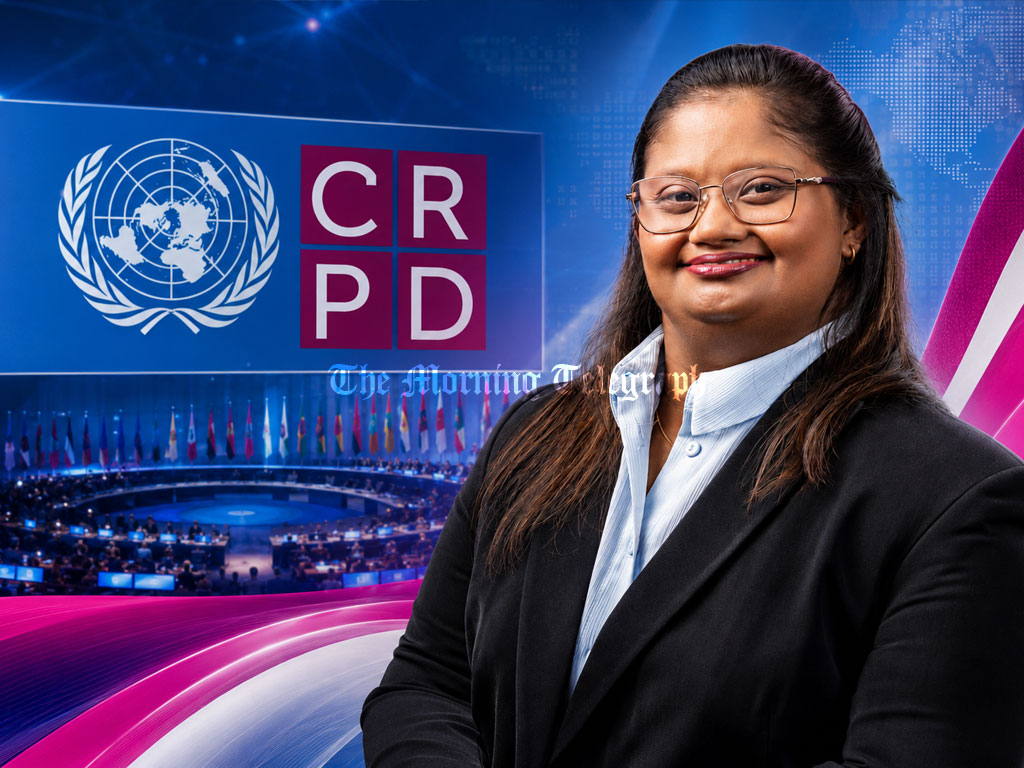
Nilshani de Silva will represent Sri Lanka at the UN CRPD conference, marking a proud moment for disability rights and inclusion.
Nilshani de Silva, one of Sri Lanka’s leading disability rights voices, has been invited to represent the country at a major United Nations conference in New York.
She has been selected to attend the 19th session of the Conference of States Parties to the Convention on the Rights of Persons with Disabilities, known as the CRPD, which will be held at the United Nations headquarters in the United States.

The conference is widely regarded as the world’s most important international forum on disability rights.
This year’s session will also coincide with the 20th anniversary of the CRPD convention.
A large number of world leaders, policymakers, and disability community representatives from across the globe are expected to take part in the event.
Nilshani de Silva has been appointed as Sri Lanka’s “Youth Delegate” for the international conference.
She has also received a special invitation to address the inaugural session of the conference on June 9.
At the opening session, she is scheduled to speak alongside the United Nations Secretary-General and other international leaders.
Born with Down Syndrome, Nilshani has become a respected activist known for challenging social stigma faced by persons with disabilities.
She has also worked strongly towards social inclusion and the meaningful integration of persons with disabilities into society.
Beyond activism, Nilshani is also recognized as a motivational speaker, teacher, and fashion designer, showing her abilities across several fields.
Sri Lanka signed the CRPD convention in 2007 and ratified it in 2016.
A special feature of this year’s session is that Sri Lanka is also serving as President of the 19th Conference of States Parties.
Nilshani’s representation has been described by critics and observers as a historic and proud moment for Sri Lanka and the country’s disability community.
Her participation also highlights the importance of including persons with disabilities in decision-making processes that directly affect their own lives and futures.