

A SriLankan Airlines Cabin Manager was removed from UL 503 to London after reportedly failing pre-departure breathalyzer checks, raising serious aviation safety concerns.
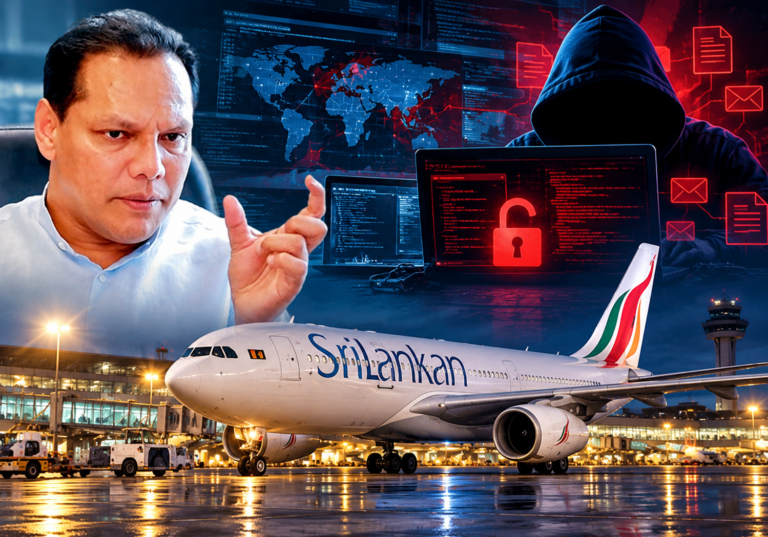
It was a dark and deeply embarrassing day for Sri Lanka’s aviation sector when SriLankan Airlines Inflight Services Cabin Manager Mahesh Ranasinghe was reportedly removed from operating UL 503 from Colombo to London on the 7th June 2026 after allegedly failing a pre-departure breathalyzer test yesterday.
The incident, now sending shockwaves through airline circles, comes at a time when SriLankan Airlines, despite years of financial losses and its heavy burden on the public treasury, has continued to maintain a strong reputation for operational safety. The national carrier has long claimed an unblemished safety record, and frequent breathalyzer testing, especially over weekends, has formed part of its internal safety culture.
News of the incident reached The Morning Telegraph almost immediately after it occurred, prompting verification checks with airline sources. According to information received, Cabin Manager Ranasinghe had allegedly failed both an initial breathalyzer test and a secondary test before being referred to the airline’s medical team for a further blood test.

Pulled From UL 503 Before Departure
Ranasinghe was scheduled to operate UL 503, SriLankan Airlines’ Colombo to London service. However, following the reported breathalyzer results, he was removed from the flight before departure.
The matter is understood to have been escalated by SriLankan Airlines Head of Flight Operations Capt. Chaminda De Soyza to the Civil Aviation Authority of Sri Lanka, which is expected to conduct its own separate inquiry into the incident.
The seriousness of the matter cannot be understated.
In aviation, alcohol-related violations involving operating crew are treated with zero tolerance because they directly involve passenger safety, crew responsibility, emergency readiness, and the integrity of the airline’s safety management system.
Flight Operated Without Cabin Manager
What happened next has raised another serious operational question.
According to reports, the Cabin Crew Rostering Department was unable to find a replacement Cabin Manager for the London-bound flight. As a result, the aircraft reportedly departed without a designated Cabin Manager, with the senior-most Cabin Supervisor on board, Chamath Jayatilleke, operating the flight in that role.
Thirty-Year Veteran and Union Figure
Cabin Manager Mahesh Ranasinghe is understood to have served SriLankan Airlines for over 30 years.
He is also known as a prominent member of the airline’s Flight Attendant Union, having served on multiple committees over the years.
That background makes the incident even more sensitive. This was not a junior crew member unfamiliar with aviation rules. This was a long-serving cabin crew professional who would have been fully aware of the consequences of alcohol-related breaches before operating a commercial flight.
At this stage, however, it must be stressed that the matter remains subject to internal and regulatory processes, including the reported medical follow-up and any inquiry by CAASL.
Why This Is a Major Safety Issue
For both pilots and cabin crew, alcohol-related breaches before flight duty are treated as among the most serious violations in aviation.
The consequences can include suspension, termination of employment, regulatory action, licence-related consequences where applicable, and possible legal implications depending on the findings and applicable law.
The reason is simple.
Cabin crew are not merely service staff. They are safety personnel. In an emergency, they are responsible for evacuation, passenger control, fire response, first aid, safety commands, and survival procedures.
Any impairment before flight duty is therefore not a private matter. It becomes a public safety concern.
A Reputation SriLankan Cannot Afford to Damage
SriLankan Airlines has had no shortage of financial controversy, political interference, management disputes, and public criticism over losses.
But one area it has repeatedly protected is its safety reputation.
That is why this reported incident matters so much.
A national carrier may survive financial turbulence. It may survive political storms. It may even survive years of losses. But it cannot afford to compromise confidence in its safety culture.
If a crew member reportedly failed pre-departure alcohol checks before a long-haul flight to London, the public has a right to know that every step was handled strictly, transparently, and according to aviation law and airline procedure.
Aviation Safety Leaves No Room for Compromise
The reported removal of Cabin Manager Mahesh Ranasinghe from UL 503 is not merely an internal disciplinary matter.
It is a test of SriLankan Airlines’ safety discipline.
It is a test of CAASL’s regulatory oversight.
It is a test of whether rules apply equally to all crew members, regardless of seniority, union influence, or years of service.
If the allegations are confirmed, the airline must act firmly. If there is an explanation, it must be established through proper inquiry.
But one thing is clear: in aviation, there is no room for alcohol, ambiguity, or compromise before takeoff.
Is it really necessary disclose identity (Name/picture) of the individual in question?
Considering the risk to passengers and compromising the safety record of the national carrier, better to expose the offender than protect him. Being a 30 year veteran, person responsible shouldn’t have the audacity to commit such an offense. Might be a long standing issue also.
I too believe that the disclosure of personal details in any disciplinary inquiry in any profession is in very bad taste!
Yes. Fake news across the globe. Not a good example for the rest of the staff. No excuse.
I think it is a plus for the airline that procedures are followed to ensure safety. Incidents like this happen in many organisations and it is to the credit of Sri Lankan Airways that they pre-empted a bad situation to arise.