Global war risks from Ukraine and the Middle East could shake oil prices, fuel costs, supply chains, and fragile economies like Sri Lanka.
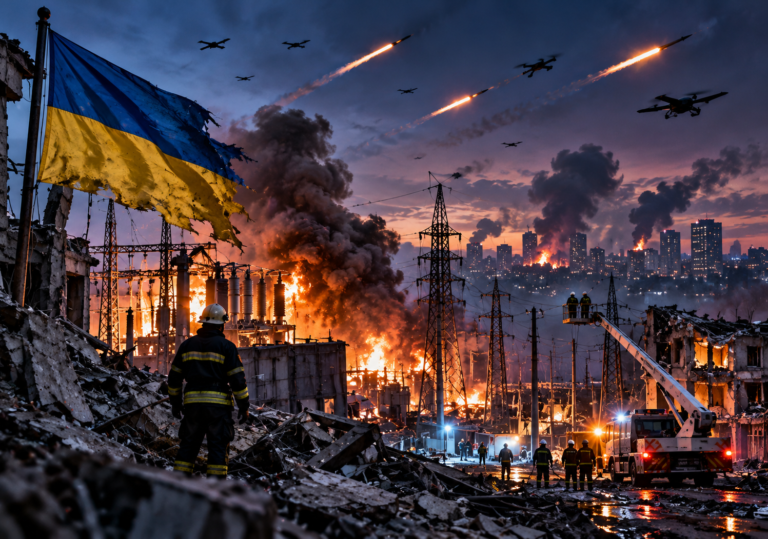
Global war risks are no longer distant warnings, as new fires in the Middle East and collapsing Ukrainian defences signal a dangerous turning point for the world.
Although an ordinary observer may still believe the world is moving peacefully, beneath that surface calm the global geopolitical order has entered a frightening new phase.
Anyone studying the present international political stage closely will see one clear truth: we are living through the early moments of a perfect mega-storm, where several major crises are exploding at the same time.
Even if people in Sri Lanka do not see these events directly, the country must carefully examine how this massive global political upheaval will affect daily life, economic survival, and the future of the world.
History shows that before the First and Second World Wars began, the world was also covered by a similar sense of false calm.

For a long period, mainstream Western media networks attempted to spread one dominant narrative across the world. That narrative claimed the Ukrainian military had fully stopped the Russian advance and that Russia was suffering massive battlefield losses.
However, when actual battlefield data and reports from independent international analysts are examined, it becomes clear that many of those claims are deeply misleading and amount to little more than propaganda points.
The true situation on the ground is that the Ukrainian military is facing a daily deterioration that has now reached an extremely serious and dangerous stage.
The clearest example of this is the failed attempt by the Ukrainian side to open a secret negotiation channel with Russian President Vladimir Putin. For that purpose, they selected Russian billionaire Roman Abramovich, who is known to have close ties with Ukraine, as an intermediary.
This secret negotiation proposal, made under the direct guidance of Ukrainian President Volodymyr Zelensky, was rejected without hesitation by the Russian President because he understands that the battlefield advantage is currently with Russia. Putin later delivered a harsh and decisive response at the St. Petersburg International Economic Forum to a strongly worded post made by Zelensky on the social media platform X.
The collapse of these secret diplomatic efforts shows that the Ukrainian leadership internally understands that its ability to continue holding the battlefield is limited.
Ukraine is now pushing hard to get its Western allies to apply different forms of pressure on Russia to accept an unconditional ceasefire. But Russia has made it clear that it has no interest in such ceasefire negotiations until all its basic war aims are achieved.
This situation resembles the helpless condition faced by Germany in the latter half of World War II in 1945, when the side losing power began pleading for peace.
At the early stages of Russia’s invasion of Ukraine, Western countries strongly believed that the sweeping economic sanctions they imposed would completely cripple the Russian economy. They believed those measures would destroy Russia’s financial ability to continue the war.
In particular, they saw the severe sanctions imposed on Russia’s oil and natural gas industries as a magic bullet capable of bringing Russia to its knees within days.
But Western powers forgot that throughout history, Russia has often become stronger under external pressure. The same Russian spirit that stood firm against the invasions of Napoleon and Hitler appears to be active again on the economic battlefield.
Today, economic data makes it clear that the calculations on which the West depended have gone wrong. Instead of collapsing, the Russian economy has successfully discovered new markets across Asia and Africa.
The statistics revealed by President Putin at the St. Petersburg Economic Forum clearly demonstrate this shift. Around ten or fifteen years ago, 50% of Russia’s central government budget was covered by income from the oil and gas industry.
Today, however, the Russian economy has diversified to such an extent that oil income contributes only 22% to the total government budget. The remaining 78% of this large-scale income now comes from other developing domestic production and service sectors.
It is also no secret that the oil sanctions imposed by Western countries are gradually being relaxed. In particular, the new war situation emerging in the Middle East has created a major risk of a sharp increase in global oil prices.
Because of this, the US government has repeatedly extended the limits and special permits given to countries such as India and China to buy Russian oil. International financial reports also indicate that even countries such as Britain and other European nations have begun secretly buying Russian oil products through third-party and intermediary countries.
As a result, Russia, which had a budget deficit at the beginning of the year, is now moving toward a budget surplus because of the current rise in oil prices. The economic strangulation Ukraine hoped for has not weakened Russia, while the Western sanctions wall is collapsing from every side.
World attention is now focused on the latest studies of two leading international political and military analysts who assess the battlefield situation through numbers and statistics.
The first is Warwick Powell. Through his papers, he argues that the human manpower and material military losses currently facing the Ukrainian military have reached an unbearable level.
According to his specific calculations, there is a major risk of a complete internal collapse of the Ukrainian military structure between the coming months of July and September.
The other well-known analyst is Peter Turchin. He says the balance of power and resources between the Russian and Ukrainian militaries has now tilted heavily in Russia’s favour. Using scientific data, he argues that it is practically impossible for Ukraine to continue resisting in this manner.
Although he does not identify the exact months of collapse in the same way Warwick Powell does, he firmly states that this large-scale war has now entered its final phase.
They warn that this situation could create severe social and political turmoil inside Ukraine, similar to the sudden collapse of the German front at the end of World War I in 1918.
Recently, a strange and revealing debate emerged within Ukrainian military and political circles. It concerned the frightening propaganda claim that Russia was preparing to use nuclear weapons to break the war front.
Defence experts, however, say Russia has no need to use nuclear weapons because the battlefield situation is already moving in its favour. So the question remains: why is Ukraine raising nuclear fears before the world?
In truth, Ukraine is using the language of nuclear weapons because of the fear and alarm surrounding Russia’s newest supersonic ballistic missile system, the Oreshnik missile.
As Russian President Putin stated some time ago, when several Oreshnik missiles are launched simultaneously, the destructive energy and impact force released are equal to the power of a conventional nuclear bomb.
However, there is no radioactive effect. This is a highly advanced weapon that operates purely through kinetic energy and advanced conventional explosive technology.
No existing Western air defence system in the world, including the American Patriot missile system, has the technical ability to intercept or destroy an Oreshnik missile in the air. Because of its speed, which is more than ten times the speed of sound, and its ability to change trajectory instantly, its arrival at the target is almost certain.
At first, Ukraine and Western media claimed that the Oreshnik missiles did not cause major damage. But French President Emmanuel Macron was reportedly so shocked by the destruction he personally witnessed from an Oreshnik attack on the Lviv region of Ukraine that he publicly stated Western countries must immediately develop a similar weapon.
Recently, Russia launched an Oreshnik missile attack on a massive Ukrainian defence fortress complex in the Donetsk region, completely crushing underground bunkers and concrete walls several metres thick.
The Ukrainian leadership, after witnessing this level of destruction, is deeply bewildered. It knows very well that if Russia begins using these missiles regularly to destroy defensive structures along the front, Ukraine will have no effective answer.
Faced with the immense technological and military power of Russian forces, Ukraine has now begun massive civil projects to build emergency defensive walls and trenches around its major cities.
In particular, video footage has leaked to international media showing frantic construction of massive defensive rings and anti-tank concrete blocks known as “Dragon’s Teeth” around Odesa, Ukraine’s main port city.
This clearly shows that Ukraine deeply fears Russia’s next major ground offensive will target Odesa. If Ukraine loses this port city, it will become a landlocked country.
Similar defensive walls are also being rapidly built around the capital, Kyiv, and areas such as Volyn in western Ukraine. But the question remains: how long can these concrete walls withstand Oreshnik missiles and Russia’s massive FAB-3000 destructive aerial bombs?
According to the latest battlefield information, Russian forces are advancing quickly on four main fronts. Many military analysts describe this as the unstoppable Russian bulldozer. It recalls the terrifying speed with which the Red Army advanced toward Berlin during World War II.
This limitless pursuit of power and its terrible consequences are similar to the great poem “Faust” by the German master Goethe. In it, the magician Faust makes a pact with the devil Mephistopheles to gain unlimited knowledge and ultimate power in the world.
Faust declares, “Give me all the power and pleasure on this earth. In return, I am ready to sign over my soul to you!”
The devil then replies, “When the time comes, I will ask for my share. Until then, I will give you great power that no man on earth can stop. But remember, no one can control the devil’s power.”
The Western powers, by continuously provoking war and expanding NATO close to Russia’s borders, were also chasing such limitless global power.
But in the end, Russia has awakened the devil called Oreshnik, and now that destructive power threatens to consume Europe. Meanwhile, the other terrifying side of the global storm has emerged in the Middle East.
Israeli Prime Minister Benjamin Netanyahu directly rejected all US requests and pressure to immediately halt severe military operations against Hezbollah in Lebanon, showing that even the commands of world powers are no longer decisive.
Realising that Western countries were buying time for Israel to gather further war strength under the cover of ceasefire negotiations, Iran launched a massive series of ballistic missile attacks on Israel within the last 24 hours.
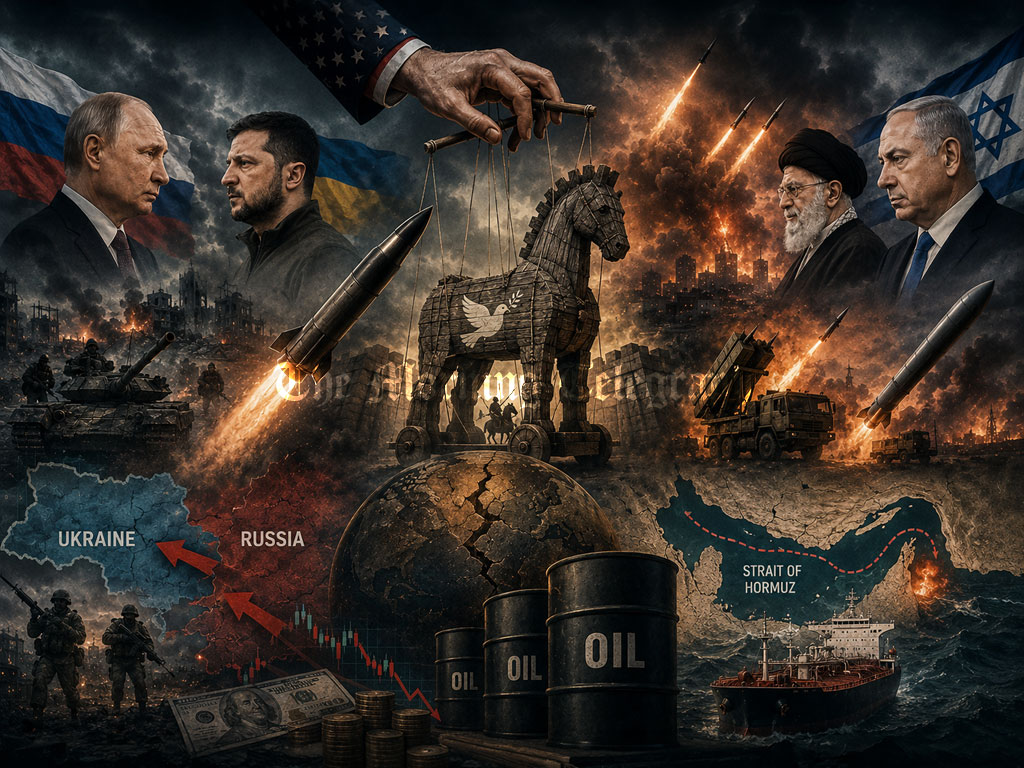
All efforts by Western countries to provide Israel with protection under the guise of ceasefire negotiations have now completely failed. This international deception recalls the famous story of the Trojan Horse in Homer’s epic Iliad.
After years of fighting, when the Greeks could not conquer the city of Troy, they pretended to retreat and left behind a giant wooden horse as a symbol of peace near the city gates.
The Trojans, believing it was a victory gift, brought it into the city. But the Trojan priest Laocoon cried out, “My people, the enemy never gives gifts! Do not trust this wooden horse. Behind it hides great destruction!”
Behind the Trojan Horse of peace talks and diplomatic solutions brought to the Middle East by Western countries was a malicious strategy to give Israel time to prepare for a regional war.
Iran has now fully understood that Western deception and smashed the wooden horse to pieces. The real fire of war emerging from it is turning the entire global energy market to ash. This conflict is not only religious or regional. It is a great struggle to control oil, the heart of the world economy.
Although specific details about the damage caused to Israel by this missile attack remain hidden due to the country’s military censorship, it is certain that Israel is preparing to retaliate very harshly.
The situation this time is completely different from 2024 and 2025. This time, Iran has launched the attack first, and the Israeli government is under internal political pressure. The risk of direct US military intervention in this conflict is also 100%.
This would shatter the security of the Persian Gulf overnight and threaten the complete closure of the Strait of Hormuz, the world’s most important and sensitive oil transport route. According to international magazine reports, heads of global oil companies have strongly warned the US government that disruption of oil supply through the Strait of Hormuz is pushing the world’s emergency oil reserves to extremely dangerous levels.
Within the coming weeks, crude oil prices in the world market are set to rise to unbearable levels. This could trigger a global economic collapse even more serious than the world oil crisis of 1973.
How will the global economic crisis, created by the connected factors of collapsing Ukrainian defensive walls, retreating Western powers, Russian economic stability, and oil supply disruption in the Middle East, affect economically vulnerable countries such as Sri Lanka?
Although the real events unfolding across the world may not be directly visible to us in Sri Lanka, the route of an oil tanker through the Strait of Hormuz and the hypersonic speed of an Oreshnik missile striking an underground bunker on the Ukrainian front could decide the prices of goods, fuel queues, and the future of entire lives in our country tomorrow. We do not live on an isolated island, but inside an interconnected global network.