By Dwayne Ferreira.
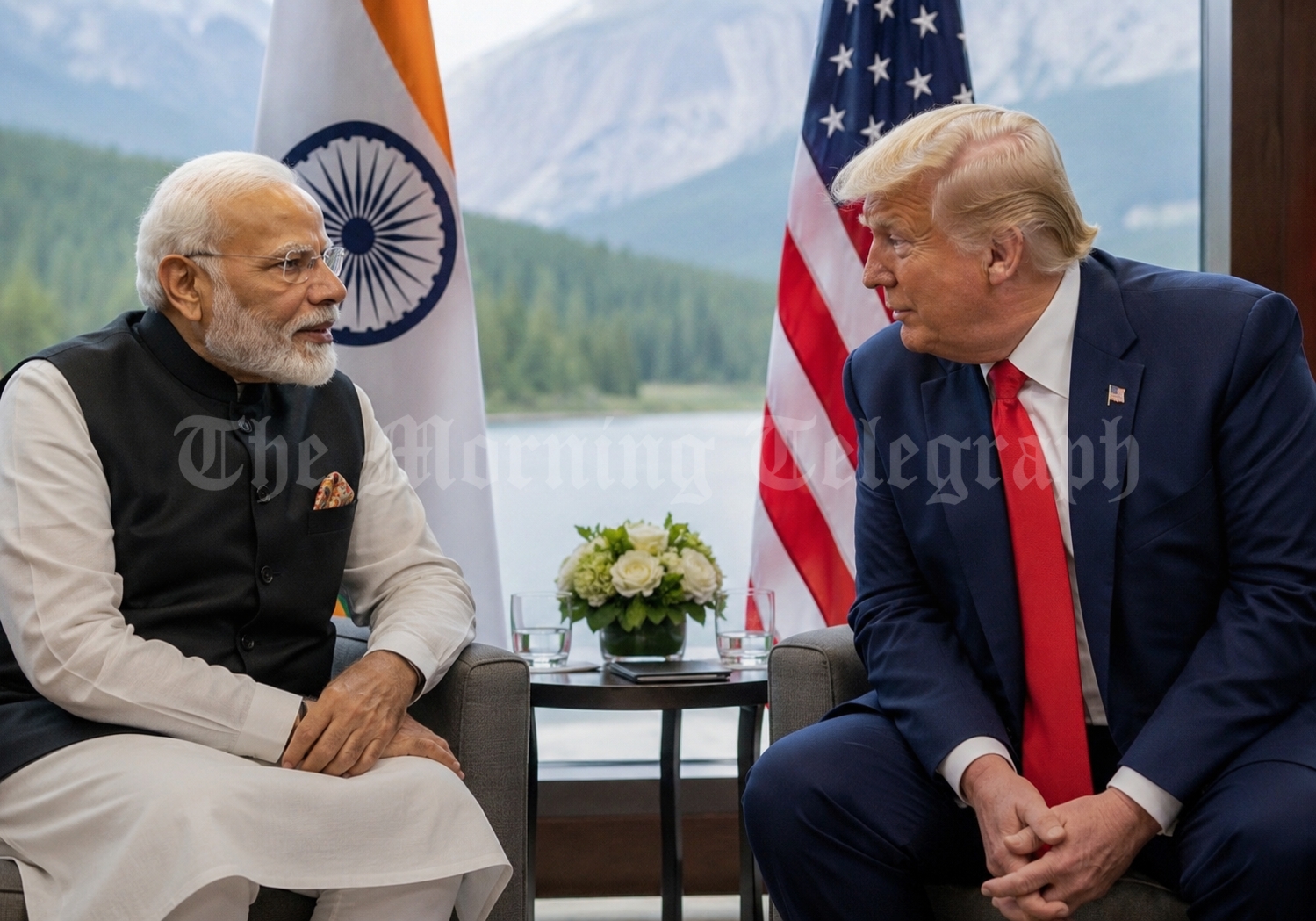
US President Donald Trump and Indian Prime Minister Narendra Modi used a bilateral meeting on the sidelines of the G7 summit to underline closer US-India ties, with trade, regional security, maritime safety and the Iran deal dominating the exchange.
The meeting came at a time of intense global concern over West Asia, the Strait of Hormuz, energy security, the war in Ukraine and the wider direction of US foreign policy under Trump.
For India, the talks placed renewed attention on freedom of navigation and the safety of Indian seafarers. For the United States, the meeting offered Trump an opportunity to present Modi as a close strategic partner while promoting his approach to the Iran agreement.
Trump Praises Modi As A Long-Time Partner
Trump opened the exchange by praising Modi and describing him as a long-time friend. He said the Indian prime minister had been investing heavily in the United States and that the relationship between the two leaders remained strong.
“We have always had a great relationship,” Trump said, adding that it was “great to be” with Modi again.
Modi described the meeting as an important continuation of discussions held in Washington last year. He said both countries had given “new speed and new energy” to their relationship and were working together across several areas.
The Indian prime minister said teams from both sides had stayed in close coordination and were working toward the targets set during their earlier engagement.
US-India Ties Focus On Iran Deal And Maritime Security
A major part of Modi’s remarks focused on West Asia and US-led efforts surrounding the Iran deal. Modi praised Trump’s leadership and said renewed hope had emerged for peace and stability in the region.
“Thanks to your efforts, Mr President, new hope for peace and stability in the region has been rekindled,” Modi said, adding that he was confident the process could support long-term peace.
Modi placed particular emphasis on the Strait of Hormuz, one of the world’s most important maritime routes for oil, gas and commercial shipping. He said both leaders agreed that keeping the strait open was vital for the global economy.
India, he said, had consistently stressed the importance of freedom of navigation and wanted both countries to give special attention to the issue.
The safety of Indian seafarers also emerged as a key concern. Modi noted that hundreds of thousands of Indian seafarers work across global maritime trade routes, including in the Strait of Hormuz, and said their safety was a priority for India.
He expressed confidence that seafarer safety would receive priority during the implementation of the Iran agreement.
Trump Says Ukraine War Remains Difficult To Resolve
Trump later faced several questions from reporters, including whether momentum from the Iran deal could be carried into efforts to end the war in Ukraine.
He said he had spoken with both Ukrainian President Volodymyr Zelenskyy and Russian President Vladimir Putin and wanted the war to end.
Trump claimed he had already ended several wars and said he initially expected the Ukraine conflict to be easier to resolve. However, he said personal and political hostility between the two sides had made the issue far more difficult.
Asked whether the United States would allow Ukraine to build or manufacture American missiles, Trump said Ukraine had raised the matter and that his administration would “take a look at it.”
Trade Deal And Defence Cooperation Discussed
On trade, Trump said the United States and India were “very close” to reaching a deal. He also praised Modi as one of the toughest negotiators he had dealt with.
In his usual style, Trump mixed praise with humour, calling Modi “beautiful looking” and “like an angel,” before describing him as “tough” and a “killer” at the negotiating table.
“He loves the Indian people, but he also loves the USA,” Trump said, recalling the “Howdy Modi” event in Houston and his earlier visit to India.
Trump said he expected to visit India again in the future and praised the reception he received during his previous trip. He also said India would continue to play a major role in global affairs as long as Modi remained its leader.
Asked about concerns in India over some recent US decisions, Trump insisted that India had a “great friend” in the White House as long as he was president. He said officials around him had “tremendous respect” for Modi and for India.
The defence relationship between India and the United States was also raised. Trump described the partnership as strong and said that if India were attacked under Modi’s leadership, the United States would be there to help.
“If anybody attacks that man, we’re going to be there,” Trump said, while adding jokingly that he was not sure whether the same would apply under a different Indian leader.
Iran Agreement Remains Central To Talks
The Iran deal remained one of the central issues during the exchange. Trump said oil prices were falling and suggested that the agreement would prevent Tehran from acquiring a nuclear weapon.
He sharply criticised the Obama-era nuclear agreement, calling it a “road to a nuclear weapon,” while describing his own approach as a “wall” against Iran obtaining nuclear capability.
Trump said the Iran agreement was still being finalised. He described it as a detailed memorandum of understanding that could lead to a more formal contract.
He also said Iran wanted to return to normal life after being hit hard militarily and economically.
The discussion also touched on Israel. Trump said he wanted Israel to be able to protect itself, but also wanted it to use “good judgment.”
Skilled Workers And Energy Cooperation Also Raised
On skilled Indian professionals working in the United States, Trump said Indian talent had long played an important role in the US employment landscape. He said opportunities would continue under his presidency.
Energy cooperation was another area of discussion. Asked about India buying more energy from the United States as it diversifies its energy sources, Trump said India could do “anything they want” with the US.
He described the relationship between the two countries as extremely close and said the bond began with the personal relationship between the two leaders.
“We cannot be closer than we are,” Trump said.
The meeting showed how US-India ties are increasingly shaped by issues beyond bilateral trade. Maritime security, energy flows, global shipping, the Iran deal, Ukraine, China, defence cooperation and high-skilled migration all featured in the exchange.
For India, the key message was the protection of its seafarers and the preservation of freedom of navigation in one of the world’s most sensitive maritime corridors.
For the United States, the meeting allowed Trump to frame Modi as a close partner while presenting the Iran deal as part of a wider foreign policy push.
The tone between the two leaders was warm, but the subjects they addressed reflected the pressure points of a changing global order.
#USIndiaTies #TrumpModi #G7Summit #IranDeal #StraitOfHormuz #IndianSeafarers #USIndiaTrade #UkraineWar #DefenceCooperation #EnergySecurity #WestAsia #TheMorningTelegraph