By Roy Denish
As pollution spreads across beaches, roads, and public spaces, critics are questioning whether Sri Lanka’s clean-up campaigns are delivering results or simply generating headlines.
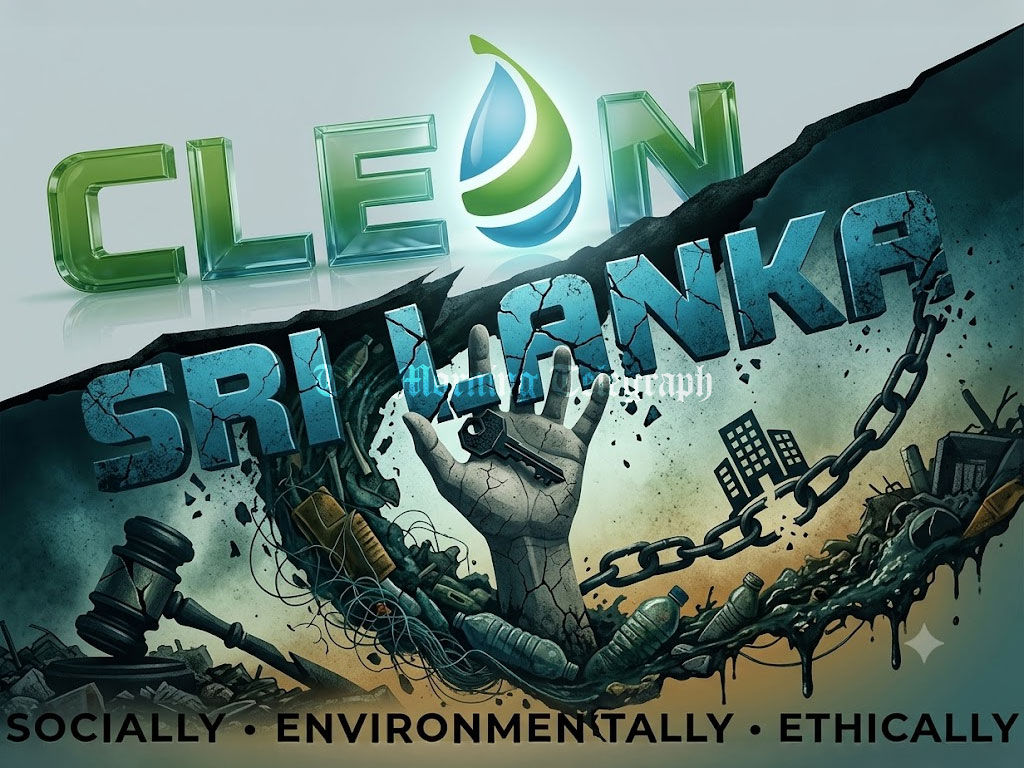
It is a painful truth that loving a country does not require you to be an environmentalist; it simply requires you to look around with open eyes and a clear conscience. Today, we look at Sri Lanka and find a nation buried under the weight of its own hypocrisy. The grand state-funded Clean Sri Lanka initiative has proven to be nothing more than an expensive exercise in public relations, a textbook definition of the old adage that an empty vessel makes the greatest noise. While vast amounts of public funds are poured into this bottomless pit, the officials holding top positions in these state-funded projects do little more than idle in their swivel chairs, cooling off their butts in air-conditioned comfort without attempting to solve the actual environmental crisis.

Simultaneously, the tourism authorities make a loud hullabaloo in the media, bragging endlessly about surging tourist arrivals. Yet, they fail to ask what kind of image we are actually presenting to these visitors. Tourists come seeking Paradise Island, but they are met with a reality that leaves them aghast. The bitter truth is that many Sri Lankans give two hoots about the environment, showing zero respect for the local rule of law. When a school child can walk aimlessly down the street strewing toffee wrappers on the pavement without a second thought, it is a sign that the rot has settled deep within our social fabric.
Therefore, a fierce and urgent appeal must be made to the government to completely overhaul our approach to environmental law enforcement. We must immediately impose hefty fines and long jail sentences for those who abuse our public spaces. This discipline must begin on our most visible arteries and landmarks. Look at the iconic Galle Road, or the Galle Face Green, which tragically is no longer green at all, but rather a barren patch of neglected dust and plastic waste. Look at our southern coastlines and the Colombo South beaches, which should be pristine national treasures but are instead treated as open dumping grounds. The time for gentle awareness campaigns is over; the state must wield the gavel of strict punishment to restore order and civic discipline.
Furthermore, this crisis cannot be solved while our massive corporate conglomerates behave like vultures, stuffing immense profits deep into their pockets while turning a blind eye to the plastic and pollution their industries generate. The corporate sector must be compelled to act, and the government must incentivize this shift. We need a system that offers substantial tax breaks to those companies actively funding and executing solutions to environmental issues, turning corporate responsibility from a hollow marketing slogan into a financial and ethical necessity.
Finally, we must direct a critical attack toward the bureaucrats who are paid to protect our natural assets. The high-ranking officials of the Coast Conservation Department need to get out of their comfortable offices, take a hike, and actually walk down the beaches they are tasked with managing. If they stepped away from their desks and witnessed the filth piling up along our shores, they might finally understand the depth of their failure. Sri Lanka cannot survive on media bragging and empty slogans; it requires iron-fisted enforcement, corporate accountability, and a bureaucracy that actually works for the soil it stands on.