By Roy Denish
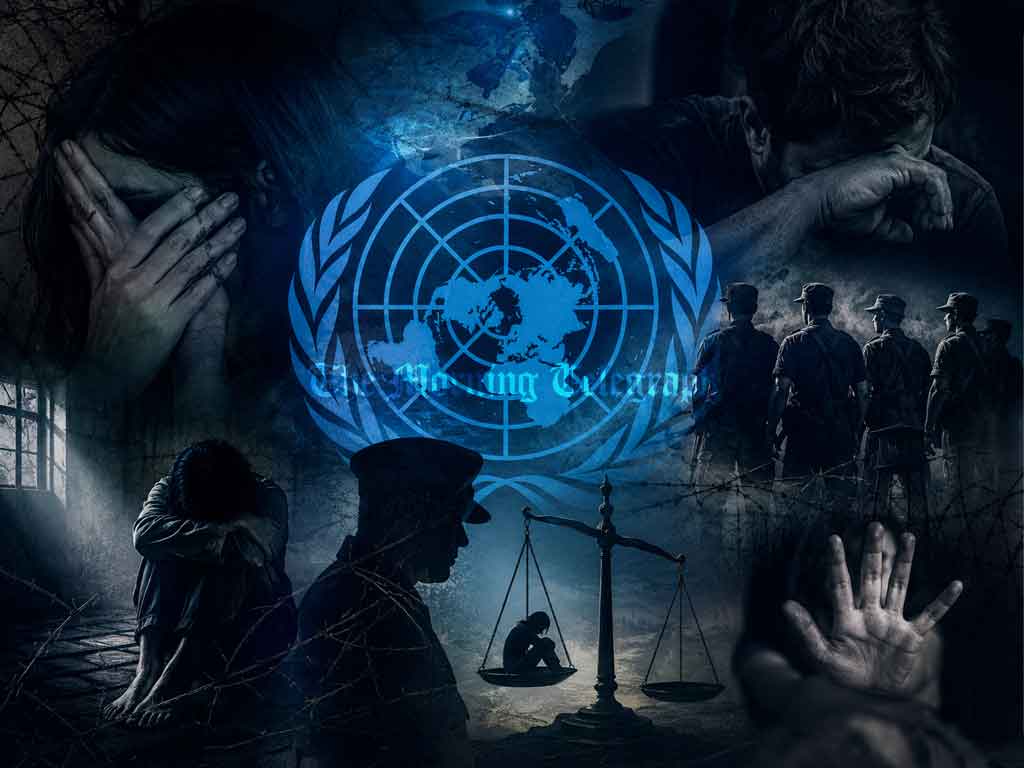
GENEVA — A new UN report alleges decades of conflict-related sexual violence in Sri Lanka, renewing calls for accountability, survivor justice, and institutional reform.
A United Nations report released this year concludes that conflict-related sexual violence in Sri Lanka was widespread, systematic, and institutionally enabled, pointing to a legacy of impunity that spans decades.
The thematic brief, titled “We Lost Everything – Even Hope for Justice,” was issued on January 13, 2026, by the Office of the High Commissioner for Human Rights. It draws on more than a decade of monitoring, evidence preservation, and interviews with survivors to outline how state security forces used sexual violence as a deliberate strategy to extract information, assert dominance, and instill fear.

The report highlights that these violations primarily targeted Tamil civilians during the 26-year civil war that ended in 2009. However, investigators noted that the patterns of abuse extend far beyond the war with the Liberation Tigers of Tamil Eelam.
According to the findings, the institutional playbook for these violations was established during counter-insurgency operations against the Janatha Vimukthi Peramuna (JVP) during the armed uprisings of 1971 and the late 1980s. The report notes that tactics refined during the state’s response to the JVP insurrections created an enduring framework of abuse that later expanded during the civil war and has persisted into the post-conflict era, with cases documented as recently as 2024.
Tracking precise numbers remains difficult due to intense social stigma, fear of retaliation, and pervasive surveillance of victims by local security forces. However, the brief contextualizes the scale of the crisis by referencing historical data, including a 2013 military study that mapped 445 documented incidents of sexual violence involving on-duty army personnel within a single tracking period in heavily militarized zones.
The UN findings also detail a high prevalence of sexual violence against men and boys in detention centers. The report notes that male and LGBTQ+ survivors face additional layers of invisibility because domestic Sri Lankan law does not formally recognize the rape of men.
Amnesty International and Human Rights Watch have backed the UN findings, noting that the documented abuses may amount to war crimes and crimes against humanity. The UN has called on the Sri Lankan government to formally apologize to survivors, eliminate the 20-year statute of limitations on sexual violence cases, and establish an independent prosecutor’s office.