By Dwayne Ferreira.
Sri Lanka El Niño risks could bring sharper drought and rainfall extremes, threatening Colombo, farming, reservoirs and power supplies.
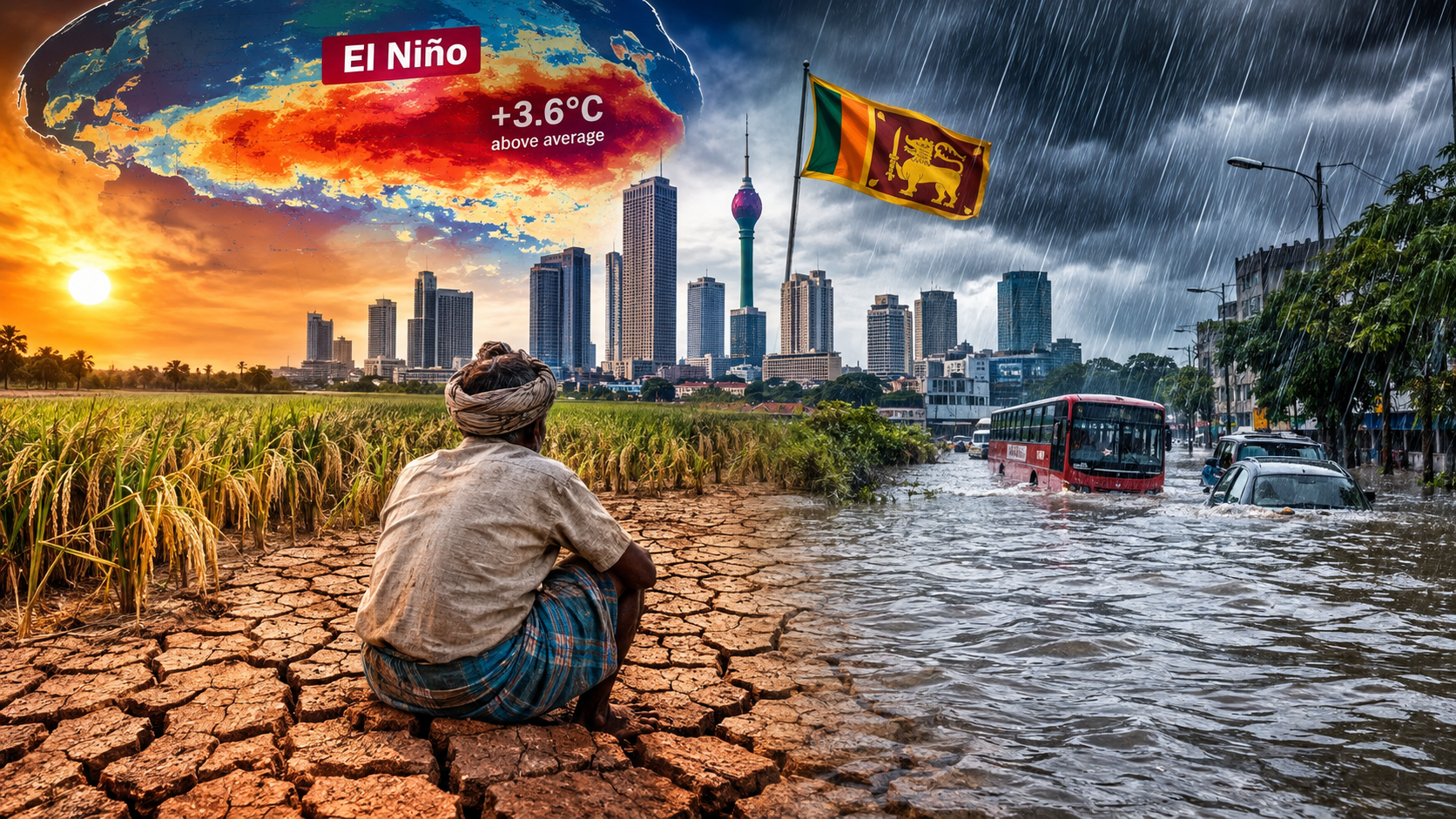
A developing Sri Lanka El Niño threat could expose the island to sharper swings in rainfall, water availability and food production as forecasters warn that the 2026 Pacific warming event may become exceptionally strong. New WaterAid research with the Universities of Bristol and Cardiff examined 44 years of rainfall and past El Niño events across major Asian cities, finding that stronger events push rainfall further from normal patterns. Colombo is especially vulnerable because longer-term WaterAid research already identifies it among South Asian cities shifting sharply toward wetter extremes.
For Sri Lanka, the danger is not a simple switch from drought to an “overcharged” Northeast Monsoon. The island’s rainfall response to El Niño is more complicated. Research published by Sri Lanka’s Department of Meteorology found that El Niño tends to reduce Southwest Monsoon rainfall over parts of the country, while the Second Inter-Monsoon can become wetter. The same research found reduced Northeast Monsoon rainfall across several northwestern, north-central and central areas.

Sri Lanka El Niño Raises Water and Flood Risks
That combination creates a form of climate whiplash. During the Southwest Monsoon, weaker rainfall can reduce soil moisture, reservoir inflows and water availability in agriculture-dependent districts. Lower hydro storage can also increase pressure on electricity generation, particularly when thermal plants must carry a larger share of demand.
Later in the year, heavier rainfall during the October-November Second Inter-Monsoon can arrive quickly after dry conditions. Such bursts can overwhelm drainage systems, trigger flash flooding and increase landslide risks in vulnerable hill-country areas. Colombo faces an added urban danger because intense rainfall can expose weaknesses in storm-water drainage and flood management.
The scale of the developing Pacific event is adding to concern. Current forecasts cited by WaterAid expect unusually strong ocean warming to peak between September and November 2026. Reuters has reported that forecasters see the event potentially becoming the strongest El Niño in the modern record. Other projections have placed possible warming in the key Pacific region above 3°C, with some estimates approaching 3.6°C above normal.
The consequences extend far beyond rainfall. Analysts have warned that a severe El Niño could damage global supplies of rice, coffee, cocoa, sugar and other commodities. Some estimates suggest global agricultural output could fall by about 14%, with economic losses reaching roughly $342 billion.
Agriculture and Power Face Economic Pressure
Sri Lanka is particularly exposed because agriculture remains central to rural livelihoods. World Bank data show agriculture accounted for about 8.4% of GDP in 2025, while roughly 26% of total employment was linked to the sector. Paddy, maize, vegetables and plantation crops can all suffer when rainfall arrives at the wrong time or in extreme bursts.
The energy system is also sensitive to reservoir conditions. Ceylon Electricity Board data show hydropower still forms a major part of daily generation, meaning prolonged dry weather can shift more demand toward coal and oil-fired plants. That can increase exposure to imported fuel costs and place additional pressure on foreign exchange.
Sri Lanka therefore faces a two-sided climate risk: too little water at one stage and too much at another. Preparing for that volatility requires more than emergency water bowsers and post-disaster compensation.
Long-term resilience will depend on better urban drainage in Colombo, stronger reservoir and irrigation management, expanded rainwater storage, improved seasonal forecasting and planting decisions that respond quickly to changing rainfall signals. With the 2026 El Niño still developing, the exact impacts remain uncertain. But the warning is clear: Sri Lanka must prepare for greater rainfall volatility rather than assume one uniform monsoon outcome.