By Roy Denish.
Scopolamine in Sri Lanka raises concern as experts warn of severe toxicity, memory loss and potential misuse in drug-facilitated crime.
Sri Lanka’s narcotics landscape is changing, and scopolamine in Sri Lanka risks drawing fresh attention as authorities confront a broader mix of illicit drugs and misused medicines. However, available official Sri Lankan enforcement reports reviewed for this article do not yet identify scopolamine as an established or rising street-drug category. Recent Coast Guard and Police reporting instead highlights heroin, methamphetamine or “ice”, cannabis, hashish, kush and illegal medicinal capsules.
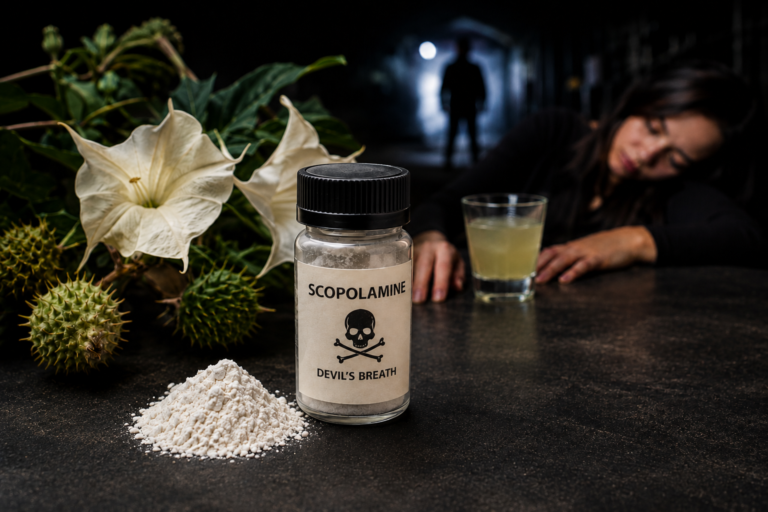
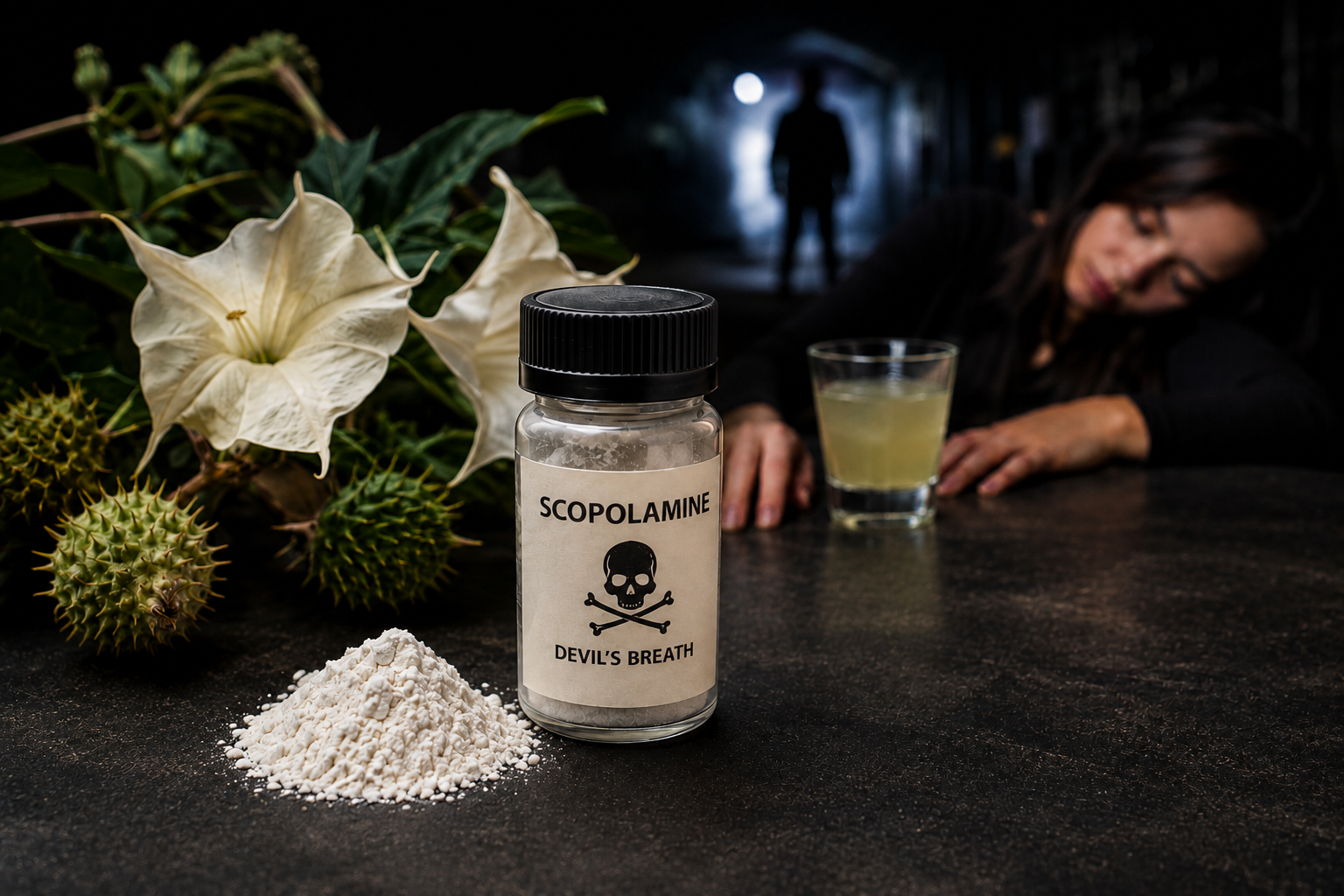
Known internationally as “Devil’s Breath” or “burundanga”, scopolamine is a naturally occurring tropane alkaloid found in plants from the Solanaceae family, including Datura species. It also has legitimate medical uses. Prescription scopolamine is used to prevent motion sickness and postoperative nausea and vomiting.

The drug acts as an anticholinergic by blocking muscarinic acetylcholine receptors. Because it can cross the blood-brain barrier, scopolamine can affect memory, attention and behaviour. At therapeutic doses, recognised side effects include dizziness, drowsiness, confusion and blurred vision. Toxic exposure can cause agitation, hallucinations, delirium, rapid heart rate, dilated pupils and memory loss.
Scopolamine Risks and Drug-Facilitated Crime
Scopolamine has gained notoriety through reports of suspected drug-facilitated robbery and sexual assault in several countries. Medical literature confirms that significant exposure can produce profound anterograde amnesia and cognitive impairment. However, popular descriptions claiming the substance simply removes a person’s “free will” or automatically makes victims obedient go beyond what clinical evidence can firmly establish.
Likewise, claims that criminals can reliably incapacitate people merely by blowing powder into their faces should be treated cautiously. Documented exposure routes include ingestion and inhalation, but the dose, method of administration and individual response can vary greatly.
The danger remains serious. Severe anticholinergic toxicity may produce hyperthermia, seizures, dangerous cardiac effects, extreme delirium and other potentially life-threatening complications. Plant-derived preparations can also be unpredictable because their concentrations vary.
Sri Lanka Faces a Wider Narcotics Challenge
Sri Lankan enforcement agencies continue to report substantial seizures of heroin, methamphetamine known locally as “ice”, cannabis, hashish, kush and illegal medicinal capsules. Recent Coast Guard reporting covering the first half of 2026 did not list scopolamine among the substances seized.
That distinction matters. Scopolamine in Sri Lanka should not be presented as a documented nationwide narcotics surge without supporting seizure, toxicology or police data. Still, its legitimate pharmaceutical use, presence in toxic plants and potential for misuse justify public awareness.
Authorities can strengthen preparedness through pharmaceutical oversight, specialist toxicology testing and rapid investigation of suspected drug-facilitated crimes. Public education should also focus on practical safety, including watching drinks in social settings and seeking urgent medical help when sudden confusion, delirium or memory loss follows a suspected exposure.