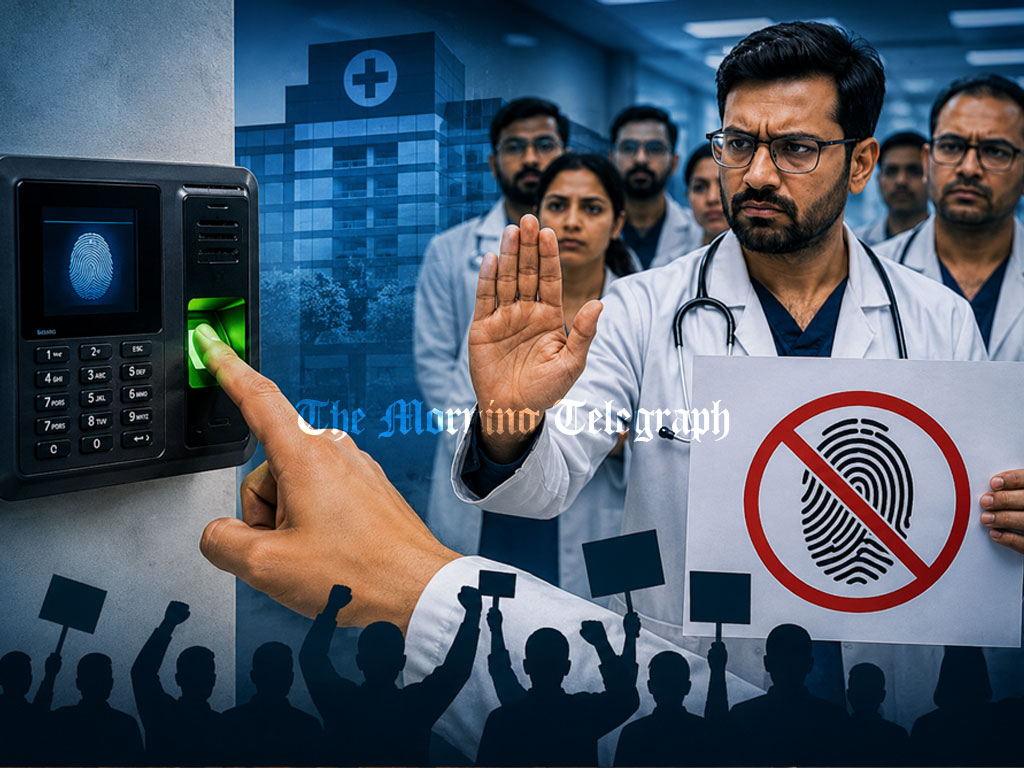
Private hospitals have introduced mandatory fingerprint scanners for doctors, prompting objections over stricter attendance rules and low allowances.
Fingerprint scanners have now been made mandatory for doctors at several leading private hospitals in Colombo and its suburbs, triggering objections from medical professionals who say the new attendance system places additional pressure on them despite already receiving low allowances.
Under the newly introduced policy, doctors are required to record their attendance using fingerprint scanners both when reporting for duty and when leaving after completing their scheduled shifts.

The biometric attendance system had previously been used only for nursing staff and other healthcare employees in private hospitals. Hospital administrations have now decided to extend the same requirement to doctors as part of their attendance monitoring procedures.
However, doctors working in the private healthcare sector have expressed dissatisfaction with the decision. They argue that the allowances paid by private hospitals to general practitioners are already at a very low level, and introducing such strict attendance regulations under those circumstances creates significant professional difficulties.
At present, Sri Lanka’s private hospital sector largely relies on doctors who have obtained qualifications from private medical faculties or overseas medical institutions. In addition, many doctors employed by government hospitals also provide services at private hospitals as an additional duty under the existing duty roster system.