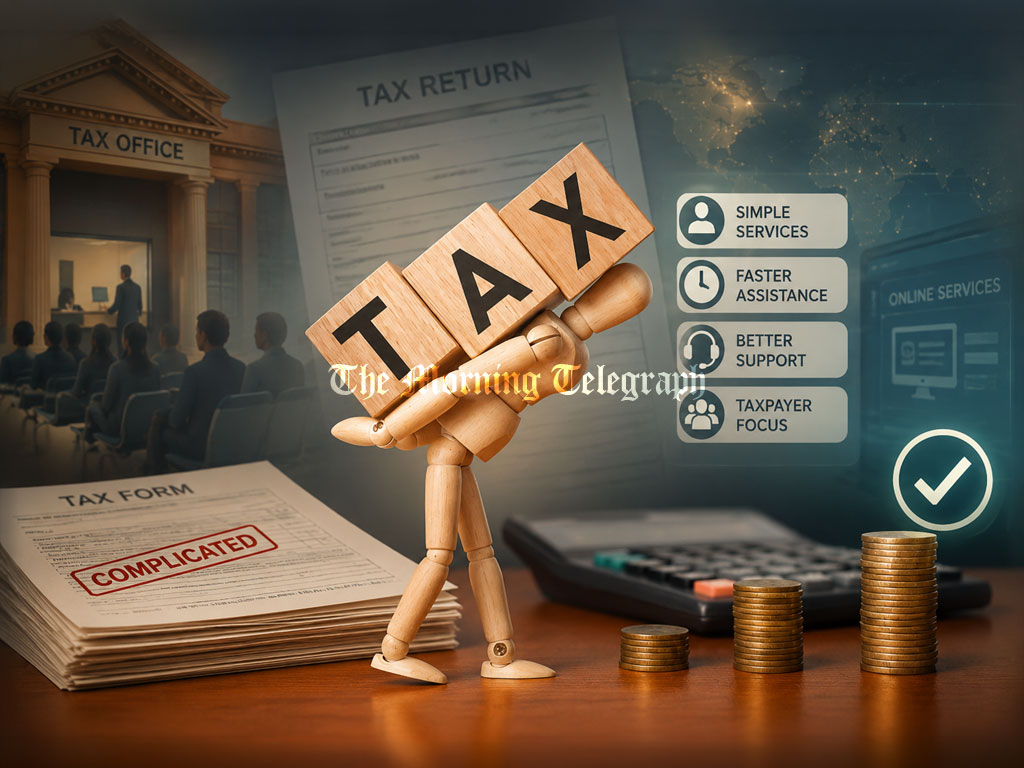
Tax Week Sri Lanka can succeed only if awareness campaigns lead to faster services, clearer answers and a simpler tax system for taxpayers.
Tax Week Sri Lanka may sound like a positive initiative, but its real value will depend on whether it improves the everyday experience of taxpayers.
Imagine that your kitchen tap has been leaking for months. You repeatedly call the plumber, but nobody arrives. Then, one morning, an invitation appears for “Water Awareness Week.”
There will be speeches, banners, photographs and a grand opening ceremony.
But the tap is still leaking.
Would that make you happy?
Probably not.
Many taxpayers may feel exactly the same when they hear about Tax Week. Most people are not asking for another event. Instead, they want a tax system that is simple, responsive and reliable.
They want clear information. They need tax officers who can explain complicated matters in plain language. They expect online services that actually work when they need them.
More importantly, taxpayers want to complete a task in one visit. They do not want to return three or four times because of unclear instructions or unresolved problems.
When people ask a question, they simply expect someone to answer it.
That is what matters to ordinary taxpayers.

Tax Week Sri Lanka Must Focus on Real Service
Holding a Tax Week is not necessarily a bad idea. In fact, helping people understand taxes and their responsibilities remains extremely important.
However, awareness does not begin with a stage, banner or speech. It begins when people find it easy to do the right thing.
If paying taxes remains confusing, slow and frustrating, another awareness programme is unlikely to change much.
Consider your favourite supermarket. You do not continue shopping there because it holds a “Customer Week.” You return because the staff are helpful, the shelves remain stocked and the prices are clearly displayed.
You also return because you can finish your shopping quickly.
Good service brings people back.
The same principle should apply to tax administration.
Every rupee spent on a ceremony, booklet, banner or advertisement is also taxpayers’ money. Therefore, every activity connected with Tax Week Sri Lanka should answer one straightforward question:
Does this make life easier for taxpayers?
If the answer is yes, then it is money well spent.
If the answer is no, perhaps those resources could serve taxpayers more effectively elsewhere.
Imagine using the same effort to answer thousands of pending telephone calls. It could help clear old taxpayer files, improve online systems, shorten waiting times and simplify complicated forms.
Officials could also use those resources to reach people in villages and small towns who need practical assistance.
Such improvements would remain useful long after the banners come down.
Better Experiences Build Public Confidence
People rarely talk for long about a good speech. However, they often remember and discuss a good experience.
A taxpayer who receives quick, clear and friendly service will tell family members. Families share those experiences with friends and neighbours.
That is how confidence grows.
Trust in a public institution does not come from posters alone. It develops through consistent everyday actions and reliable service.
A successful tax awareness programme should therefore measure results through the problems it solves. The number of events held should not become the main measure of success.
The real question is whether taxpayers can complete their work more easily than before.
A Small Request to the Finance Minister
Honourable Minister, Tax Week can become much more than five days of organised activities.
Please ask every department one simple question:
“What have we done today that made paying taxes easier?”
Do not measure success only by how many meetings officials held.
Do not count only the number of banners printed.
Do not focus only on the number of speeches delivered.
Instead, ask how many taxpayer problems officials actually solved.
If, by the end of the week, more people can register easily, Tax Week will have achieved something meaningful. The same is true if taxpayers can receive answers quickly and complete their work without unnecessary delays.
Success should also mean that people can leave a tax office feeling that officials respected their time.
People do not expect perfection.
They simply want a system that works.
When the system becomes clear, efficient and responsive, people will not need constant reminders about why taxes matter.
They will see the value of a functioning system for themselves.