By Dwayne Ferreira.
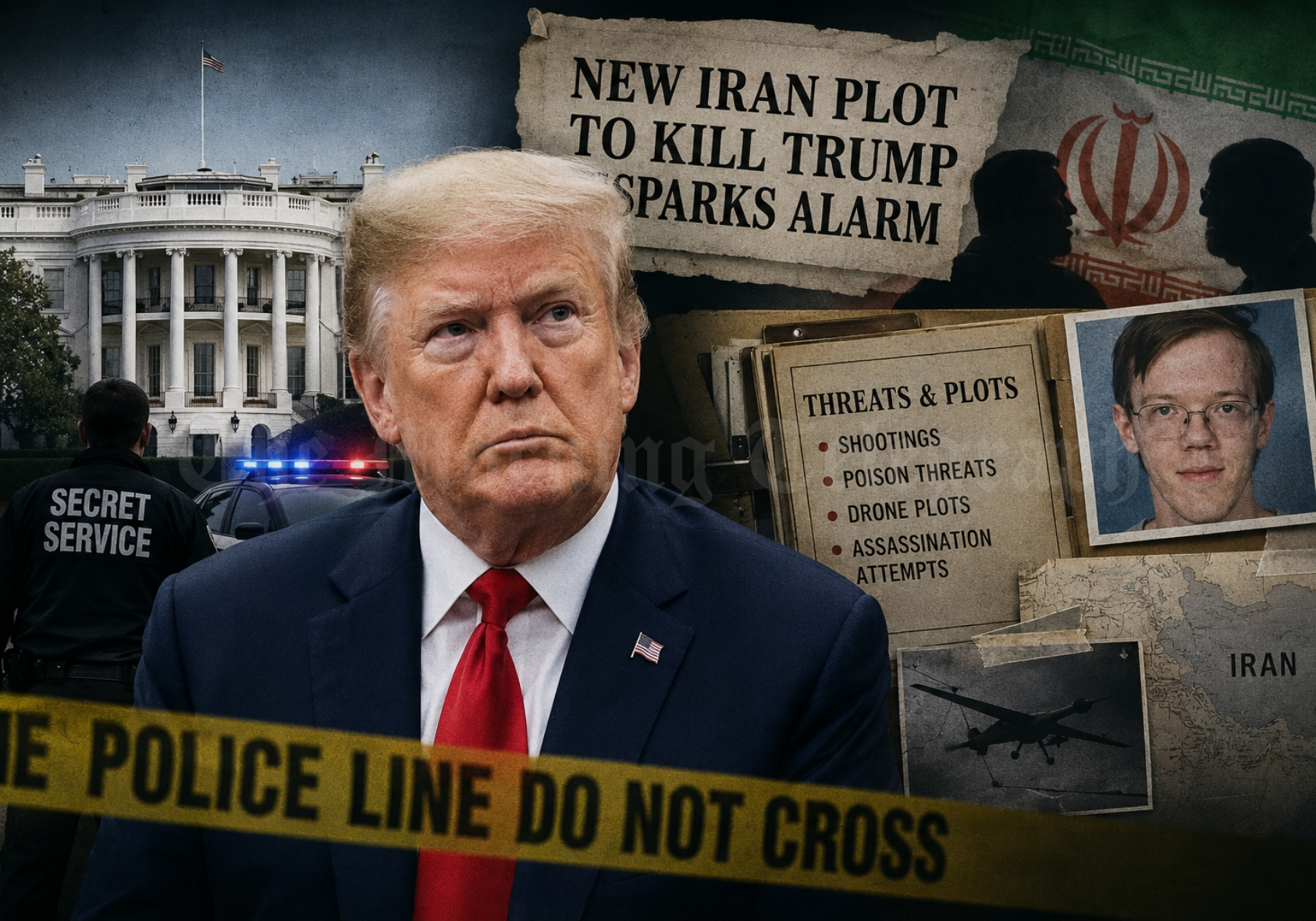
Trump assassination plots face new scrutiny after reported Iran intelligence, past shootings, poison threats and foiled attacks.
WASHINGTON — The reported warning has intensified concern around one of America’s most heavily protected political figures. It also adds another layer to years of shootings, poison threats, armed breaches and foiled murder-for-hire cases involving Trump.
The Wall Street Journal reported that Israel recently shared intelligence with Washington indicating that Iran was considering a fresh assassination plan. The report said U.S. officials received the intelligence and were assessing it. If confirmed, the alleged plot would deepen the confrontation between the United States and Iran.

Iran has long vowed revenge for the January 2020 U.S. drone strike that killed Qassem Soleimani, the powerful commander of the Islamic Revolutionary Guard Corps’ Quds Force. Trump ordered that strike during his first term. As a result, he remains central to Iran’s retaliation narrative.
U.S. officials have not publicly confirmed the full details of the latest report, and the allegation remains based on reported intelligence rather than a public charging document. However, it follows a documented pattern of serious threats and violent incidents involving Trump. Those include two major assassination attempts during the 2024 campaign and a separate 2026 federal indictment alleging an attempt to assassinate him at the White House Correspondents’ Association Dinner.
Trump assassination plots deepen security fears
The most dramatic attack came on July 13, 2024, in Butler, Pennsylvania. Trump was shot during a campaign rally. The FBI later identified Thomas Matthew Crooks, 20, of Bethel Park, Pennsylvania, as the person involved in what it called an assassination attempt against Trump.
Trump survived the shooting. However, the attack killed one rally attendee, wounded others and triggered national scrutiny of the Secret Service. A later Senate report said failures by the agency allowed the gunman to reach a position from which he could fire at Trump.
Just two months later, Trump faced another assassination attempt in Florida. Ryan Wesley Routh was later sentenced to life in prison for the attempted assassination of Trump at Trump International Golf Club in West Palm Beach. The Justice Department said Routh’s planned sniper attack targeted Trump while he was a major presidential candidate.
The threat did not end with the 2024 election. In May 2026, the Justice Department announced that Cole Tomas Allen had been indicted for attempting to assassinate President Trump during an April 25 shooting at the White House Correspondents’ Association Dinner in Washington. Prosecutors said Allen rushed security and fired a shotgun, striking a Secret Service officer.
White House UFC attack case widens the threat picture
Another major case emerged around UFC Freedom 250, the cage-fighting event held at the White House in June 2026. The Justice Department said five men were arrested and charged over an alleged plan to attack and kill government officials and others attending the event.
Prosecutors said the suspects allegedly planned to use explosive drones to force an evacuation. They then intended to deploy snipers against “high value targets” in the fleeing crowd.
The Associated Press later reported that eight men were indicted over the alleged drone and sniper plot. Potential targets reportedly included Trump, Vice President JD Vance, Israeli Prime Minister Benjamin Netanyahu, Elon Musk and others.
That case matters because it shows how threats against Trump have moved beyond the lone-gunman model. Recent cases have included poison, firearms, drones, sniper planning, security breaches and foreign-linked murder-for-hire allegations. It also adds urgency to the wider debate on political violence in America.
Earlier cases show a longer history of danger
Trump’s security problems began before he entered the White House. In June 2016, Michael Steven Sandford, a British citizen, tried to seize a police officer’s firearm at a Trump rally in Las Vegas. The Justice Department said Sandford had taken shooting lessons the day before. He then grabbed for the officer’s Glock during the rally and was later sentenced on weapons and disruption charges.
In 2020, Trump was targeted by a poison letter. Pascale Cecile Veronique Ferrier, a dual citizen of Canada and France, later received a sentence of more than 21 years in prison. Prosecutors said she mailed threatening letters containing homemade ricin to then-President Trump at the White House and to law enforcement officials in Texas.
Federal authorities have also pursued Iran-linked assassination cases. In November 2024, the Justice Department said Farhad Shakeri, described as an Iranian asset, had been tasked by Iran with surveilling and plotting to assassinate President-elect Trump.
In a separate case, Asif Merchant, described by prosecutors as an Iranian intelligence-linked operative, was convicted in March 2026 of terrorism and murder-for-hire charges. The Justice Department said the case involved a foiled plot to assassinate U.S. politicians and government officials on American soil.
Why the latest Iran report matters
Trump’s threat profile is unusually complex. He is a sitting president, a former president, a polarising political figure and the man who ordered the Soleimani strike. Therefore, he can attract threats from lone actors, extremist networks and foreign-linked groups.
The new report about Israel sharing intelligence on a possible Iranian assassination plan fits into that wider record. It also places the Iran question back at the centre of Trump’s security posture and the broader Middle East conflict. Some cases involved individuals. Others allegedly involved networks. Some were domestic. Others had alleged foreign links.
Together, they show that Trump’s security risk is not theoretical. It is repeated, documented and ongoing.
By a conservative count, Trump has faced five direct or alleged attempts on his life: the 2016 Las Vegas gun-grab incident, the 2020 ricin poison letter, the 2024 Butler shooting, the 2024 Florida golf-course assassination attempt and the 2026 White House Correspondents’ Dinner shooting indictment. If broader foiled plots are included, including Iran-linked murder-for-hire cases and the White House UFC drone-sniper conspiracy, the number rises to at least eight serious Trump assassination plots, attempts or alleged plots.