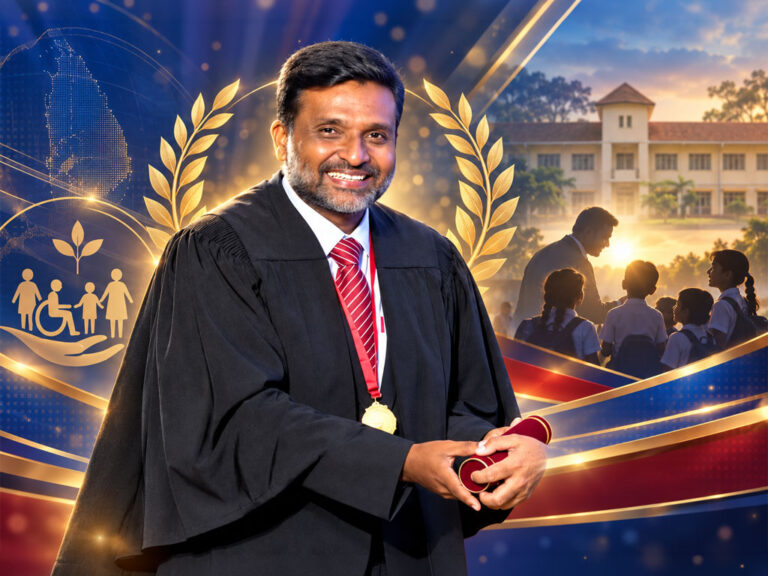
Professor Pradeep N. Weerasinghe examines Sri Lanka’s development crisis, arguing that top-down planning and weak communication have deepened poverty and inequality across the country.
Sri Lanka’s development crisis has deepened to alarming levels, with Professor Pradeep N. Weerasinghe arguing that top-down planning and weak communication have worsened poverty and inequality across the country.
After over three decades of a brutal civil war, Sri Lanka made a determined effort to move towards rapid social and economic development. While significant attention was paid to physical infrastructure development in the post-war period, particularly between 2019 and 2025, the country faced an unprecedented deep and multifaceted development crisis. This period can be identified as one of the most critical and darkest turning points in the country’s development history. Economic collapse, foreign exchange shortages, severe inflation, food insecurity, political instability, and rising social inequalities completely disrupted the daily lives of ordinary people.
However, it is not sufficient to view this entire crisis solely through economic statistics or financial indicators. It is, in fact, a serious systemic crisis created by the convergence of failures in governance, social organization, state-society political structures, development planning, and communication. In particular, the fundamental and underlying causes of this crisis can be identified as the failure to listen to the real voices of grassroots people in the traditional development process, the systematic exclusion of communities from decision-making processes, and the transformation of development into a top-down bureaucratic mechanism.

The Multifaceted Nature of Sri Lanka’s Development Crisis
Economic Collapse and Its Social Consequences
The economic slowdown and collapse Sri Lanka faced in 2022 is recorded as one of the most severe and tragic economic crises in recent history in the entire South Asian region. Due to structural economic faults accumulated over decades, excessive foreign debt, the depletion of foreign exchange reserves to near-zero levels, and short-sighted fiscal policies, the entire economic system of the country collapsed. As a direct result, there were severe shortages of fuel, gas, essential medicines, and food supplies, and hours-long daily power cuts disrupted the entire population’s lives.
This situation was not limited to abstract economic statistics. It led to severe social tension, unbearable psychological pressure, and rapid growth of deep political distrust towards the ruling regime. The skyrocketing prices of goods and inflation caused the real living standards and purchasing power of the people to fall to unprecedented levels.

The Spread of Poverty and Social Inequality
The most regrettable fact revealed by the research data is that by 2023, approximately 31% of Sri Lanka’s total population, nearly one-third, was living below the poverty line in severe hardship. The most striking feature was that 80% of this impoverished population lived in the country’s rural and estate sectors.
The research identified several factors that caused rural communities to suffer so severely:
- Loss of Market Access: Rural farmers lack direct market connections to obtain fair prices for their produce, leading to exploitation by intermediaries.
- Collapse of Small Businesses: Self-employment and small-scale businesses at the rural level completely shut down due to rising raw material costs and fuel and electricity crises.
- Loss of Income Sources: The rapid reduction of employment opportunities caused many families to lose their permanent income sources completely.
As a result of this multidimensional poverty, several serious long-term crises emerged in rural society. These include children of school-going age dropping out to engage in wage labor, a rapid increase in child and maternal malnutrition, and the exacerbation of rural health problems due to the inability to access proper treatment.
Structural Failures in Traditional Development Planning
A fundamental reason why most development projects in Sri Lanka have failed or their benefits have not reached the people is that they are designed not based on grassroots realities, but by Colombo-centric high-level officials and politicians. This process is known as Top-Down Planning.
These projects, implemented based on short-sighted external assessments without any deep understanding of the communities’ cultural, geographical, and economic needs, often become white elephants. As a result, despite spending large sums on projects, there is no qualitative improvement in the living standards of grassroots people.
| Real Needs of the Rural Community | What is Provided by the Rulers (Top-Down) |
| Small-scale and self-employment income streams | Large-scale physical infrastructure projects |
| Direct market connections and access | Buildings without community participation |
| Practical financial management training | Schemes without meaningful dialogue with people |
The Interconnection Between Development Process and Communication
Communication as a Fundamental Tool of Development
According to modern development science, development is not merely the allocation of funds, building concrete structures, or carpeting highways. Real development is a human process closely intertwined with people’s ideas, real life needs, cultural values, and future aspirations. Therefore, the most fundamental and inseparable element of any successful development process is communication.
Through an effective two-way communication process, the following outcomes can be achieved within the development process:
- Accurate Identification of People’s Real Needs: The opportunity to understand in their own words the real problems facing grassroots people.
- Development of Active Community Participation: Creating a sense of ownership among the people towards projects.
- Increasing Transparency in Governance: Open information about projects.
- Ensuring Accountability: Officials and politicians being held accountable to the public.
- Community Empowerment: Building self-confidence that they can solve their own problems.
However, the tragedy in Sri Lanka is that communication is not considered a fundamental strategic element in development planning, but is treated as a marginal element limited to ceremonies or propaganda activities at the project’s conclusion.
The Crisis of the Top-Down Development Model
Almost all major development projects implemented in Sri Lanka for a long time have been shaped under a Western-style Top-Down model. In this approach, all policy decisions, resource allocations, and project designs occur within the high-level ruling apparatus, including politicians, officials, and experts, while the targeted beneficiaries, grassroots communities, are expected to simply accept or follow these decisions without any questioning.
The research has clearly categorized the main structural problems within this model:
- Ignoring People’s Real Needs: Forcibly implementing projects that are unnecessary for the area and not requested by the community.
- Not Allowing Community Voices: Field officers or policymakers not engaging in any meaningful dialogue with grassroots people.
- Lack of Understanding of Cultural Background and Local Knowledge: Complete rejection of the indigenous wisdom and cultural values of rural society accumulated over centuries.
- Incorrect Identification of Local and Structural Problems: Failure to identify the unique geographical and social problems specific to each province or village.
- Lack of Community Ownership: The feeling that the project is not their own, leading people to abandon projects as soon as NGOs or the government withdraw.
The final result is that millions of rupees are spent on projects, and shortly after completion, the beneficiaries fall back into the same helpless poverty they were in before.
Communication Barriers and Socio-Cultural Dynamics Faced by Rural Communities
The Influence of Cultural and Religious Beliefs
The research also revealed that certain traditional attitudes and religious beliefs in Sri Lankan rural society pose serious barriers to development communication. Some rural communities fatalistically consider their extreme poverty, economic pressure, or unjust living conditions as determined by their fate or past karma, unchangeable conditions.
These defeatist attitudes cause them to show great reluctance to actively, creatively, or politically participate in development processes. These attitudinal barriers affect development in the following ways:
- Reduced Self-Confidence: The belief that they cannot change their own lives is broken.
- Lack of Open Dialogue About Problems: Remaining silent about existing socio-economic issues, leaving them to fate.
- Reluctance to Accept New and Scientific Ideas: Fear of moving beyond the traditional framework.
- Dominance of Elites in Decision-Making: Only a few traditional elites making decisions, with others becoming passive followers.
- Lack of Trust in Government, Officials, Politicians, and Experts.
Family Structures, Hierarchy, and Social Pressure
Due to the strongly patriarchal and hierarchical structures still prevalent in rural families and social structures, the ideas and voices of the most dynamic sections of society, youth and women, are often ignored both within the family and society.
The research highlights the communication and economic limitations faced by rural women in particular:
- Minimal Opportunity for Economic Decision-Making: Men monopolizing financial decisions in families or businesses.
- Limited Opportunity to Speak at Community Meetings: Even when attending public meetings, women and youth are unable to openly express their real problems due to dominance, social pressure, and shame.
- Lack of Control Over Financial Resources: Despite contributing labor, they do not control income.
This situation completely undermines the social, psychological, and economic empowerment of rural women and the younger generation.
The Digital Divide
While digital technology and Information and Communication Technology (ICT) create many new development opportunities in modern globalization, the serious digital divide between rural and urban areas in Sri Lanka severely limits rural people’s ability to access those technological opportunities. Due to poor internet connectivity in rural areas, lack of digital literacy at the grassroots level, and the high cost of technological devices like smartphones and computers, rural people, especially farmers and small business owners, are marginalized and lagging behind in modern digital economic processes and market opportunities.
Corruption, Governance Issues, and Lack of Transparency
Bias and Politicization in Beneficiary Selection
Another major institutional and structural weakness causing development projects to fail at the grassroots level is corruption and bias. According to the research, in selecting beneficiaries for various subsidies or development projects, practices based on political influence, loyalty, and the discretion of local politicians and leaders are common, rather than scientific or needs-based methods.
As a result:
- The truly destitute, economically marginalized, and needy families do not receive project benefits.
- Hatred and anger develop in society due to political favoritism.
- Public trust in the state mechanism and development officials is completely broken.
- The entire development process becomes ethically and practically corrupt.
Lack of Information Communication and Transparency
The lack of open access to official information about project fund usage, resource allocation, decision-making processes, and actual progress is one of the most serious governance problems in Sri Lanka. Project monitoring is often limited to fabricated written reports that satisfy higher officials, with no real involvement of beneficiaries.
Due to the failure to properly utilize modern media and communication platforms:
- People Have No Understanding of Progress: People do not know how much money is being spent on development activities in their area.
- Difficulty Detecting Corruption: Keeping information secret prevents the public from identifying financial fraud and corruption.
- Accountability is Completely Reduced: A situation is created where officials are not accountable to the public.
The Role of NGOs and Civil Society Organizations
To fill the gaps in the government’s traditional bureaucratic and top-down development model, prominent NGOs and Civil Society Organizations (CSOs) operating in the country have played a special and commendable role at the grassroots level.
The Sarvodaya Shramadana Movement and Community Empowerment
The Sarvodaya Shramadana Movement, with a long history, uses an exemplary communication and development model for the self-reliance and physical empowerment of rural communities. Instead of merely providing aid, they operate prioritizing active community participation.
The Sarvodaya Movement primarily serves in the following areas:
- Self-employment training for rural youth.
- Micro-credit programs for those without bank facilities.
- Health and community education programs.
- Women’s empowerment.
According to the research, four factors contribute to the special importance and success of civil organizations like Sarvodaya. Therefore, creating strong and mutual cooperation between the government and these NGOs can facilitate the exchange of national-level resources and grassroots expertise and experience.

Financial Literacy and Rural Debt Traps
The Microfinance Disaster
One of the most severe economic and social tragedies facing rural society today is their entrapment in uncontrolled microfinance debt traps. Many rural families, especially women, take out easily accessible microfinance loans without any financial management knowledge.
This research reveals a horrific chain of consequences in the microfinance loan process:
- Misuse of Loan Money: Loans are used for daily food and consumption expenses rather than investment in income-generating activities.
- No Income Generation: No new permanent income source is created.
- Inability to Repay Loans: Failure to pay installments due to high interest rates.
- Severe Entrapment in Debt Traps: Eventually, families fall into extreme poverty by taking new loans from other institutions to pay existing installments.
The Critical Need for Financial Education and Communication
To rescue rural communities from these debt traps and make them financially independent, systematic financial education is essential, using communication strategies. Communities should receive continuous practical training and awareness on systematic savings, correct investment, practical business management, effective use of loans, and understanding market dynamics.
Holistic Health, Nutrition, and Mental Health Issues
The study strongly emphasizes a holistic approach, stating that development should not be assessed solely on physical resources but must necessarily include human physical and mental well-being.
Nutritional Deficiency and Its Long-Term Impact
Under the current economic pressure, low-income and rural families have completely lost the ability to obtain a nutritious and balanced diet. This situation negatively affects the country’s future generation, the children.
The research identifies three main areas affected by children’s nutritional deficiency:
- Stunted Physical Growth: Children not developing properly physically.
- Declining Academic Performance: Malnutrition weakens children’s memory and learning abilities.
- Overall Physical Health Deterioration: Increased susceptibility to diseases.
This is a serious situation that long-term undermines the country’s human capital development.
The Mental Health Crisis and Social Stigma
Due to unbearable economic pressure, endless debt burdens, and sudden loss of jobs and income sources, a large percentage of Sri Lanka’s rural population is suffering from severe stress and depression. However, in the Sri Lankan rural social context, there is a very backward attitude towards mental health.
Three main problems exist in rural areas:
- Extremely Limited Mental Health Services: Lack of counseling or psychiatric facilities in rural hospitals.
- Lack of Open Dialogue: Fear of discussing mental illness or stress within the family or society.
- Social Stigma: Society’s judgmental and stigmatizing view of those seeking help from mental health clinics causes people to suffer in silence.
Therefore, using community media and communication strategies to provide open education on healthy lifestyles and mental health at the grassroots level is essential.
Theoretical Foundations of People Empowerment
To understand the alternative paths proposed for escaping the development crisis, it is essential to study three prominent theoretical approaches to people empowerment.
Paulo Freire’s Pedagogy of the Oppressed
Brazilian educator Paulo Freire’s theory argues that to liberate the oppressed in society, they must be given a critical consciousness about their environment and the structural factors that have oppressed them. According to Freire, people should not be passive receivers of education or development. They should actively create new knowledge through dialogue with authorities and among themselves, with equal rights. They should have the capacity to critically question injustices and corruption in society.
The Role of Communication: According to Freire’s approach, communication is not simply information dumping from top to bottom. It is building dialogue at an equal level among people. Through this dialogic communication, people identify their real problems, understand their causes scientifically, and are ultimately motivated to find collective solutions.
Amartya Sen’s Capability Approach
Nobel laureate economist Amartya Sen argues that real development is not just a country’s GDP growth, but expanding the capabilities and real freedoms of ordinary people living in that country. According to Sen, poverty is not just a lack of money or income. It is a multidimensional deficiency.
The Role of Communication: Empowering people through communication skills can increase their active participation. Communication provides people with essential official information at the right time, informs them of new economic opportunities, develops their understanding of basic human rights, and actively increases their political participation in governance.

Participatory Communication Theory
Participatory communication theory strongly emphasizes that the success of a development process depends solely on the extent to which grassroots people become active and real participants in it. According to this theory, people are not just passive beneficiaries waiting to receive externally provided benefits. They must actively participate as partners in the entire decision-making, implementation, monitoring, and evaluation process from the project’s inception to completion.
The research identifies five main pillars of participatory communication theory:
- Meaningful Dialogue: Continuous two-way communication between officials and the community.
- Full Participation: Allowing public opinion in every decision.
- Community Ownership: Taking care of the project as their own.
- Power Sharing: Moving away from bureaucratic monopoly and decentralizing decision-making power.
- Respect for Local Knowledge and Culture: Not underestimating village wisdom.
Participatory Communication: An Alternative and Practical Solution for Sri Lanka
Based on research data, several practical solutions centered on communication, moving beyond traditional models, are proposed to escape the current development crisis.
Bringing Communities to the Center of Development
For a development project to be successful and sustainable, the community must be brought to the center, not the periphery, of the entire process. This requires the following structural reforms:
- Involving People in Planning: Conducting needs analysis with the community before starting a project.
- Incorporating Community Views in Decision-Making: Prioritizing public opinion over the will of external officials.
- Creating Proper Feedback Systems: Setting up digital or physical channels for people to immediately report deficiencies and corruption.
- Obtaining Direct Community Participation in Project Evaluation: Giving people the power to assess whether the project has truly benefited them.
The Special Role of Community Media
Community radio services, local social media networks, rural communication workshops, and regular community meetings are powerful tools for strengthening grassroots communication. The research identifies five special strengths of community media:
- Free Exchange of Ideas: People can express opinions without political influence.
- Discussion of Local Issues: Bringing the real problems of the village to the forefront.
- Acquiring New Knowledge: Providing agricultural, health, and financial knowledge in local languages.
- Developing Community Action: Uniting village people for common goals.
- Providing a Platform for Active Participation: Allowing beneficiaries to actively participate in identifying, analyzing, planning, implementing, monitoring, evaluating, and re-planning development issues.
This is a realization of the famous concept “Voice to the Voiceless.”
Practical Use of Information and Communication Technology (ICT)
By minimizing the rural digital divide, mobile phones and modern ICT can be effectively used to boost the grassroots economy.

Access to New Markets and Technology
- Direct Market Connections: Creating physical and communication networks that directly connect producers and consumers, completely eliminating intermediary exploitation.
- Digital Markets (E-commerce Platforms): Creating platforms to market rural products at national and international levels.
- New Technological Tools: Providing modern technological tools that can enhance efficiency in agricultural and professional activities at concessionary prices.
- Practical Business Training: Providing systematic training on packaging, branding, and customer communication.
Establishing Community Radio and Television Centers
At least one independent community radio and television center with government ownership and direct community participation should be established in every Divisional Secretariat division. These centers should integrate ICT with traditional communication tools. The primary role of these centers is to facilitate active participation in development projects and engage in investigative journalism.
Key Challenges Facing People Empowerment in Sri Lanka
According to research data, several major structural challenges must be faced in establishing grassroots people empowerment and participatory communication in Sri Lanka:
- Strong Political Influence and Interference: Attempts by local politicians to politicize any independent community project.
- Entrenched Corruption in State Institutions: Misuse of resources and lack of accountability.
- Unresolved Rural Digital Divide: Technological infrastructure remains minimal in rural areas.
- Lack of Practical Financial Literacy in Communities: Unawareness of financial management.
- Minimal Social Participation of Women and Youth: Due to cultural, family, and power influences.
- Weak and Inactive Grassroots Community Organizations: Village associations failing to function independently.
- Severe Information Asymmetry: Official information being retained by officials and elites, hidden from ordinary people.
- Power Hierarchies and Power Inequality.
Policy Recommendations for Sustainable and Inclusive Development
Based on research findings, the following policy recommendations are proposed to rescue Sri Lanka from the current development dilemma and lead it towards truly sustainable and inclusive development.
Developing Grassroots Communication and Leadership Skills
Even if people are given the power to make decisions, it is of no use if their communication abilities are weak. Therefore, systematic training programs should be launched by the government and civil organizations targeting rural communities, especially women and youth. These trainings should develop community dialogue skills, community leadership skills, practical problem-solving skills, and teamwork.
Legislating Transparent Governance
To eradicate corruption in governance and development projects, communication and media must act as a true watchdog in projects. The following information should be openly and mandatorily provided to the public under the Right to Information (RTI) Act for every state and local development project:
- Complete Financial Information: Actual expenditure for each phase of the project.
- Decision-Making Process and Reasons: Criteria for selecting beneficiaries and how plans were approved.
- Progress Reports: Displaying truthful reports on the current status of the project through community boards or websites.
- Facilitating Investigative Journalism.
Strengthening Government-NGO-CSO Collaboration
Government, NGOs, CSOs, and grassroots community organizations must stop competing or viewing each other with suspicion and instead work together in a network for a common national development goal. This collaboration would enable resource exchange, access to expert knowledge, building sustainable development, and providing digital markets and new technological access.
Establishing Community Radio and Television Centers
At least one independent community radio and television center with direct community participation should be established in every Divisional Secretariat division. These centers should integrate ICT with traditional communication tools. Their primary role is to facilitate active participation in development projects and engage in investigative journalism.
The severe development crisis Sri Lanka has faced and continues to face today did not arise solely from a lack of money or weaknesses in economic management. It is, in fact, a serious systemic crisis rooted in long-standing governance failures, unequal social structures, and communication without community participation. The old Top-Down command development model, institutional corruption, politicization of beneficiaries, complete neglect of grassroots community participation, and communication weaknesses have directly contributed to structurally deepening this entire crisis.
Therefore, what Sri Lanka most urgently needs today is a new people-centered development approach that completely moves away from traditional infrastructure-focused approaches, listens respectfully to the real voices of grassroots people, actively involves entire communities in core decision-making processes, and brings two-way communication to the center of development.
As world-renowned theorists like Paulo Freire and Amartya Sen have shown, only when participatory communication, the active contribution of community media, the correct use of digital technology, developing financial literacy, and transparent governance are integrated can the truly democratic and sustainable development a country aspires to be built.
The ultimate truth to understand is that real development is not an external gift or grant given by authorities from top to bottom for the people. It is a transformative and human process built together with the people, by expanding the communication capabilities and freedoms of all grassroots people, with their maximum participation.

(Note | Professor Pradeep N. Weerasinghe)
Department of Journalism Studies – University of Colombo
pnweera@yahoo.com
SOURCE:- THELEADER.LK