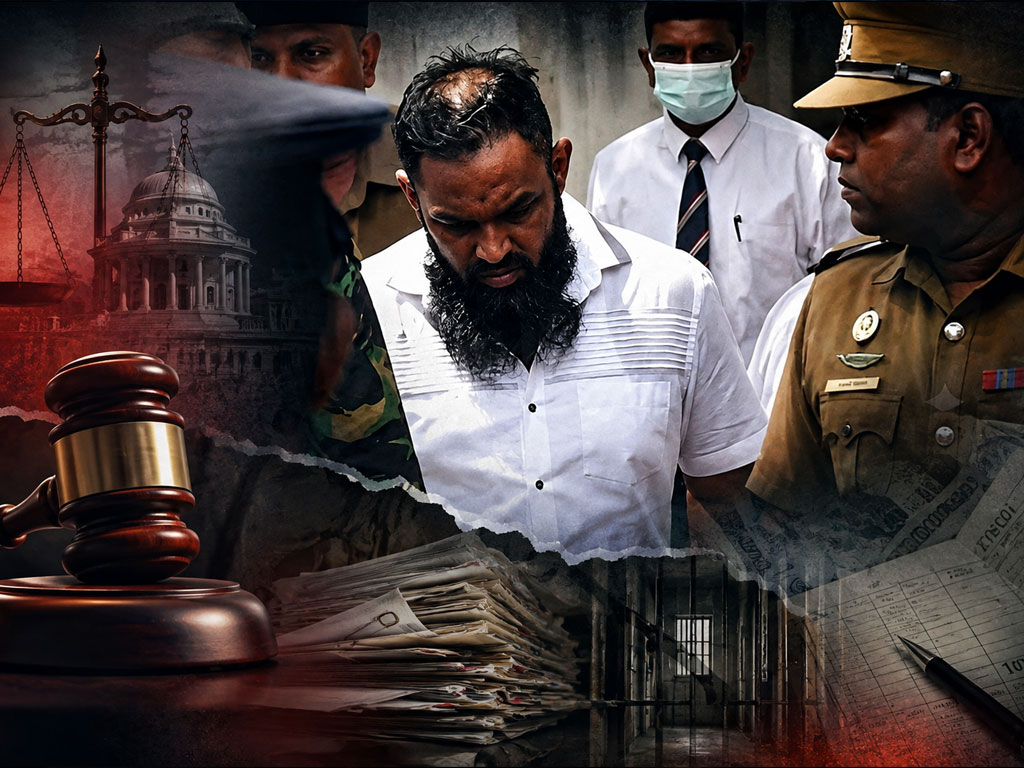
The Harak Kata PTA verdict exposes alleged misuse of anti-terror laws and the huge public cost of keeping high-risk suspects in custody.
The Harak Kata PTA verdict has exposed serious concerns over Sri Lanka’s criminal justice system, including alleged anti-terror law abuse and enormous public expenditure.
The Colombo High Court delivered the ruling on July 30 in a case involving organised crime suspect Nadun Chinthaka, widely known as Harak Kata.
High Court Judge Buddhika C. Ragala ruled that conspiring to escape from the Criminal Investigation Department does not amount to terrorism.
The judge therefore concluded that authorities could not prosecute such an offence under the Prevention of Terrorism Act.
The decision represents more than a legal victory for the accused. It also sets a firm judicial boundary against arbitrary or politically motivated use of special laws by the executive and police.
Get
Breaking News
First
on WhatsApp
Follow The Morning Telegraph for instant alerts, top stories and exclusive updates delivered straight to your phone.

Harak Kata PTA Verdict Challenges Legal Shortcuts
Authorities introduced the Prevention of Terrorism Act to address threats to national security.
However, its broad definition of an “unlawful act” and provisions allowing police-custody confessions have created space for abuse.
The ruling highlights the danger of using those powers against suspects accused of ordinary organised crime.
Sri Lanka’s general Penal Code already contains provisions covering escape and conspiracy to escape.
Therefore, attempts by law enforcement agencies to use anti-terror legislation as a shortcut threaten the rule of law.
The court has also made clear that the Attorney General’s discretion in filing prosecutions is not unlimited.
Alongside this legal distortion, the case has exposed the vast economic burden of keeping high-risk suspects in custody for years.
Sri Lanka continues to recover from a severe economic crisis. Yet the government reportedly spends nearly Rs. 10 million each month to keep one suspect in an isolated cell in Tangalle.
That expense raises serious questions about priorities, accountability and the use of public tax money.
Security Operation Carries Massive Public Cost
Authorities have reportedly deployed 87 officers to provide security for the suspect.
Their salaries, daily meals and transport costs contribute to an expenditure that reportedly reaches billions of rupees over time.
The case also includes allegations involving an attempted Rs. 120 million bribe.
There were also reported plans to escape with assistance from CID officers entrusted with responsibility for the suspect.
Meanwhile, allegations that senior officials faced extortion demands have deepened concerns about institutional corruption.
These claims suggest that the underworld’s financial power has penetrated parts of the state apparatus despite the vast public funds spent on security.
The problem therefore extends beyond one suspect or one failed prosecution.
It involves legal abuse, compromised officials, high detention costs and the continuing influence of organised crime.
Illegal Assets Should Fund the State’s Response
Failed legal shortcuts will not resolve this multidimensional crisis.
Authorities must instead use money-laundering legislation to confiscate illegal assets worth billions allegedly controlled by organised criminals.
That process requires cooperation between Sri Lankan agencies and international law enforcement bodies.
Recovering criminal assets could help offset the enormous cost the government bears in maintaining high-security detention and protection arrangements.
Such action would also target the financial foundations that allow organised crime networks to corrupt officials and weaken institutions.
The Harak Kata PTA verdict should therefore serve as a clear legal warning to the state.
Authorities must stop stretching special legislation beyond its proper purpose. They must also correct corrupt practices, strengthen lawful prosecutions and recover criminal wealth instead of forcing taxpayers to carry the entire burden.
SOURCE:- SRI LANKA LEADER