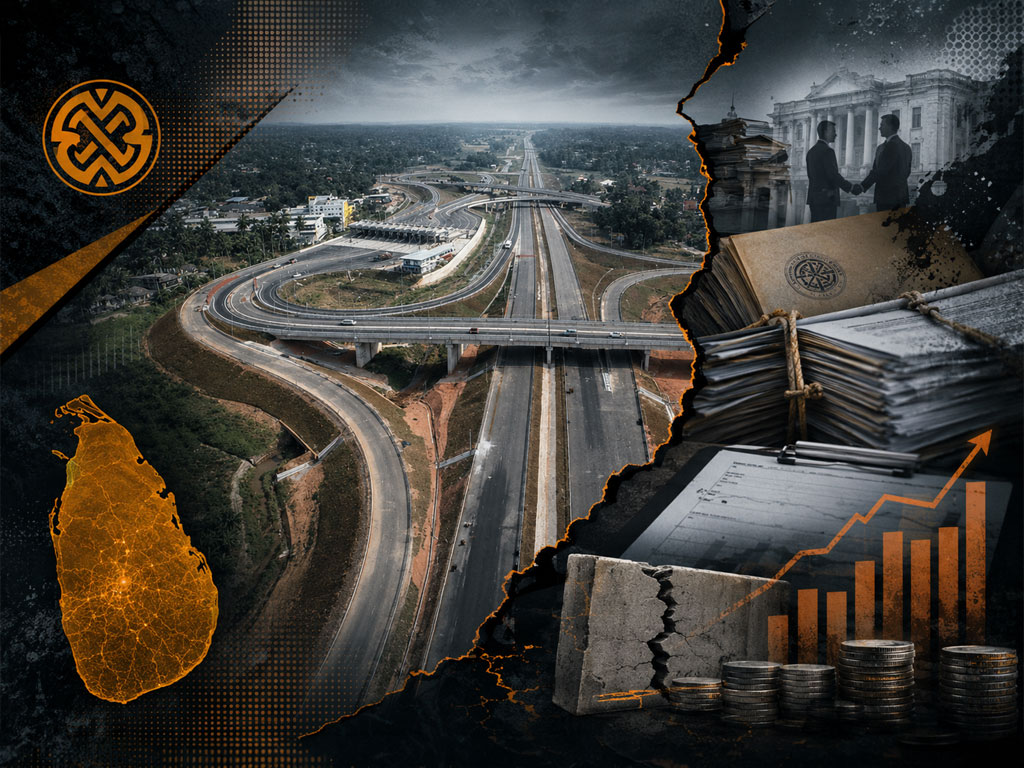
The RDA tender process faces scrutiny after an engineer alleged restricted competition added Rs. 17.87 billion to an expressway project.
Sri Lanka’s RDA tender process faces fresh scrutiny after a senior engineer alleged that restricted competition added Rs. 17.87 billion to an expressway project.
The concerns come as the Road Development Authority prepares to begin the fourth phase of the Central Expressway Project, known as CEP 4, and the Ruwanpura Expressway.
The engineer, who spoke anonymously to the Daily Mirror, alleged that the RDA, Ministry of Transport and Highways and National Procurement Commission had failed to ensure adequate competition.
He said the issue extended beyond a technical flaw in procurement. Instead, he warned that an allegedly restrictive prequalification system could expose the public to billions of rupees in additional costs.
According to the engineer, the warning signs already appear in the RDA’s own project data.
Get Breaking News First
on WhatsApp

Restricted RDA tender process questioned
During Section 2 of CEP 3, the RDA reportedly allowed only six local contractors to qualify for seven separate contract packages.
With fewer contractors than available packages, the engineer argued that meaningful competition effectively disappeared. Each participating company therefore had a strong chance of securing part of the project.
Every bid submitted for the packages reportedly exceeded the engineer’s estimate by between 16% and 21%.
The original estimated cost stood at Rs. 94.69 billion. However, the total reportedly increased to Rs. 112.56 billion.
That difference placed an additional Rs. 17.87 billion burden on public finances, according to the engineer. He described the increase as evidence of a systemic weakness rather than a minor cost variation.
The engineer contrasted that result with Section 1 of CEP 3, where more contractors competed than the number of packages available.
Bids in that section reportedly came in between 38% and 42% below the engineer’s estimate.
As a result, the Government saved nearly Rs. 5.9 billion, he said.
The comparison, according to the engineer, demonstrates that open competition can reduce construction costs. Restricting the number of participants, however, may force the Government to pay considerably more.
Why were only six contractors selected?
The engineer questioned why the RDA adopted a more restrictive system during the second phase.
Sri Lanka reportedly has 13 contractors holding the Construction Industry Development Authority’s CS2 grading. This represents the highest category available for highway construction.
However, only six companies received the opportunity to compete for the seven packages. Authorities reportedly excluded the other firms by applying demanding financial and technical conditions.
The engineer said the Ministry of Transport and the National Procurement Commission must explain whether those requirements were genuinely necessary.
They must also address whether the criteria effectively pre-selected a limited group of contractors, he added.
Another concern was the absence of any bid below the engineer’s estimate. In a genuinely competitive tender, that outcome alone should have triggered closer examination, the engineer argued.
However, he alleged that authorities continued the process without launching an investigation into the pricing pattern.
During Section 1 of CEP 3, about 15 contractors competed, including several medium-sized companies.
Most reportedly lacked previous expressway-building experience. Nevertheless, the engineer said they completed their work within the required timeframe and met the expected construction standards.
Had the present qualification restrictions applied during that earlier phase, many companies now considered leading contractors may never have qualified, he argued.
Fears model could return for new expressways
The engineer warned that authorities could repeat the same model when awarding contracts for CEP 4 and the Ruwanpura Expressway.
Both projects involve substantial public expenditure. Therefore, any unnecessary restriction on competition could produce another major financial burden.
He outlined several options for broadening competition without reducing construction standards.
First, the RDA could allow international contractors already operating in Sri Lanka to submit bids. Such companies are familiar with domestic laws, administrative procedures and environmental requirements.
Their participation would therefore not necessarily create a major administrative burden.
Second, authorities could allow all local contractors holding the highest CIDA highway grade to compete. They would still need to meet appropriate financial and technical standards.
Third, Sri Lankan CS2 contractors could form joint ventures with experienced international companies.
Such partnerships could combine local resources and knowledge with international technology, expertise and financial capacity.
These steps, the engineer argued, would expand competition while protecting technical quality.
Procurement bodies urged to protect public funds
The National Procurement Commission carries responsibility for promoting fairness, transparency and competition in public procurement.
The Ministry must protect public funds, while the RDA must ensure that procurement policies remain intact during project implementation.
Sri Lanka continues to face intense pressure to maintain fiscal discipline. Against that backdrop, the engineer argued that an alleged Rs. 17.87 billion loss caused by limited competition cannot be justified.
The matter also falls within the ministry headed by Bimal Ratnayake, who has not previously faced corruption allegations.
However, the article warned that the controversy could expose him to criticism if authorities fail to address the claims. Some analysts have also suggested the restrictions may have formed part of a deliberate plan, although the article provided no evidence establishing that allegation.
The allegations require a transparent and independent examination before contracts for the next expressway projects proceed.
The public has a right to know whether the tender conditions protected construction quality or unfairly restricted competition.
Ignoring the lessons from CEP 3 could produce consequences beyond another financial loss. It could also severely damage public confidence in the management of Sri Lanka’s largest national infrastructure projects.