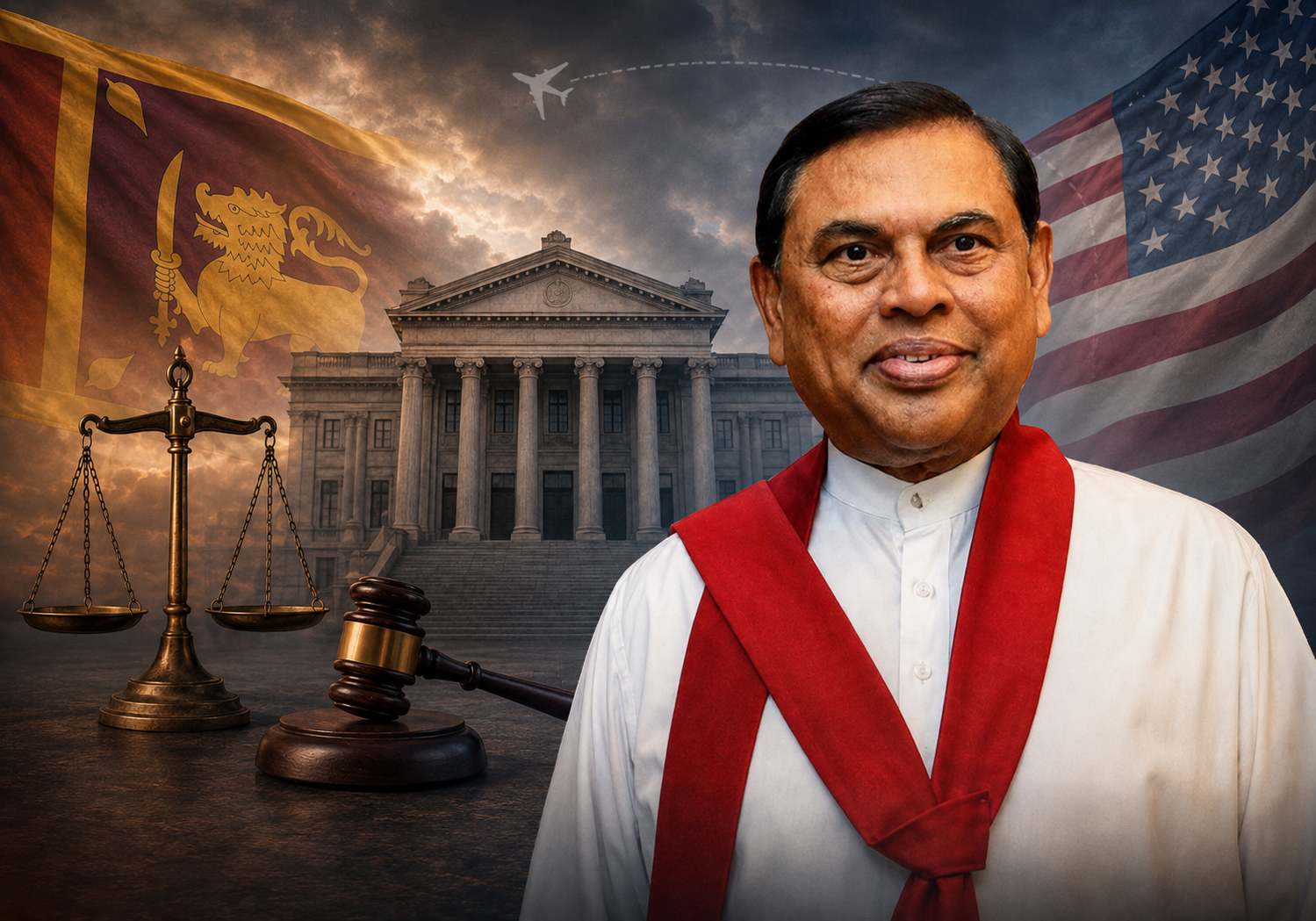
Sri Lanka will seek US assistance to bring Basil Rajapaksa before court over the alleged Rs. 60 million Brown’s Hill property purchase.
Sri Lanka will seek assistance from United States authorities in the Basil Rajapaksa extradition process to bring the former minister before court over the Brown’s Hill property case in Matara.
Minister of Public Security and Parliamentary Affairs Ananda Wijepala said the government plans to follow the necessary legal procedures through the US judicial system. Rajapaksa is currently believed to be in the United States.
The move follows repeated attempts by the Matara Magistrate’s Court to secure his appearance in the case. It concerns allegations linked to the purchase of a property on Eliyakanda Road in Matara.
The government has said it will use formal legal channels rather than treating the matter as a political or administrative request.

Basil Rajapaksa Extradition Follows Fresh Warrant
The Matara Chief Magistrate’s Court reissued an arrest warrant against Rajapaksa on July 21, 2026, after he failed to appear before court for a second time.
Chief Magistrate Chathuranga Eranga Dissanayake ordered police to arrest Rajapaksa and produce him before court when the case was called.
The court had previously issued a warrant on May 22, 2026, after the former minister failed to attend an earlier hearing. Lawyers representing Rajapaksa made submissions concerning his health and said he was receiving medical treatment overseas.
However, the magistrate rejected those submissions when the first warrant was issued. During the July hearing, prosecutors maintained that Rajapaksa had continued to avoid appearing before court. The court then issued a fresh warrant.
The matter was scheduled to be recalled on August 18 for written submissions from the bail sureties and further proceedings.
Brown’s Hill Property Purchase Under Investigation
The Brown’s Hill case relates to the purchase of a one-and-a-half-acre coconut estate on Eliyakanda Road in Matara.
Investigators allege that the property, reportedly worth about Rs. 60 million, was purchased using funds obtained through unlawful means. The allegations have not yet been proven in court.
The case was filed by the Police Financial Crimes Investigation Division. It names Basil Rajapaksa and several other accused.
Ayoma Galappaththi, who has been identified in court reports as the sister of Rajapaksa’s wife, is also named in the case. Tissa Galappaththi and Muditha Jayakody are among the other accused.
Rajapaksa is listed as the third accused, while Ayoma Galappaththi is listed as the fourth accused.
Neither Rajapaksa nor Galappaththi was present in open court when the case was heard on July 21. Their bail sureties attended but were unable to produce the two accused.
The magistrate directed the sureties to explain why the bail amounts should not be forfeited to the State. They later requested time to submit written explanations.
Court reports also said that a foreign travel ban imposed on Rajapaksa remained in force while the case continued.
Sri Lanka Considers International Legal Assistance
Sri Lankan authorities previously indicated that they would consider seeking assistance from INTERPOL and other international agencies to locate Rajapaksa and bring him before court.
Minister Wijepala has said that international legal mechanisms used to pursue organised crime suspects and drug traffickers overseas would also be applied to former ministers and politicians wanted by Sri Lankan courts.
He said law-enforcement action would be taken without considering a suspect’s previous position or political status.
However, seeking US assistance would only begin a formal international process. It would not automatically result in Rajapaksa’s arrest or return to Sri Lanka.
Sri Lankan authorities would need to submit court orders, details of the alleged offences and other supporting documents through the appropriate diplomatic and judicial channels.
Any request would then be considered by the relevant US authorities under American law and applicable legal arrangements.
Similarly, an INTERPOL notice would not by itself order the United States to return Rajapaksa. Such a notice may help authorities locate a wanted person and could support a request for provisional arrest.
Nevertheless, decisions involving arrest, detention or surrender would remain subject to the laws and courts of the country where the person is located.
Therefore, the government’s announcement represents the start of a possible legal process rather than confirmation that Rajapaksa will be returned.
Rajapaksa has not been convicted over the Matara property transaction. The allegations must be tested before a court, and he remains entitled to the presumption of innocence until proven guilty.