e-Motoring investigation examines alleged vehicle registration manipulation, tax losses and system failures inside Sri Lanka’s Motor Traffic Department.
The e-Motoring investigation has placed Sri Lanka’s Department of Motor Traffic under renewed scrutiny over alleged registration manipulation, tax losses and long-running weaknesses in its digital systems.
The e-Motoring project aimed to digitise and streamline services at the Department of Motor Traffic, replacing an older computer system introduced in 1996.
Authorities originally proposed the project in 2009 as a more transparent electronic platform. In 2018, the procurement contract went to a joint venture involving Metropolitan Advance Technology and South Africa’s Face Technologies.
However, Face Technologies later withdrew from the partnership. This created questions over software ownership, system functionality and the project’s ability to operate as originally intended.
The payment model also drew scrutiny. State administrative and audit sectors questioned the basis for a charge of Rs. 187.97 per transaction, alongside concerns over escalating costs.
The system is now reported to be technically inactive, or operating in what has been described as “silent mode”, while authorities review the project at ministry level.
Get
Breaking News
First
on WhatsApp
Follow The Morning Telegraph for instant alerts, top stories and exclusive updates delivered straight to your phone.

e-Motoring Investigation Focuses on Registration Data
The failure to fully modernise the department’s information technology system has now become central to investigations by the Commission to Investigate Allegations of Bribery or Corruption and the Criminal Investigation Department.
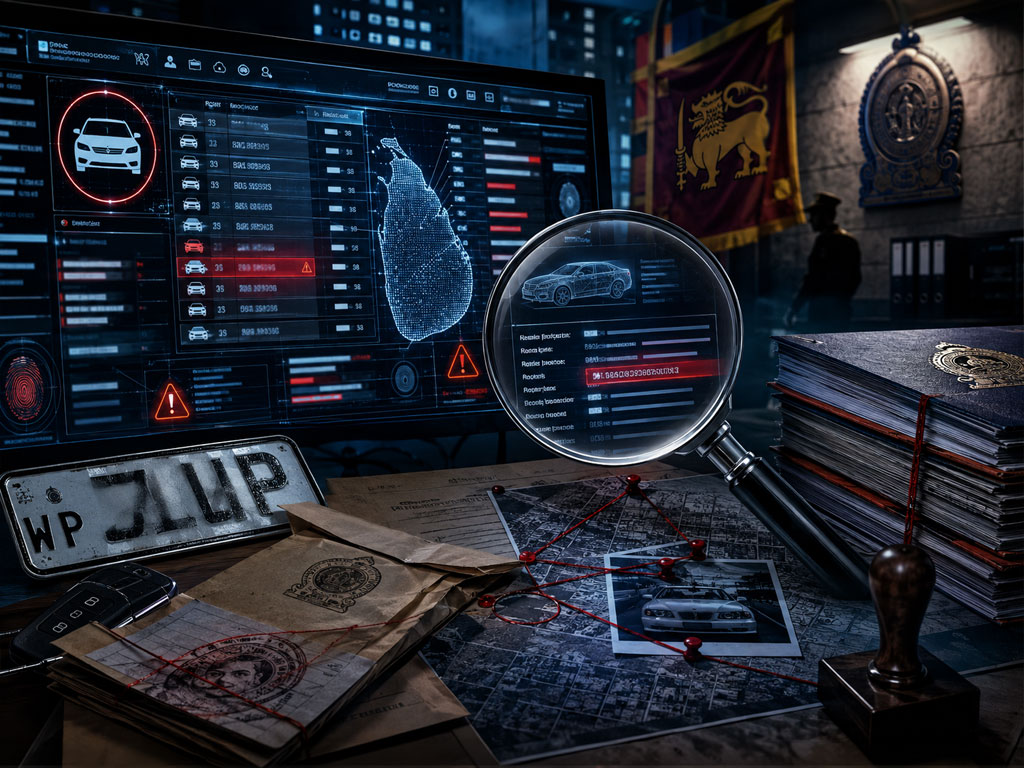
Investigators are examining claims that officials exploited weaknesses in the older computer database to alter vehicle-registration information.
According to National Audit Office reports and ongoing investigations, authorities have identified alleged manipulation involving inactive registration numbers previously assigned to diplomats who had left Sri Lanka.
Investigators have also examined allegations involving motorcycle and other vehicle chassis numbers that were altered or removed from the system.
The inquiries further concern luxury vehicles allegedly brought into Sri Lanka illegally and later entered into the registration database.
Legal records cited in the investigation state that the Government suffered substantial customs-revenue losses because vehicles were allegedly registered while avoiding applicable taxes.
These allegations have transformed what began as a failed digital-modernisation project into a wider investigation involving public revenue, data integrity and administrative accountability.
Former RMV Chiefs Among Officers Facing Proceedings
The Bribery Commission and CID have arrested and produced several former and serving Department of Motor Traffic officials before court in connection with the investigations.
They include former Commissioners General Nishantha Anuruddha Weerasinghe and Kamal Amarasinha.
The courts subsequently released the suspects on bail while investigations continued.
Investigators have also conducted searches at the Department of Motor Traffic premises in Narahenpita. During those operations, officials took money and documents into custody as part of the continuing inquiries.
The allegations remain subject to investigation and judicial proceedings, and the courts must ultimately determine individual criminal responsibility.
Digital Reforms Sought as Questions Remain
Meanwhile, the Department has introduced temporary measures as authorities attempt to strengthen the vehicle-registration process.
These include online vehicle ownership transfers and the requirement to submit a Taxpayer Identification Number, or TIN, for vehicle ownership transfers from 2026.
Officials are also considering direct data integration between Sri Lanka Customs and the Department of Motor Traffic.
Such integration could allow authorities to compare customs import information directly with registration records and potentially reduce opportunities for fraudulent entries.
Attention is also turning toward reactivating the e-Motoring project after resolving its legal, contractual and technical problems.
The e-Motoring investigation therefore raises a wider question about Sri Lanka’s digital governance: whether a system designed to eliminate manipulation instead became trapped in technical failures while vulnerabilities in the older database remained open to abuse.
A video examining the alleged e-Motoring irregularities, registration manipulations and the role of senior RMV officials will be released soon.