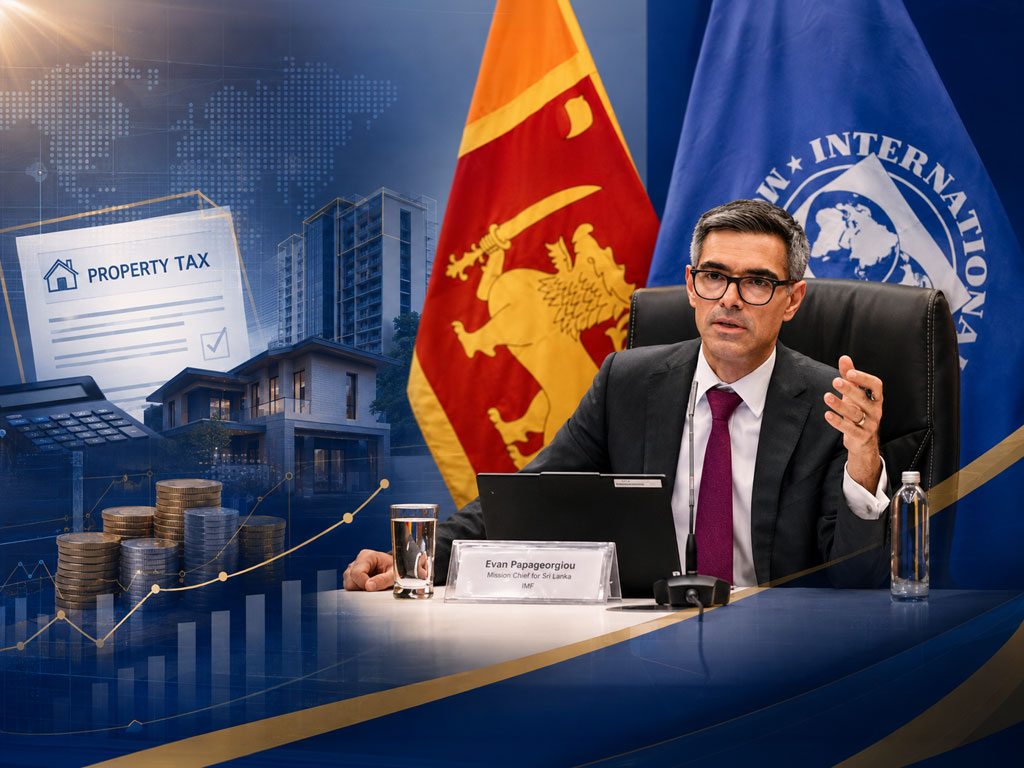
Sri Lanka property tax plans face renewed IMF pressure, with implementation expected within the first six months of next year.
The Sri Lanka property tax should be introduced within the first six months of next year, according to the International Monetary Fund’s expectations under its programme.
The proposed tax would primarily target people who own a second home or additional residential property.
The IMF says the Government is still studying the exact timetable and structure required to introduce the new tax system.
According to the Fund, property taxation forms an important part of a formal tax framework. It can also make a significant contribution to strengthening Sri Lanka’s domestic revenue.
The IMF has additionally recommended that the Government develop a “Medium-Term Revenue Strategy” to create a more efficient and equitable tax system.
That strategy includes expanding the taxpayer base, strengthening tax administration and removing unnecessary tax concessions.

How the Sri Lanka Property Tax Would Work
A property tax is a direct levy based on the value of immovable assets owned by an individual.
Such property can include land, houses and buildings.
Local government authorities already collect assessment taxes on property through periodic payments. However, the IMF proposal involves a broader property tax implemented at national level.
Authorities initially planned to introduce the system in 2025.
However, two major obstacles have affected implementation.
One involves legal issues connected to the 13th Amendment to the Constitution.
The other is the absence of a comprehensive national database containing reliable and accurate property valuation information.
Without such a database, implementing a wider property-based tax system remains difficult.
Government sources have meanwhile argued that there is no immediate need to introduce another property tax because existing revenue streams have already allowed the country to meet revenue targets.
The IMF, however, maintains that structural tax reforms of this nature remain important for Sri Lanka’s long-term economic stability.
Accordingly, the Fund has called on the Government to prepare the necessary groundwork for implementing the Sri Lanka property tax.
A key part of that preparation will involve developing the database systems needed to identify properties, establish reliable valuations and support the eventual operation of the new tax structure.