By Roy Denish.
MV X-Press Pearl compensation remains stalled as victims await justice amid court delays, a weakened commission and a judicial tenure controversy.
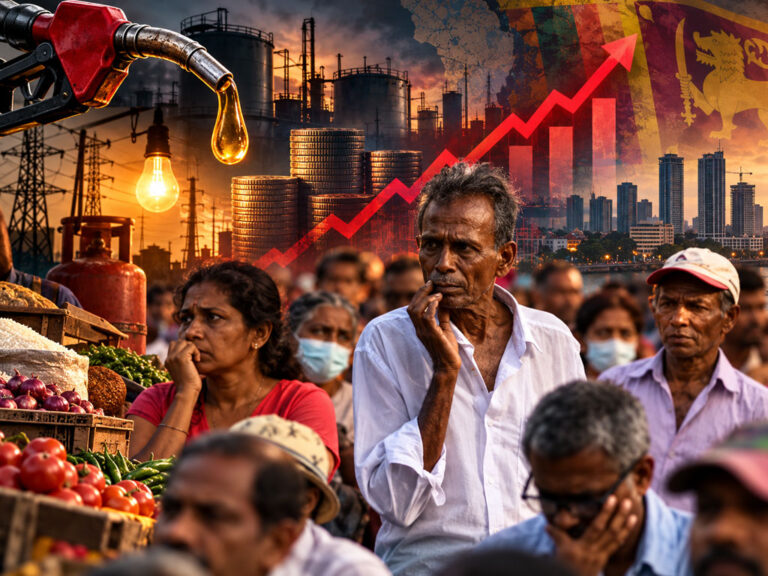
Imagine watching your entire livelihood wash away in a tide of burning plastic, toxic chemicals, and black oil, only to be told that a billion-dollar promise of justice is quietly evaporating behind closed courtroom doors. That is the stark reality facing tens of thousands of fishermen along Sri Lanka’s western coast, five years after the container ship MV X-Press Pearl caused the worst marine environmental disaster in the island’s history.
What was initially hailed as a watershed moment—a unanimous Supreme Court ruling ordering the vessel’s operators to pay one billion United States dollars—has devolved into a systemic unraveling characterized by a silenced compensation commission, a diminished judicial bench, and a stalled payout in which barely a fraction of a percent has reached the national Treasury.
Compounding this tragedy, the government is aggressively fast-tracking a controversial constitutional amendment to raise the judicial retirement age, a move designed to keep the sitting Chief Justice in office beyond his mandatory retirement while effectively bypassing the referendum required by the supreme law.

As international insurers lobby heads of state and the machinery of justice grinds to a deliberate halt, the public is left confronting an alarming convergence of institutional self-preservation and corporate impunity, forcing the nation to ask whether its poorest citizens are being sacrificed to protect the powerful.
The catastrophe itself began in May 2021, when the container vessel caught fire off the coast of Colombo, burning for nearly a fortnight before plunging into the sea and unleashing an unprecedented torrent of hazardous cargo.
It released millions of plastic nurdles, toxic heavy metals, and oil into local waters, immediately halting fishing operations and shattering the economic backbone of coastal families who relied on the sea for their daily survival.
Four long years later, on July 24, 2025, the Supreme Court delivered what appeared to be a historic judgment, holding the ship’s local agents, owners, and operators jointly and severally liable for the devastation.
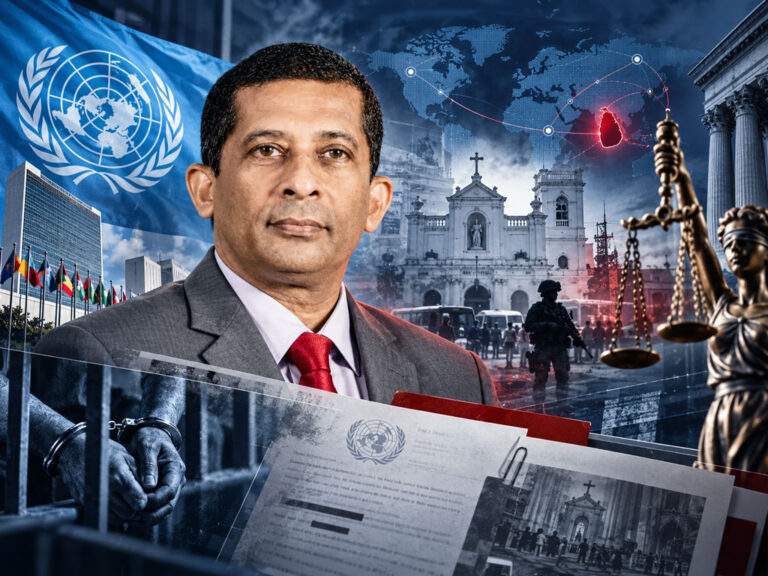
A full bench of five judges, presided over by then-Chief Justice Murdu Fernando, ordered an initial payment of one billion dollars and established the MV X-Press Pearl Compensation Commission—chaired by a retired Supreme Court judge—to disburse funds to more than 19,000 affected claimants.
Crucially, paragraph 899 of the judgment mandated that proceedings remain open before the original five-judge bench, directing the Registrar to pass the file to the incoming Chief Justice to fill any subsequent vacancies and ensure uninterrupted oversight.
Three days after delivering that landmark ruling, Murdu Fernando retired at the mandatory age of sixty-five, and Preethi Padman Surasena was sworn in as the 49th Chief Justice of Sri Lanka, setting the stage for what critics describe as an extraordinary institutional retreat.
What followed this monumental victory stands as a masterclass in bureaucratic obstruction and the quiet dismantling of judicial accountability, beginning with the financial vacuum left in the wake of the ruling.
Against the one-billion-dollar order, only a token sum—roughly one million dollars, or one dollar in every thousand—has actually reached the national Treasury, representing an abysmal failure of enforcement.
Meanwhile, the ship operator turned to Singapore to pursue international arbitration, seeking to cap its liability at a fraction of the Sri Lankan court’s award while local authorities appeared to remain on the sidelines.
The judicial safeguards built into the original judgment were systematically dismantled when the first subsequent hearing, on September 25, 2025, was heard by just three judges instead of the mandated five.
By January 26, 2026, that three-judge bench had terminated the proceedings entirely, reportedly without even serving motions on the original petitioners who had fought for and won the case.
At the same time, the compensation commission was reduced to near-total paralysis, effectively gagging the very body created to protect the victims.
In a formal report to the Supreme Court, Commission Chairman and retired Justice E.A.G.R. Amarasekara detailed how the body was stonewalled at every turn by the judicial administration.
Written requests for certified records went unanswered, expert members worked for months without pay, and the Commission learned of the case’s termination secondhand through public channels rather than through official notification.
Most alarmingly, the Commission explicitly warned in writing that these indefinite delays were causing the compensation pool to evaporate, raising fears of a behind-the-scenes settlement at a figure that would directly contradict the Court’s original computation.
While the courts stalled and the Commission was starved of resources, external pressure mounted from the London P&I Club—the polluter’s liability insurer—which wrote directly to the President of Sri Lanka and the Chancellor of the Exchequer in London, seeking political and diplomatic intervention outside the independent judicial process.
While compensation funds remain stalled and the Commission is silenced, the executive branch is aggressively advancing the 22nd Amendment to the Constitution to raise the retirement age of Supreme Court and Court of Appeal judges.
Although officials claim the amendment is intended to clear court backlogs, its timing and the government’s determination to pursue it have fueled allegations that it is designed to protect specific individuals at the apex of judicial power.
The administration is pressing ahead despite opposition from the Bar Association of Sri Lanka, sitting judges, civil society groups, religious leaders, and international legal bodies that view the move as a threat to judicial independence.
Under Article 107 of the Constitution, judicial tenure is protected as an integral component of judicial independence, which is directly connected to the people’s sovereign rights under Articles 3 and 4(c).
In 2022, the Supreme Court explicitly ruled that any alteration to the tenure of incumbent judges impinges on judicial independence and requires a public referendum to give citizens a direct voice in the matter.
Yet Chief Justice Padman Surasena reaches the mandatory retirement age of sixty-five before the end of the year, creating a compressed timeline for the administration’s proposed changes.
Because a constitutional referendum cannot realistically be organized within that timeframe, critics argue that the government is attempting to bypass the requirement in order to keep Surasena in office until 2028—placing him at the head of the very court overseeing enforcement of the billion-dollar judgment.
The State’s defense rests on the absence of formal evidence of corruption or conspiracy, maintaining that no explicit bargain can be proven on paper.
Yet when an administration creates an undeniable convergence of troubling circumstances—a landmark billion-dollar judgment stalled, a compensation commission paralyzed, proceedings quietly wound down by a reduced bench, an insurer lobbying heads of state, and a constitutional amendment fast-tracked to extend the Chief Justice’s tenure—it cannot reasonably expect the public to remain silent.
Article 4(d) of the Constitution mandates that all organs of government must respect, secure, and advance the fundamental rights of the people without exception or evasion.
The citizens of Sri Lanka, particularly the impoverished fishermen of the western coast, were promised justice after enduring an ecological catastrophe that stripped away their livelihoods.
They are now watching that promise drain into the sea amid a cloud of political maneuvering and institutional indifference.
If the State has nothing to hide, it must address these grave appearances of impropriety with absolute transparency: enforce the judgment vigorously, adequately resource the Commission, disclose the terms of any settlement, and subject the judicial tenure amendment to the referendum the Constitution requires.
Without transparency and accountability, public confidence in the rule of law will remain the ultimate casualty, leaving a nation to wonder whether its highest courts exist to protect the vulnerable or shield the powerful.