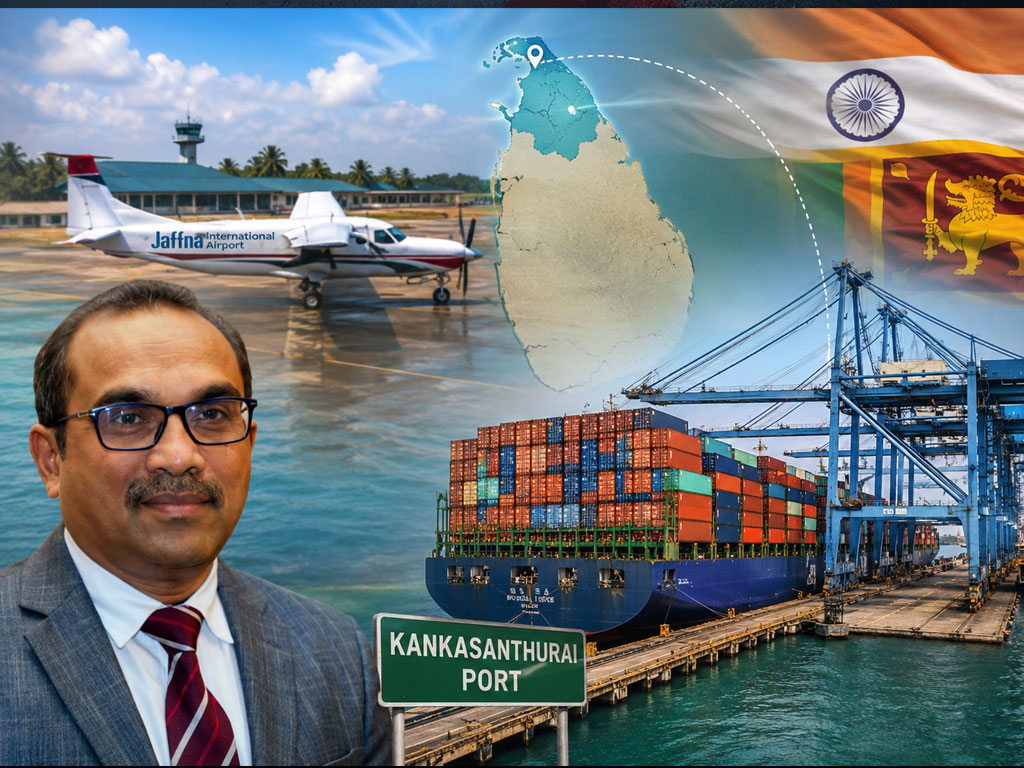
Jaffna airport port development remains a Government decision despite Indian funding, Transport Minister Bimal Ratnayake says amid growing debate.
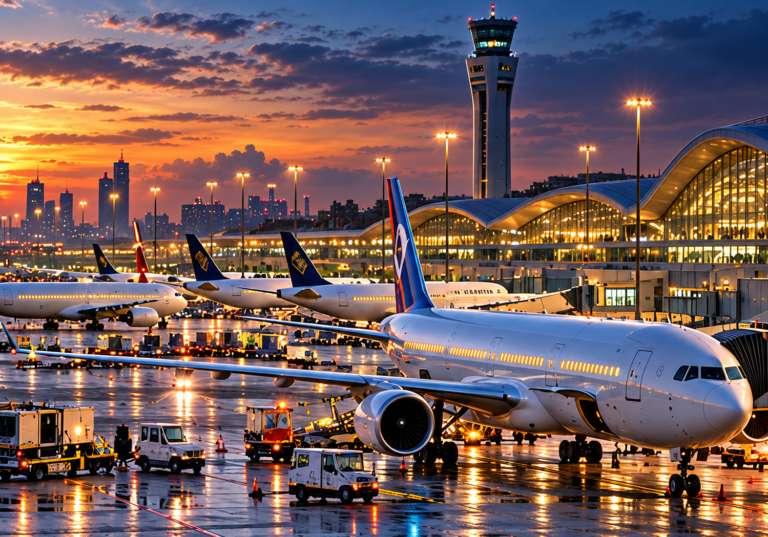
Jaffna airport port development will proceed according to decisions made by the Sri Lankan Government, despite financial assistance from India, Transport Minister Bimal Ratnayake has said.
According to the Jaffna Monitor, Ratnayake made the remarks during a media briefing at the National People’s Power office in Jaffna.
He was responding to questions about why development of Jaffna International Airport, also known as Palali Airport, and Kankasanthurai Port has not progressed despite Indian funding.
Ratnayake, who serves as Transport and Highways Minister and the NPP’s Northern Provincial Chief Coordinator, has faced criticism from opponents who accuse him of obstructing the two projects.

Jaffna Airport Port Development Funding Questioned
Ratnayake said India has provided some funding for the airport project.
However, he said the amount is insufficient to complete all the proposed work. Sri Lanka would therefore have to borrow additional funds to cover the balance.
The situation at Kankasanthurai Port is different.
India has stated that it will meet the full cost of the proposed development work at the port.
Ratnayake said the Government remains committed to development but stressed that Sri Lanka must decide what projects should proceed, where development should occur and when those projects should be implemented.
He cited Mattala Rajapaksa International Airport in the Southern Province as a warning against undertaking major infrastructure projects without adequate planning.
According to Ratnayake, previous governments imposed a substantial financial burden on the state through the Mattala project.
Critics Say Palali Is Different From Mattala
However, critics argue that comparing Mattala with Palali is difficult.
Mattala Airport was built at an estimated cost of approximately USD 248 million based on projected passenger demand that did not materialise.
Palali, they argue, has a different history and market.
Under an agreement reached in 2005, India initially provided assistance to rehabilitate infrastructure at the airport.
Apart from disruption during the pandemic, direct Jaffna-Chennai flights have operated since 2019, serving an established regional passenger market.
Supporters of expansion argue that additional direct connections with Indian cities could allow tourists, business travellers and members of the Sri Lankan Tamil diaspora to reach the North without first travelling through Colombo.
That could eliminate the six to eight-hour land journey from Colombo to Jaffna for many international visitors.
They argue that developing both gateways could also reduce the North’s economic dependence on Colombo and strengthen Jaffna’s position as a regional destination.
Economic Links With India Enter the Debate
The controversy has also taken on a political dimension.
One Jaffna-based economist cited in the report argued that reducing the North’s economic dependence on Colombo may be uncomfortable for politicians with what he described as a nationalist mindset, including Bimal Ratnayake.
That remains the economist’s political assessment rather than an established fact.
He further argued that a fully developed Kankasanthurai Port and Palali Airport could allow the Northern Province to establish stronger direct economic links with India without requiring commercial activity to pass through Colombo.
The debate over Jaffna airport port development therefore extends beyond infrastructure spending.
It now involves questions over national development priorities, borrowing, regional connectivity, relations with India and the extent to which the Northern economy should gain more direct access to international markets.