Lion Brewery excise allegations involve claimed Rs.115.5 million revenue losses, disputed agent licences and calls for a CIABOC forensic investigation.
Lion Brewery excise allegations have triggered calls for a wider investigation after a complaint claimed that irregular distributor approvals caused the Government to lose Rs. 115.5 million in revenue.
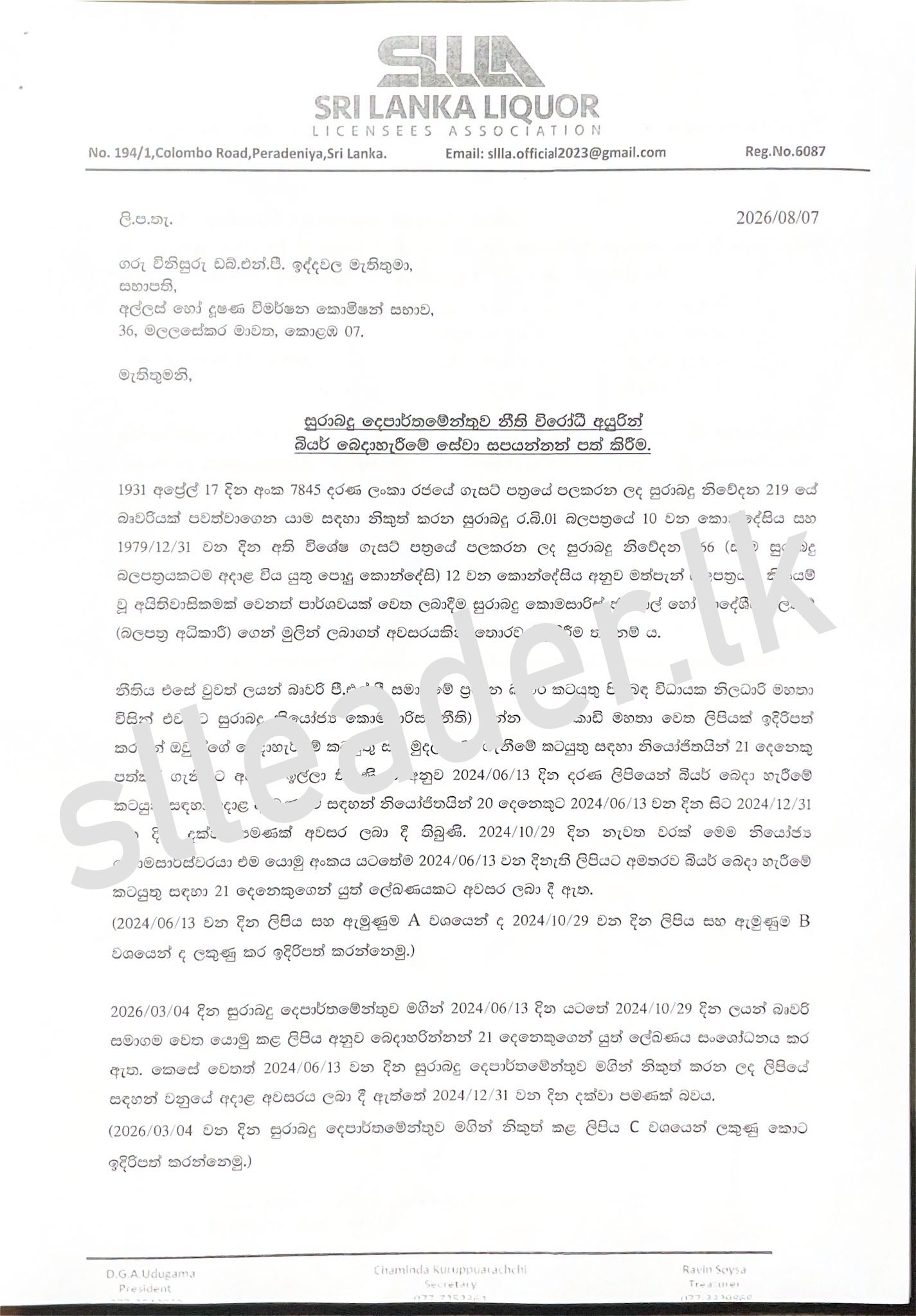
The allegations were reported by Sri Lanka Mirror and are said to arise from a complaint submitted by the Sri Lanka Alcohol Licensees Association to the Commission to Investigate Allegations of Bribery or Corruption.
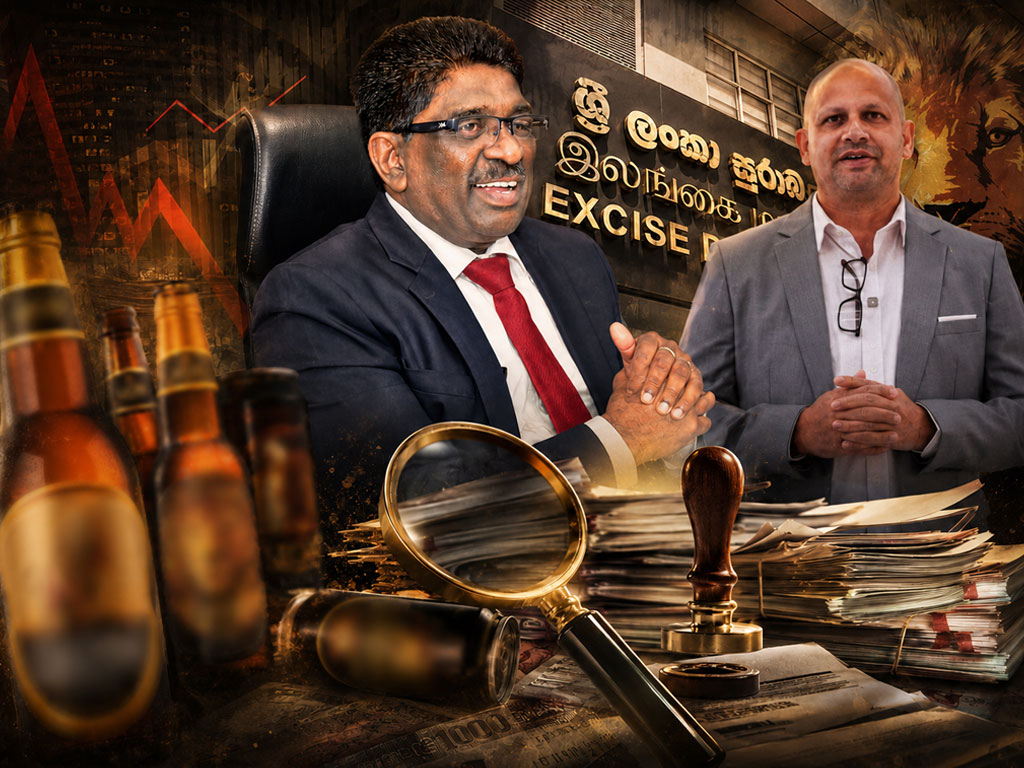
The complaint concerns Lion Brewery (Ceylon) PLC, several excise officials and the appointment of beer distribution agents.
The claims remain allegations and have not been established as fact through a court finding or completed anti-corruption investigation.
According to the complaint, 21 beer distribution agents allegedly operated without the mandatory RB-03 excise licence required under the applicable licensing framework.

Lion Brewery Excise Allegations Focus on Distributor Licences
The complaint argues that the appointments breached provisions of the Excise Ordinance No. 219 of 1931 and Gazette notifications No. 666 of 1979.
It alleges that licence-related rights were transferred to third parties without the prior approval required from the licensing authority.
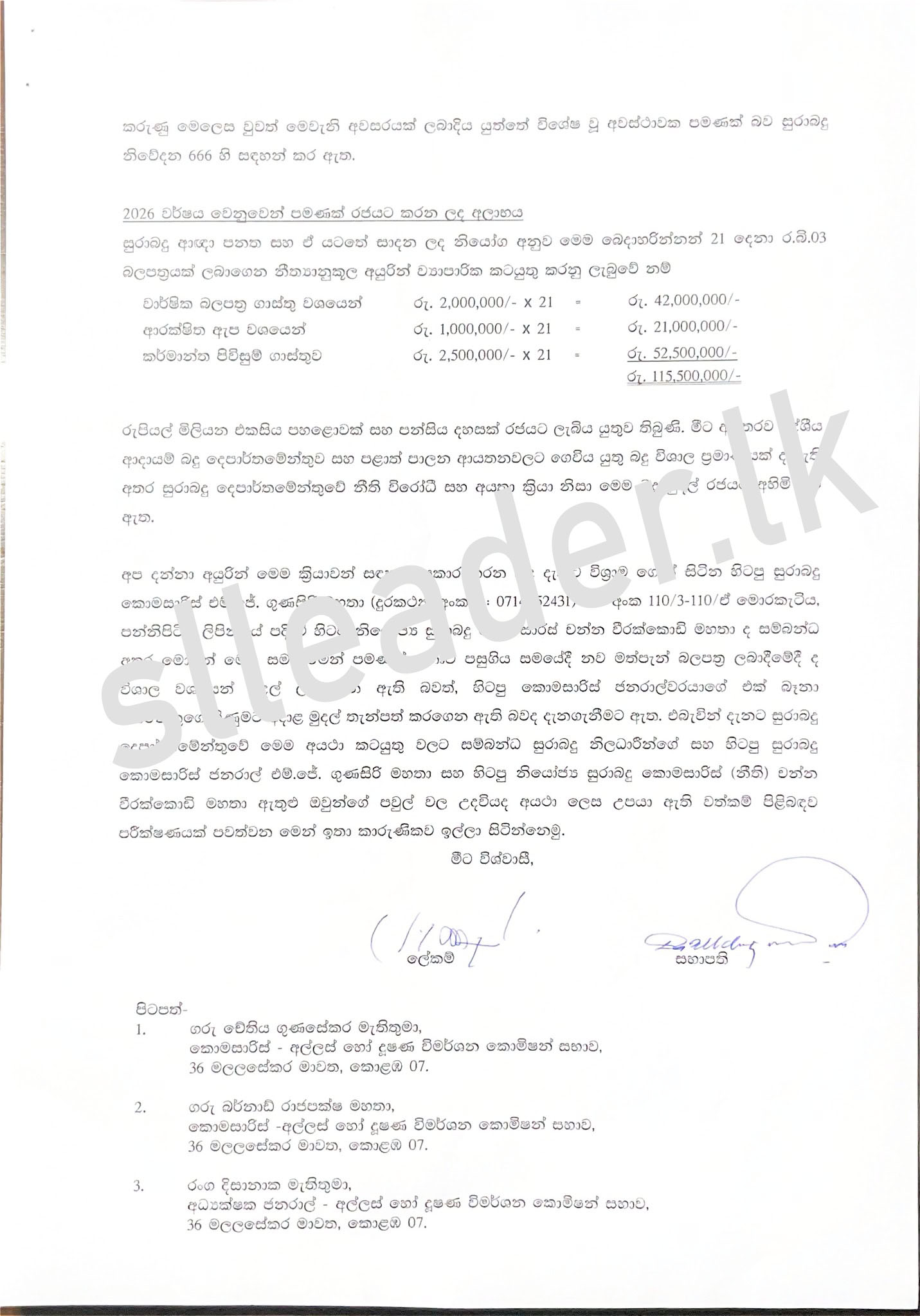
The association claims that the resulting direct loss to state revenue for 2026 amounted to Rs. 115.5 million.
That figure is broken down into Rs. 42 million in annual licence fees, Rs. 21 million in security deposits and Rs. 52.5 million in industry access fees.
The complaint also raises questions about the financial activity of agents allegedly operating without valid licences.
It claims those transactions may not have been subject to the normal level of regulatory scrutiny.
As a result, the association argues that further revenue may have been lost through VAT and other payments due to the Inland Revenue Department and local authorities.
However, the amount of any additional tax loss has not been independently established in the material provided.
Questions Raised Over 2024 and 2026 Approvals
The complaint also cites documentary records relating to the approval of distributors.
According to the allegations, approval was granted to 20 agents on June 13, 2024.
That approval was reportedly due to expire on December 31, 2024.
However, the complaint says that on October 29, 2024, approval was issued to 21 agents using the same reference number.
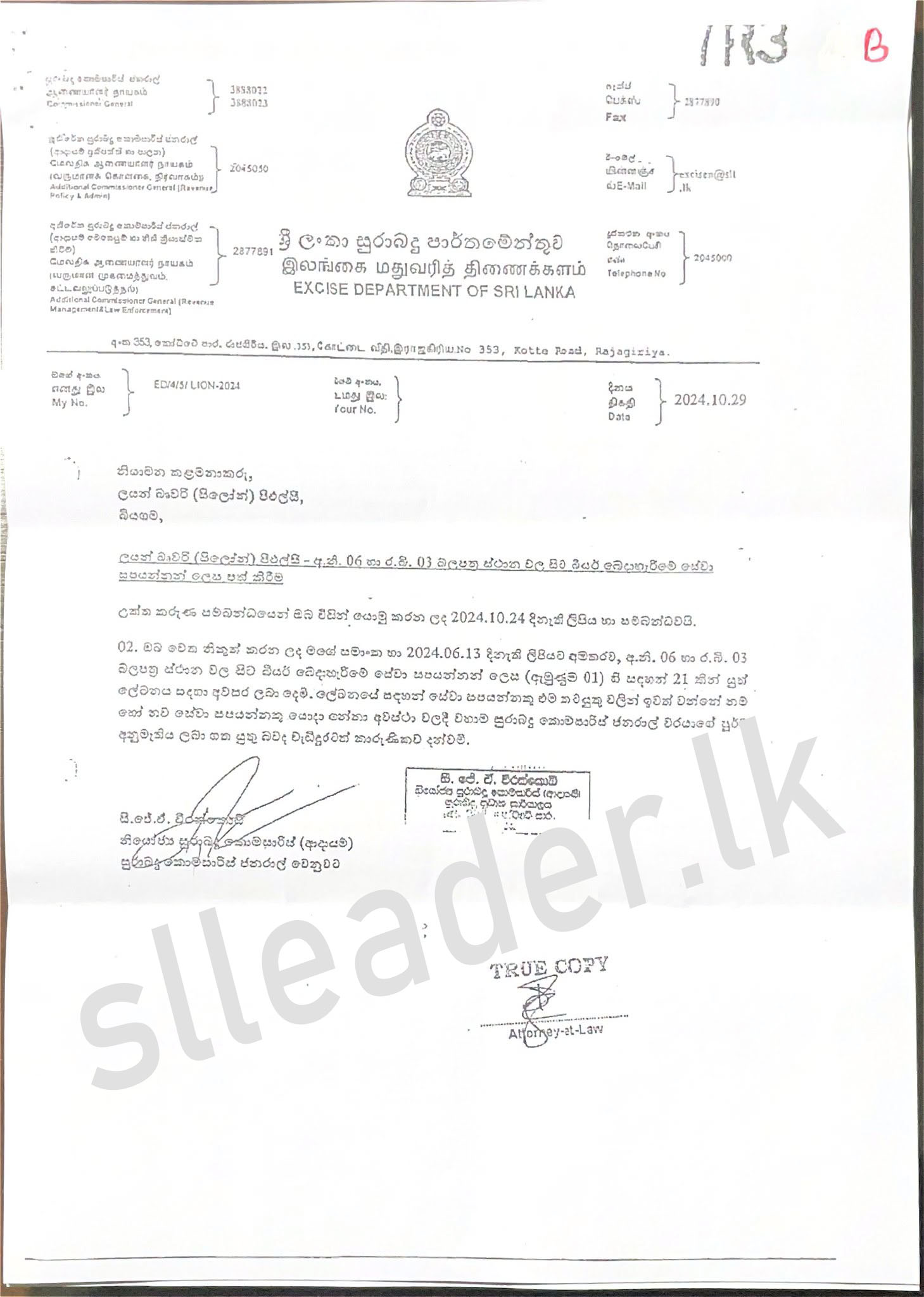
It further alleges that the Excise Department later amended the agent register in March 2026 using the original approval letter that had already expired.
New companies were allegedly added at that stage.
The association characterises those actions as improper alterations to official administrative records.
That allegation would require examination by the relevant authorities before any criminal conclusion could be drawn.
Named Officials and Bribery Claims
The complaint reportedly names Lion Brewery External Affairs Executive Channa Senarathna, former Excise Commissioner M.J. Gunasiri and former Deputy Commissioner (Legal) Channa Weerakkodi.
It alleges that they were among the key persons connected to the disputed approvals.
The complaint also makes a more serious bribery allegation.
It claims that a large payment was credited to the bank account of a relative, described as the son-in-law of a former Commissioner General, in connection with the approvals.
That allegation has not been proven and should be treated as a matter requiring investigation by CIABOC and other competent authorities.
The complaint further argues that the transactions should be examined under the Anti-Corruption Act No. 09 of 2023.
It also raises the question of whether private-sector corporate liability provisions could apply if any wrongdoing is ultimately established.
Call for Forensic Audit and Accountability
The broader issue behind the Lion Brewery excise allegations is whether state revenue and licensing rules were applied consistently.
The association argues that a forensic audit should examine the relevant approvals, payments, assets and the financial interests of any officials or connected parties involved.
It also wants authorities to determine whether public revenue was actually lost and, if so, how much should be recovered.
At a time when Sri Lanka continues to place heavy emphasis on tax collection and fiscal discipline, allegations involving excise revenue deserve careful and transparent examination.
However, accountability requires evidence rather than assumption.
The next step therefore rests with CIABOC, the Excise Department and any other competent investigative authority.
A credible inquiry should establish whether the distributor approvals complied with the law, whether state revenue was lost, whether any improper payments were made, and whether any individual or corporate entity bears legal responsibility.
Until those questions are resolved, the allegations remain serious but unproven claims requiring independent investigation.
SOURCE:- SRI LANKA LEADER