
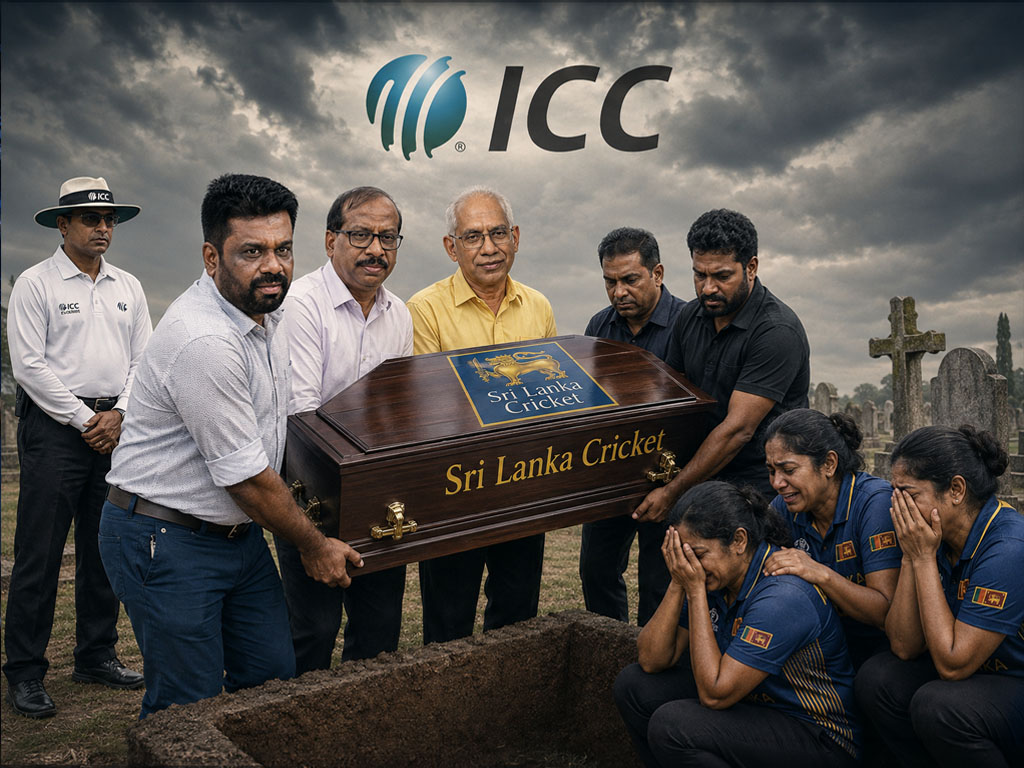
Sri Lanka ICC hosting rights controversy raises questions over political interference, lost cricket revenue and accountability for the 2027 tournament.
The Sri Lanka ICC hosting rights controversy has intensified, with criticism mounting over government intervention in cricket administration and the possible financial consequences for the country.
Sri Lanka faces losing the hosting rights for the 2027 ICC Women’s Champions Trophy amid concerns surrounding political interference in the administration of Sri Lanka Cricket.
One of the International Cricket Council’s key governance principles requires member cricket boards to operate independently and without inappropriate political interference.
Critics argue that despite knowing this requirement, the President and Sports Minister proceeded with the appointment of the “Cricket Transformation Committee” and other interim arrangements through gazette notifications.

The central question is now one of accountability.
If decisions taken by political authorities result in the country losing substantial international revenue, should those responsible be held accountable for the resulting financial consequences?
The criticism goes further, questioning whether decisions made through poor judgement, inadequate foresight or mismanagement could amount to misuse of public responsibility.
It has also been alleged that the decision to appoint Eran Wickramaratne to the cricket administration came directly from the President.
Critics contend that efforts to take control of Sri Lanka Cricket have now placed millions of dollars in potential revenue at risk.
Sri Lanka ICC Hosting Rights and Direct Financial Losses
The criticism surrounding the Sri Lanka ICC hosting rights issue focuses heavily on the potential financial impact.
It is claimed that the ICC has rejected the politically appointed administrative structure and withdrawn Sri Lanka’s hosting opportunity.
If that position stands, the country could lose both direct payments and wider economic benefits connected to the tournament.
For major ICC tournaments, host countries can receive substantial organisational funding to cover stadium preparation, security and local transport.
The figures cited in the criticism place those payments between USD 2 million and USD 8 million.
Losing the tournament would therefore mean losing that potential hosting and organisational income.
Another major issue concerns Sri Lanka’s participation in the competition itself.
As host nation, Sri Lanka would have benefited from direct qualification.
However, if hosting rights are lost and Sri Lanka does not qualify through rankings, the national women’s team could potentially miss the tournament.
The criticism states that this could also cost Sri Lanka a minimum ICC participation payment of USD 1.25 million, along with the possibility of additional prize money depending on performance.
Broadcasting, Sponsorship and Tourism Revenue at Risk
Commercial and media income is another concern.
Sri Lanka Cricket could lose additional revenue associated with domestic broadcasting rights, sponsorship arrangements and advertising opportunities inside tournament venues.
Beyond cricket administration, the wider economy could also suffer.
A major international tournament would normally bring players, team officials, international journalists and foreign spectators into the country.
Those visitors would spend money on hotels, transport, food, entertainment and other local services.
The argument is that losing a global cricket tournament therefore means losing not only ICC-related revenue, but also foreign exchange that could have flowed directly into Sri Lanka’s tourism and small-business sectors.
Critics place direct responsibility for these potential losses on President Anura Kumara Dissanayake, the Sports Minister and other officials involved in restructuring cricket administration.
However, claims that particular officials committed a “financial crime” or acted illegally remain allegations and would require proper legal determination.
Political Interference Raises Wider Accountability Debate
The strongest criticism is that officials knew the ICC’s position on political interference yet still appointed interim bodies and the Cricket Transformation Committee.
Those opposing the appointments argue that the moves damaged Sri Lanka’s international cricket standing, threatened opportunities for players and exposed the country to significant economic losses.
They also argue that officials responsible for decisions that cause measurable financial damage should not be protected merely because those decisions were political or administrative.
The Sri Lanka ICC hosting rights dispute has therefore developed into a wider debate over sports governance, political intervention and public accountability.
At stake is not only the future of a major women’s cricket tournament, but also Sri Lanka’s international reputation and the revenue that global sporting events can generate.
Critics are now calling for those responsible for any proven losses to be identified and held accountable, with financial losses recovered where the law permits.



Sri Lankans at any time do not think in terms of MONEY. Sri Lanka needs unnecessary influx into the country causing unnecessary problems.