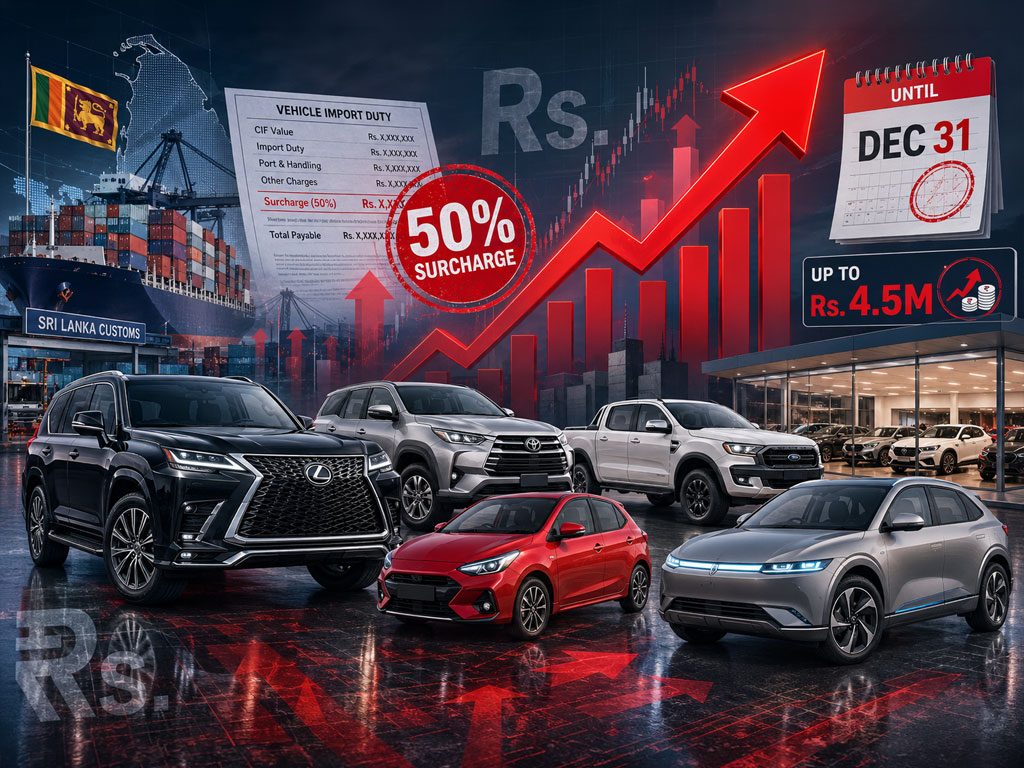
Sri Lanka vehicle prices have risen sharply after the government extended the 50% import tax surcharge, with some models up by Rs. 4.5 million.
Sri Lanka vehicle prices have risen sharply after the government decided to extend the 50% surcharge on vehicle import taxes until December 31 next year.
The decision has already pushed up showroom prices, with several popular vehicle models recording increases of as much as Rs. 4.5 million.
The main reason for the price increases is that the higher tax rate applies to vehicles imported under Letters of Credit, or LCs, opened after May 15.
Vehicle dealers say the market has already begun adjusting prices to reflect the additional tax burden.

- Toyota Land Cruiser: Increased by Rs. 4.5 million
- Toyota Prado: Increased by Rs. 2.5 million
- Double-cabs: Increased by between Rs. 2 million and 2.5 million
- Honda Vezel: Increased by Rs. 900,000
- Toyota Raize: Increased by Rs. 800,000
- Suzuki Wagon R: Increased by Rs. 500,000
- Toyota Yaris: Increased by Rs. 500,000
- BYD Atto 1 (electric vehicle): Increased by Rs. 1 million
Vehicle Importers Association of Sri Lanka President Prasad Manange said importers had expected the surcharge to end rather than continue.
However, he said the extension has forced showroom prices higher.
Manange noted that around 90% of vehicles currently available in the market were imported under Letters of Credit opened before May 15.
As a result, he warned that Sri Lanka vehicle prices could rise further once stocks imported under the new tax structure begin reaching showrooms in greater numbers.
He said the government should consider alternative measures to stabilise the market instead of repeatedly relying on additional surcharges.
Among the measures proposed were changes to vehicle tax policy, tighter regulation of Letters of Credit and steps towards maintaining more stable exchange rates.
The latest increases therefore may not represent the final adjustment in Sri Lanka vehicle prices.
Importers warn that further upward pressure could emerge as older stocks are depleted and vehicles imported under the higher tax regime become a larger share of the market.