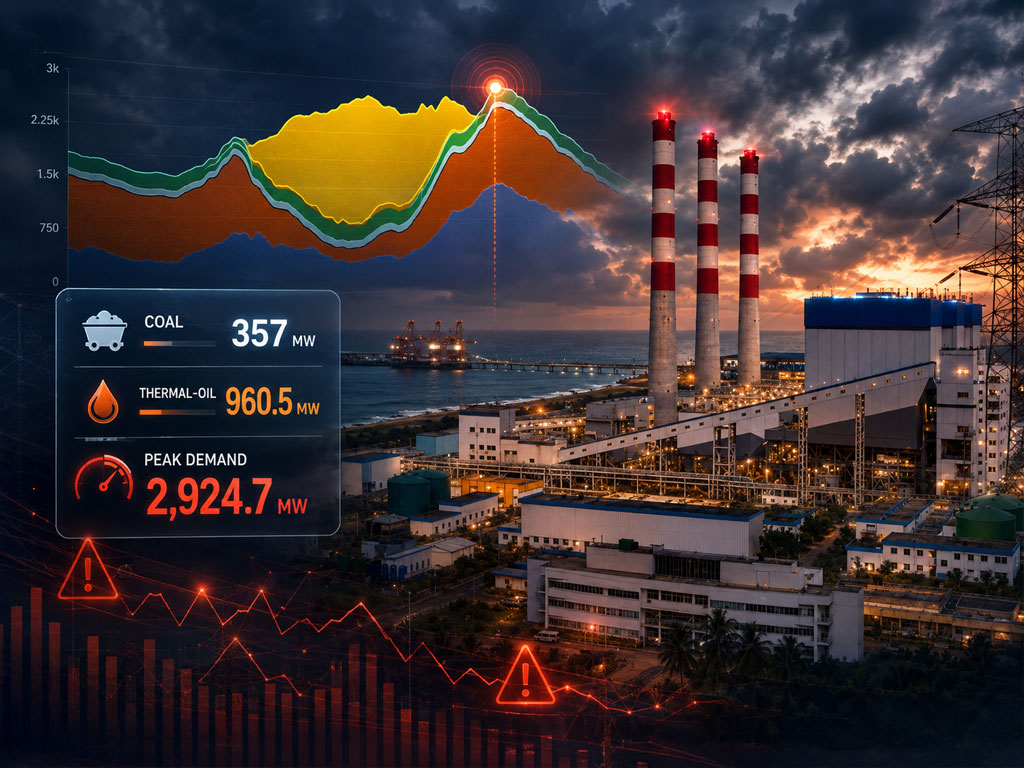
Norochcholai power crisis cuts coal generation to 357 MW at peak demand, forcing Sri Lanka to rely on 960.5 MW of costly thermal power.
The Norochcholai power crisis has forced Sri Lanka to rely heavily on expensive diesel and furnace oil generation as coal-fired output remains far below capacity.
Electricity generation data for Wednesday, September 2, showed national demand reaching 2,924.7 MW at 19:00, during the evening peak.
At that time, the Norochcholai coal power plant contributed only 357 MW to the national grid.
The plant has a total installed generation capacity of 900 MW. However, less than half that capacity was operating during the peak demand period.

Reports indicate that constraints affecting coal supplies have prevented the plant from operating at its maximum capacity.
As coal generation declined, the Ceylon Electricity Board had to rely substantially on more expensive thermal generation to meet electricity demand.
Diesel and furnace oil power plants together generated 960.5 MW during the period concerned.
The increased reliance on thermal generation has raised concerns because producing electricity from diesel costs several times more than generating power from coal or hydroelectric sources.
As a result, prolonged dependence on diesel and furnace oil could significantly increase the CEB’s overall electricity generation costs.
The Norochcholai power crisis therefore carries consequences beyond the immediate shortage of coal-fired electricity.
Higher thermal generation costs can place additional pressure on the financial position of the Ceylon Electricity Board.
Ultimately, continued reliance on expensive fuel-based generation could also affect the cost structure used when determining consumer electricity tariffs.