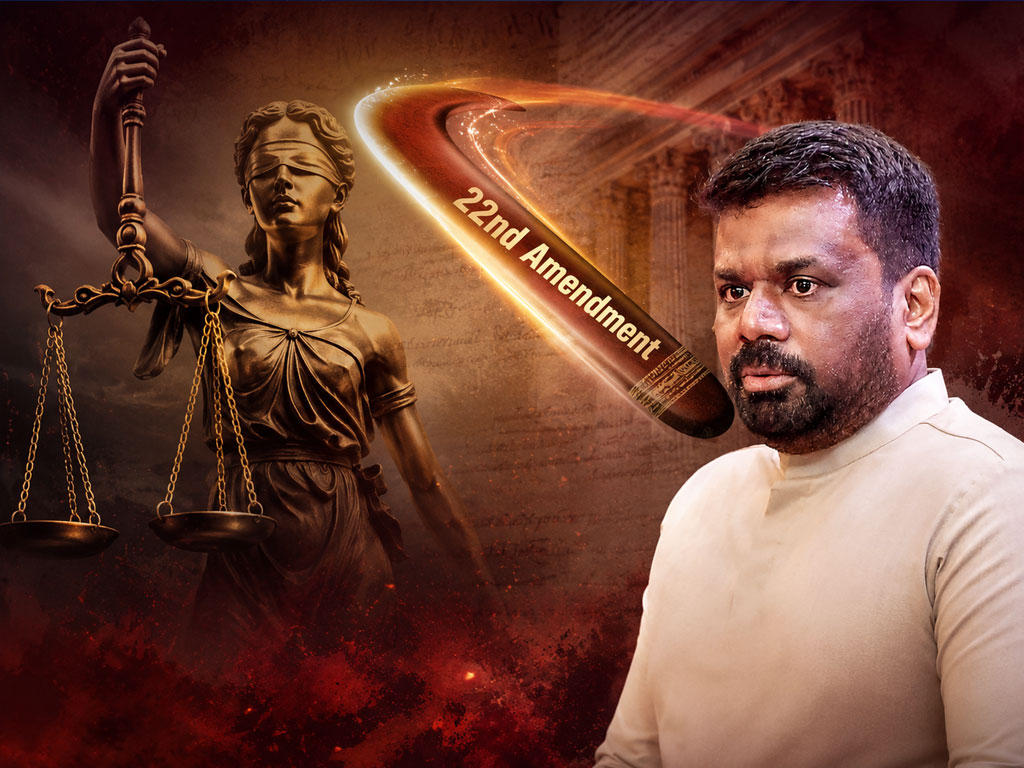
22nd Amendment controversy puts the NPP government under pressure over judicial independence, legal criticism, opposition unity and public trust.
The 22nd Amendment controversy has placed President Anura Kumara Dissanayake’s government in an increasingly difficult political position, regardless of whether the proposed constitutional change ultimately succeeds.
The National People’s Power government came to office promising a different political culture, stronger democratic standards and an end to the practices it condemned under previous administrations.
However, critics now argue that the proposed 22nd Constitutional Amendment has exposed a widening gap between those promises and the government’s conduct in office.
The Bill seeks to change the retirement ages of Supreme Court and Court of Appeal judges.
Politically, the government now faces a difficult calculation.
If Parliament passes the amendment, critics will argue that the administration ignored concerns raised over judicial independence and constitutional procedure.
If the amendment fails or the government withdraws it, opponents are likely to portray that outcome as a major political retreat.
The controversy therefore risks becoming a “win or lose, they lose” situation for the administration.

22nd Amendment Controversy Tests Government’s Reform Image
The central political question is whether the proposed amendment is consistent with the “advanced political culture” promised by President Dissanayake and the NPP before taking office.
The government previously attacked what it called the “deal politics” of earlier administrations.
Against that background, critics have questioned why an amendment affecting the tenure of sitting judges has been introduced as an urgent constitutional measure.
Some opponents have gone further and rhetorically questioned whether such a change could create an inappropriate relationship between political authorities and members of the judiciary.
There is no established evidence of any improper arrangement with judges, and such suggestions remain political criticism rather than proven fact.
Nevertheless, the controversy has already created reputational pressure for the government.
Commonwealth Lawyers Association President Steven Thiru travelled to Sri Lanka to observe the Supreme Court hearing on petitions challenging the Bill.
After the hearing, he commented publicly on aspects of the procedure.
Thiru expressed concern that lawyers representing petitioners did not receive an opportunity to make an oral reply after other submissions concluded.
Instead, the petitioners were directed to make any further submissions in writing.
He described the absence of an oral reply in such an important constitutional proceeding as “an unusual and unfortunate situation.”
Thiru also raised questions over the composition of the bench hearing the case.
He questioned why a Full Bench, or a broader bench involving the most senior judges, had not been appointed for a matter directly concerning judicial independence.
Although the Chief Justice sat on the bench, he noted concerns among lawyers that other senior-most judges were not part of the hearing.
According to Thiru, highly significant constitutional cases commonly involve the court’s most senior judicial officers.
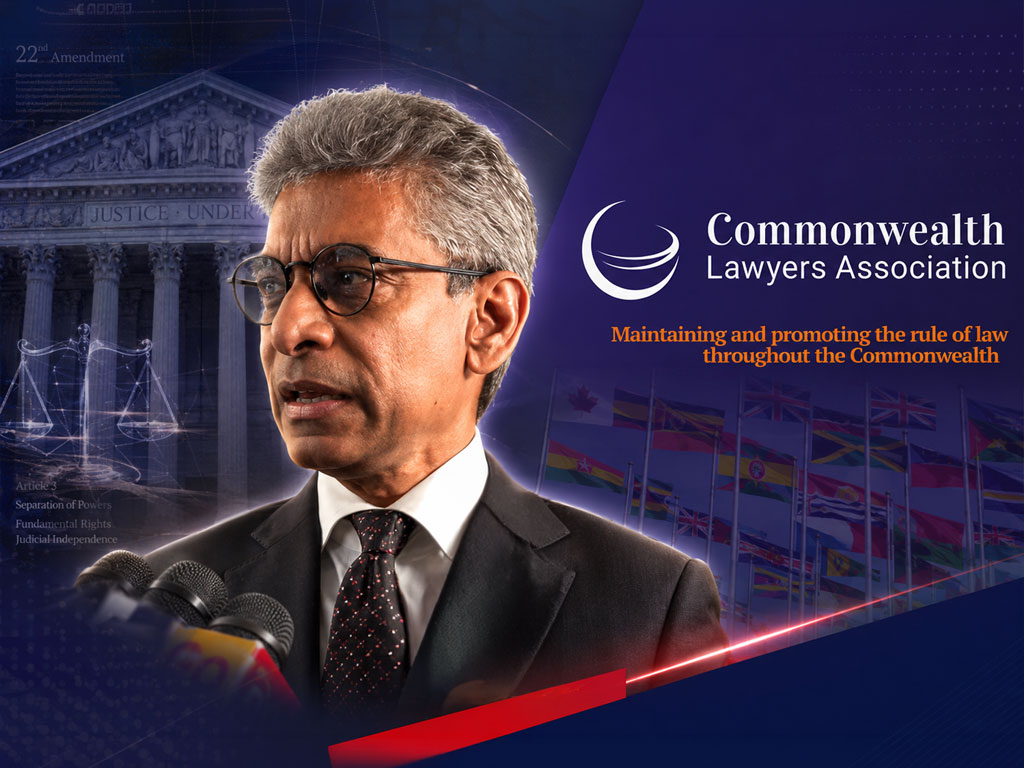
VIDEO: Commonwealth Lawyers Expose Irregularities in 22nd Amendment Hearing
Commonwealth Lawyers Association President Stephen Thero raises concerns over oral reply rights, bench composition and judicial independence.
The Morning Telegraph • September 2, 2026 • 3 min readInternational and Domestic Criticism Adds Pressure
The comments from an international legal figure have added another dimension to the 22nd Amendment controversy.
Critics argue that questions raised internationally about court procedure and judicial independence could damage Sri Lanka’s democratic reputation.
The political damage does not depend solely on whether those criticisms ultimately prove legally decisive.
Their significance lies in the fact that the amendment has created a debate extending beyond Parliament and domestic party politics.
Religious leaders have also entered the discussion.
The chief prelates of the three Nikayas have asked the government to reconsider the amendment.
Civil society groups have likewise raised concerns.
International attention has also focused on the potential implications for judicial independence, including concerns associated with the UN Special Rapporteur on the independence of judges and lawyers.
Taken together, opposition from religious leaders, civil organisations and international legal voices has created a broader challenge for the government.
For an administration elected partly on a promise of democratic reform and institutional integrity, such criticism carries particular political weight.
Opposition Groups Find Common Ground
Another consequence has been the unexpected unification of opposition forces.
Political groups that had previously been divided have found common ground in opposing the proposed amendment.
Opposition representatives from the North-East and South appeared before the Supreme Court challenging the Bill.
The government therefore risks achieving something its political opponents had struggled to accomplish themselves: creating a common platform around a single constitutional issue.
That could have consequences beyond the immediate court case.
A fragmented opposition is easier for any government to confront.
An opposition united around a question of judicial independence, constitutional safeguards and democratic accountability presents a different political challenge.
The controversy has also affected the government’s relationship with professionals and intellectuals who once appeared sympathetic to its reform agenda.
Prominent lawyers have taken positions against the amendment.
Former Bar Association of Sri Lanka President and President’s Counsel Saliya Pieris has argued against the proposed changes before the Supreme Court.
Former Tamil National Alliance Parliamentarian and President’s Counsel M.A. Sumanthiran has also strongly challenged the amendment.
Their opposition is politically significant because both have been associated with wider debates over constitutionalism, democratic governance and institutional reform.
BASL Opposition Deepens Judicial Independence Debate
The Bar Association of Sri Lanka has also rejected the Bill.
According to the position described in the source material, the BASL views the proposed amendment as a direct threat to judicial independence.
That resistance creates another difficulty for the NPP government.
The administration’s 2024 election manifesto promised broader constitutional reform, including abolishing the executive presidency and introducing a new constitution.
Critics therefore question why the government has prioritised an amendment dealing with judicial retirement ages instead of first pursuing those larger commitments.
From that perspective, the issue has become one of political credibility as much as constitutional law.
If the amendment passes with a two-thirds majority, the government may secure a parliamentary victory.
However, its critics argue that it could still suffer a political loss if sections of the legal community, civil society and the wider public believe the process weakened confidence in judicial independence.
Conversely, if the Supreme Court’s determination creates obstacles to the Bill, or if mounting opposition forces the administration to withdraw it, opponents will describe that as a political setback.
Either path carries consequences.
The deeper problem for the government is that the debate is no longer confined to whether judges should retire at one age or another.
It now touches the credibility of the administration’s promises, the independence of the judiciary, relations between branches of government and Sri Lanka’s democratic reputation.
For President Dissanayake and the NPP, that is why the 22nd Amendment controversy has become a political catch-22.
Winning the parliamentary battle may not end the political argument. Losing it could be even more damaging.
The government must therefore decide whether proceeding with the amendment is worth the growing political, legal and reputational cost surrounding it.