By Dwayne Ferreira.
Russian missile and drone strikes leave 600,000 Ukrainians without electricity as Starlink restrictions and ceasefire disputes deepen tensions.
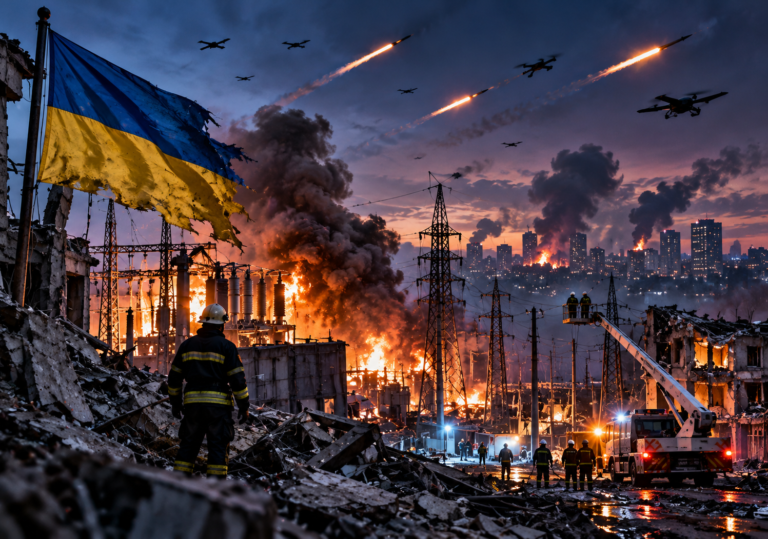
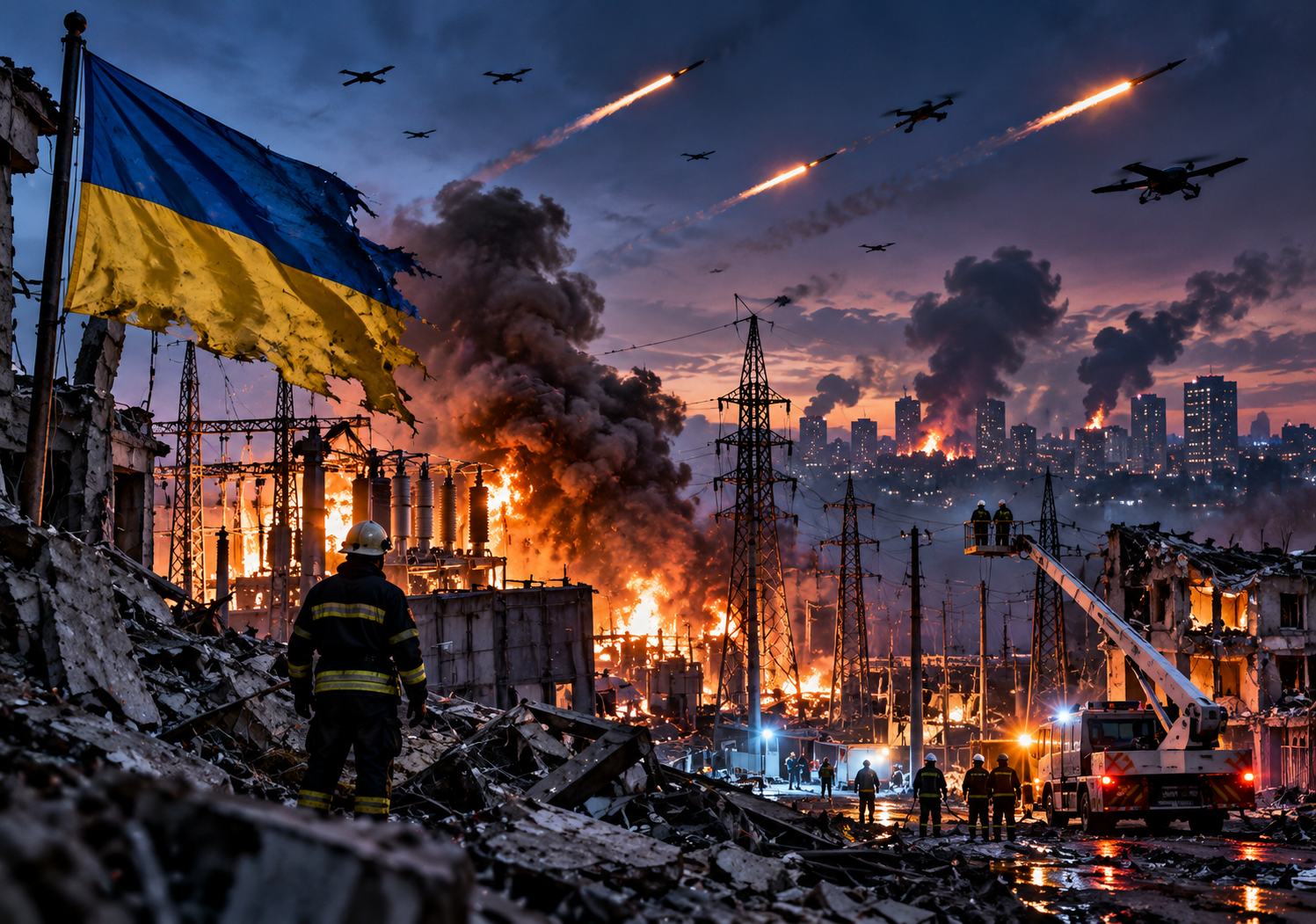
KYIV, Ukraine – Russia has launched a major wave of missile and drone attacks against Ukraine’s energy infrastructure, leaving approximately 600,000 people without electricity and intensifying tensions between Kyiv, Moscow and Washington.
The overnight strikes targeted power generation and distribution facilities in and around Kyiv and Kharkiv, Ukraine’s second-largest city.
Ukrainian President Volodymyr Zelenskyy condemned the attacks as a deliberate rejection of US President Donald Trump’s recent call for an immediate halt to attacks on energy infrastructure.

The assault also coincided with a dispute over restrictions affecting Ukraine’s use of SpaceX’s Starlink satellite communications system, which Ukrainian officials say has disrupted military drone operations.
Russia Launches 39 Missiles and 128 Drones
According to Ukrainian military figures reported on October 14, Russian forces launched 39 missiles and 128 drones during the overnight assault.
Ukrainian air defences reported intercepting four missiles and 115 drones.
The relatively low number of missiles intercepted has renewed concerns about Ukraine’s ability to defend against fast-moving ballistic weapons and other sophisticated aerial threats.
Zelenskyy said more than 30 power stations had been damaged during the attacks.
Russia’s Defence Ministry acknowledged striking power facilities in the Kyiv and Kharkiv regions, describing the targets as infrastructure supporting Ukrainian military operations.
Ukraine disputes the broader justification for attacks that disrupt essential civilian electricity supplies.
Civilian Casualties and Widespread Disruption
The attacks caused deaths and injuries, with reports indicating at least two fatalities and 21 wounded at one affected site.
Electricity outages spread across several areas, affecting households and essential services.
The destruction of energy infrastructure is particularly concerning as Ukraine approaches the colder months, when reliable electricity is necessary for heating, water distribution and medical services.
Repeated strikes also place enormous pressure on repair crews, replacement equipment and emergency energy supplies.
Trump Energy Ceasefire Comes Under Pressure
The attacks followed Trump’s announcement on Sunday, October 11, of what he described as an immediate energy ceasefire between Russia and Ukraine.
Zelenskyy has maintained that Ukraine is willing to suspend attacks on Russian energy infrastructure if Moscow reciprocates.
However, the latest Russian strikes have raised serious doubts about whether an enforceable agreement exists.
Ukraine’s president described the scale of the attack as a deliberate demonstration of Moscow’s disregard for Washington’s position.
The Kremlin has indicated that discussions concerning an energy truce are continuing, but Russia has not accepted Ukraine’s interpretation of an immediate halt.
Starlink Restrictions Complicate Ukraine’s Defence
A separate controversy emerged on Wednesday when Ukrainian officials accused Elon Musk’s SpaceX of restricting Starlink services used in drone operations.
Starlink has become an important component of Ukraine’s communications network since Russia’s full-scale invasion in February 2022.
The system supports communications in areas where conventional networks have been damaged or destroyed.
Ukrainian officials said new restrictions were interfering with certain drone missions, including operations connected with battlefield surveillance and defence.
Reports indicated that some restrictions affected terminals moving at speeds exceeding approximately 160 kilometres per hour.
The restrictions do not mean that all Starlink services across Ukraine have stopped functioning.
Nevertheless, Ukrainian officials argue that limitations affecting military systems could weaken their ability to respond to Russian attacks.
Intelligence-Sharing Questions Deepen US–Ukraine Tensions
Ukraine also raised concerns about the absence of advance warnings from Western partners before the latest strikes.
Officials said they had not received expected warnings on consecutive days.
Trump, however, insisted that Washington was continuing to share intelligence with Ukraine.
The European Commission said it had no indication that intelligence sharing had stopped.
The competing statements highlight growing uncertainty surrounding military cooperation between Kyiv and Washington.
Europe Faces Another Test of Its Support for Ukraine
The latest attacks underline Ukraine’s continuing dependence on Western air-defence equipment, communications technology and financial assistance.
They also increase pressure on European governments to maintain support as the war continues.
For ordinary Ukrainians, however, the most immediate concern remains the loss of essential services.
With hundreds of thousands facing electricity outages and winter approaching, another prolonged campaign against the country’s power network could have severe humanitarian consequences.
Sources:
Reuters, Le Monde and reporting on Ukrainian and Russian official statements, October 14.