By Dwayne Ferreira.
Yoshitha Rajapaksa’s appeal is withdrawn before the Supreme Court, ending his current challenge to a conspiracy charge in a money laundering case.
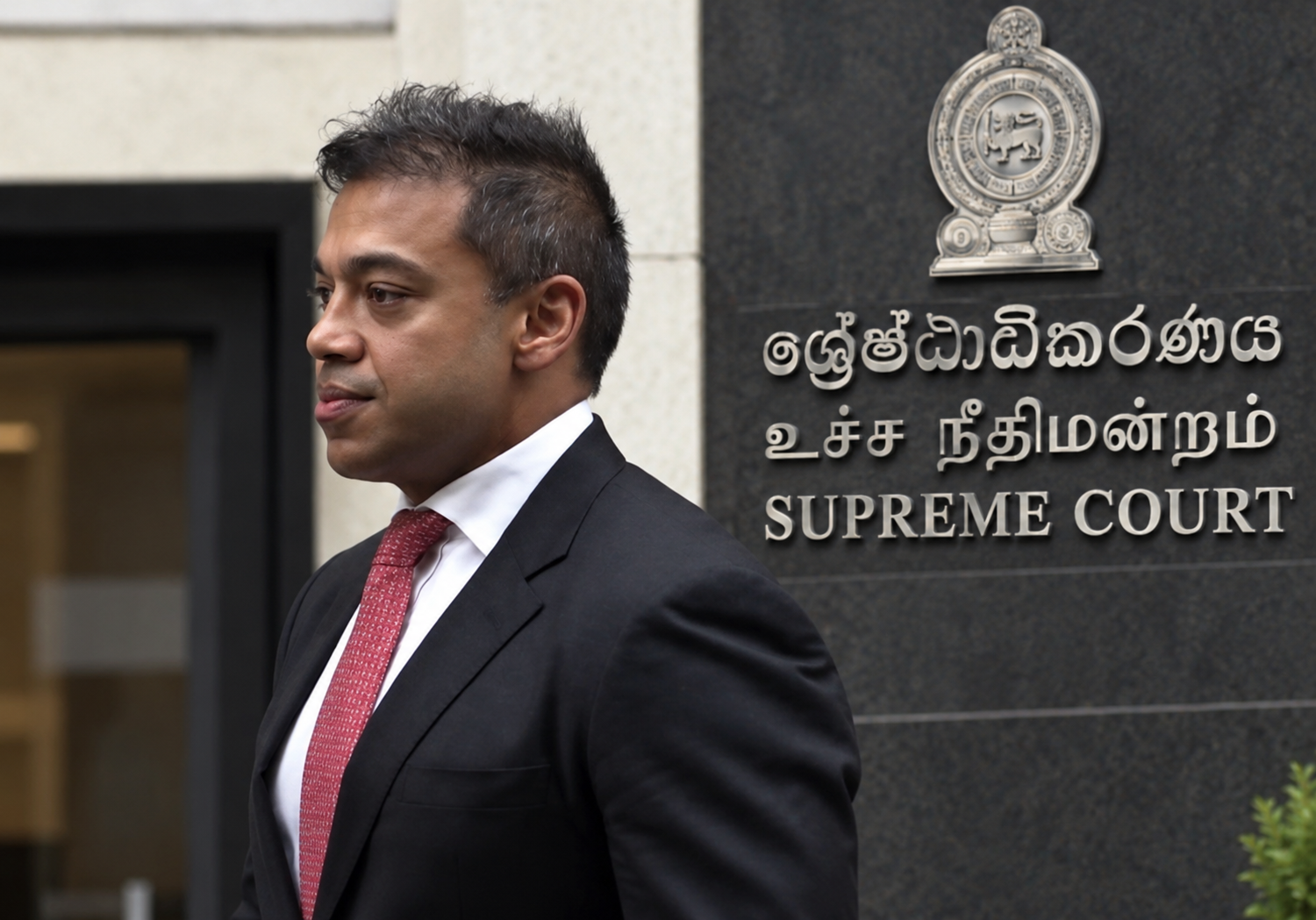
COLOMBO – Yoshitha Rajapaksa has withdrawn an appeal filed before the Supreme Court seeking to challenge the continuation of a conspiracy charge against him in an ongoing money laundering case.
The Supreme Court on Monday granted permission for Rajapaksa, the son of former President Mahinda Rajapaksa, to withdraw the appeal challenging an earlier Court of Appeal decision.
The appeal arose after the Court of Appeal dismissed a revision application filed by Rajapaksa seeking to overturn a Colombo High Court ruling that allowed the conspiracy charge against him to proceed.

Supreme Court Permits Withdrawal
The matter was considered before a three-judge Supreme Court bench comprising Justices Mahinda Samayawardhena, Sampath Abaykoon and Gihan Kulatunga.
Rajapaksa’s legal team informed court that he wished to withdraw the appeal while retaining the ability to raise the relevant preliminary legal issues again in any future appeal.
The Supreme Court subsequently granted permission for the withdrawal.
Deputy Solicitor General Janaka Bandara, appearing on behalf of the Attorney General, did not object to the request.
The withdrawal means that the present Supreme Court challenge will not proceed.
However, the court’s order allows Rajapaksa to preserve the legal arguments raised through the appeal should they become relevant in future proceedings.
Dispute over conspiracy charge
The legal dispute centres on a conspiracy charge contained in proceedings filed under Sri Lanka’s Prevention of Money Laundering Act.
Rajapaksa had earlier argued before the Court of Appeal that the conspiracy charge could not be maintained against him in the circumstances of the case.
His lawyers had pointed to the position concerning co-accused Daisy Forrest, arguing that continuing a conspiracy allegation against Rajapaksa alone raised legal questions.
The Attorney General’s Department disputed that position, maintaining that the charge could continue.
On July 3, the Court of Appeal dismissed Rajapaksa’s revision petition, prompting the subsequent move to the Supreme Court.
Money laundering proceedings continue
The underlying money laundering proceedings remain before the courts.
In one case, prosecutors allege that more than Rs. 59 million, whose source could not be satisfactorily explained, was deposited into fixed deposit accounts maintained at three private banks between March 31, 2009 and December 12, 2013.
The proceedings have been instituted under the Prevention of Money Laundering Act.
The Supreme Court withdrawal does not amount to a ruling on Rajapaksa’s guilt or innocence in the underlying case. Instead, it ends his present attempt to have the disputed legal issue determined by the Supreme Court at this stage.
The money laundering proceedings are therefore expected to continue before the relevant lower court.