SriLankan Airlines Airbus deal faces fresh scrutiny over a reported US$48 million gap linked to compensation paid after aircraft lease cancellations.
The SriLankan Airlines Airbus deal has returned to the spotlight over a reported US$48 million gap linked to the cancellation of aircraft lease agreements.
The controversy comes amid renewed investigations into the wider Airbus transaction following the arrest and remand of former Parliamentarian Namal Rajapaksa.
However, senior journalist Saroj Pathirana, through Sandeshaya by Saroj, argues that the inquiry should not focus only on alleged bribery connected to the original aircraft purchase.
He says the financial losses and transactions surrounding the later cancellation of the agreements also require broad legal and public scrutiny.

SriLankan Airlines Airbus Deal Goes Beyond Bribery Claims
International investigations into the 2013 aircraft procurement process alleged that Airbus had promised more than US$16 million in kickbacks connected to SriLankan Airlines’ acquisition of Airbus A330 and A350 aircraft.
The Commission to Investigate Allegations of Bribery or Corruption has reported facts before court alleging that money moved through a network of companies in Singapore.
The investigation alleges that funds ultimately flowed to then-SriLankan Airlines Chief Executive Officer Kapila Chandrasena, former ministers and members of the Rajapaksa family.
Businessman Nimal Perera has also given a statement alleging that US$800,000 from those funds was handed to Namal Rajapaksa through him.
That statement formed part of the basis for the current legal action against Namal Rajapaksa, according to the information presented.
Investigations have also expanded to others, including Shameendra Rajapaksa, identified as the son of Chamal Rajapaksa.
Those allegations remain before the legal process and have not been established by a final court determination.
Namal Rajapaksa Added to Original Airbus Case Probe
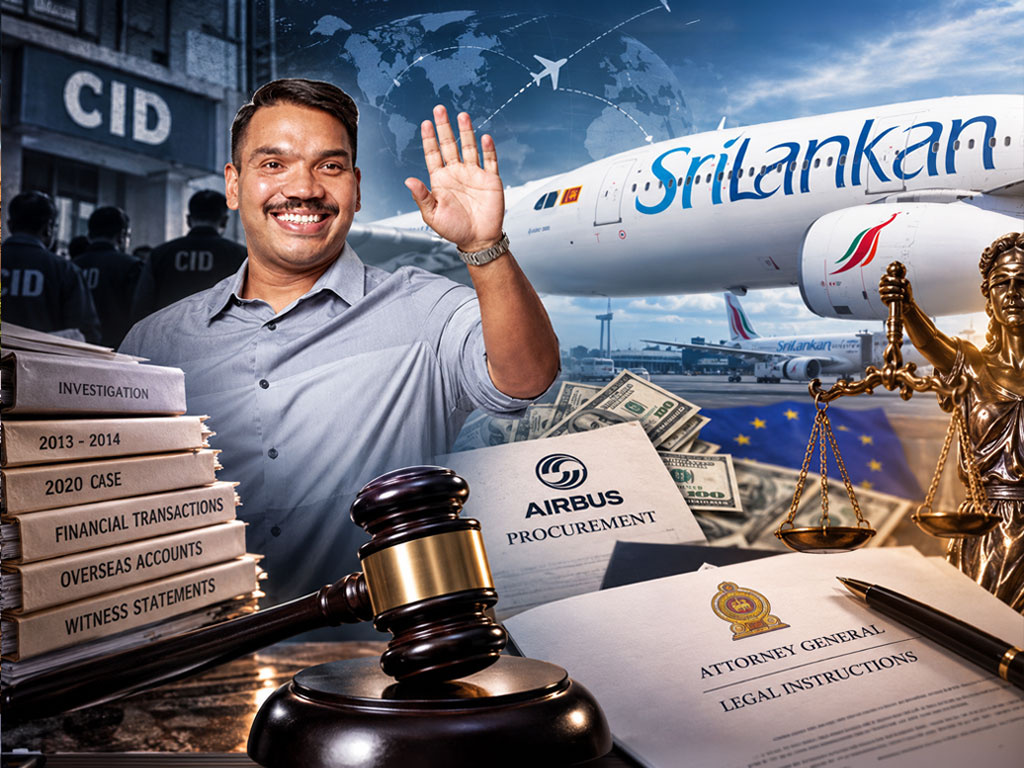
Namal Rajapaksa Airbus case widens as the Attorney General instructs the CID to name him as a suspect in the original 2020 aircraft procurement probe.
The Morning Telegraph • September 12, 2026 • 4 min readQuestions Over Yahapalana-Era Aircraft Cancellation
Alongside the bribery investigation, questions are now being raised about decisions taken after the Yahapalana government came to power in 2015.
In October 2016, authorities decided to cancel lease agreements covering four remaining aircraft.
That decision resulted in substantial compensation payments by SriLankan Airlines and the government.
At the time, officials argued that cancelling the agreements would prevent even greater losses that could arise from continuing with the original arrangement.
However, questions later emerged over the procedures used to approve and make the cancellation payments.
The matter had previously attracted scrutiny from the Committee on Public Enterprises and through audit reports.
Those concerns included allegations that payments were made before formal Cabinet approval and questions over the parties involved in implementing the transaction.
The US$48 Million Gap at the Centre of Fresh Scrutiny
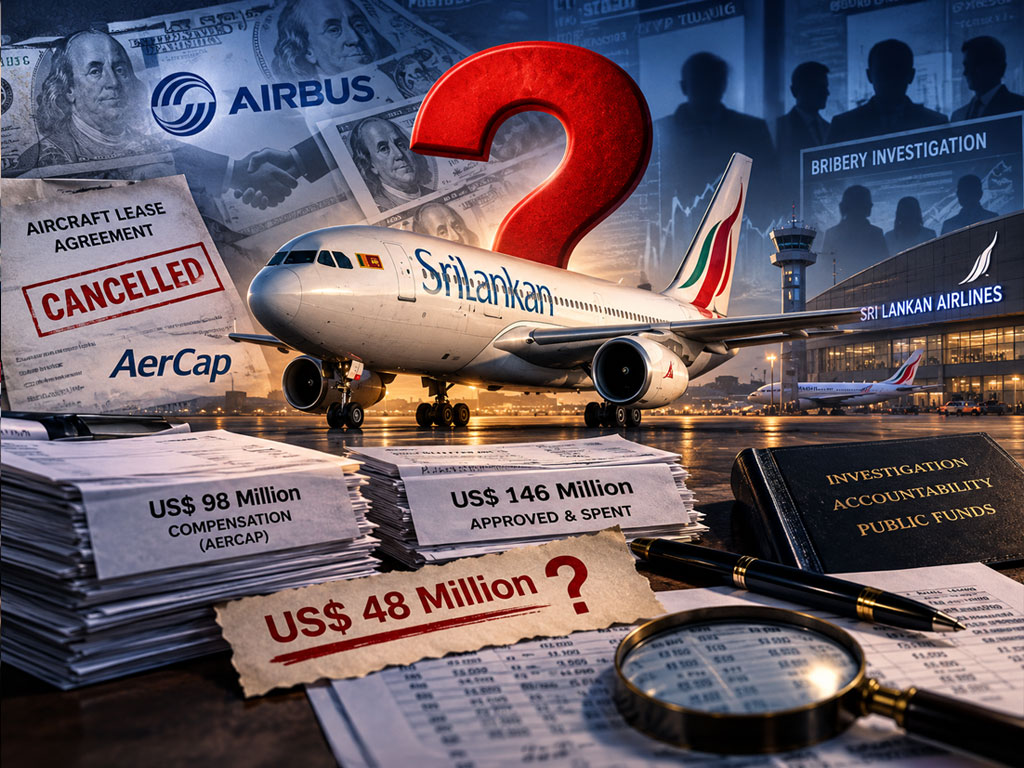
Pathirana’s analysis focuses specifically on the difference between two figures connected to the cancellation of the SriLankan Airlines Airbus deal.
One figure is US$98 million, described as compensation paid to aircraft leasing company AerCap to terminate the arrangement.
The second figure is more than US$146 million, which Pathirana says was approved and spent from SriLankan Airlines’ state bank account in connection with cancelling the agreement.
That leaves a reported difference of more than US$48 million.
Pathirana argues that the public has still not received a clear explanation of where that additional money went, what purpose it served or which parties received it.
The central question is therefore whether the entire cancellation process was properly documented, approved and accounted for.
His argument is that allegations of bribery during the original aircraft transaction must be investigated, but so must any unexplained losses or procedural irregularities linked to terminating the contracts.
If state funds were used improperly during the cancellation process, independent authorities should examine those transactions with the same seriousness applied to the original bribery allegations.
Calls for an Impartial Investigation
Sri Lanka’s wider financial difficulties make accountability over such transactions particularly important.
The article argues that investigations involving large amounts of public money should not be limited by political loyalties or by which administration was in power at the time.
That means scrutiny should extend both to alleged kickbacks connected to the original aircraft purchases and to financial decisions taken during the Yahapalana government’s cancellation process.
The reported US$48 million gap must therefore be established through bank records, Cabinet documentation, audit material and the records surrounding payments to AerCap and other parties.
Only a comprehensive investigation can determine whether the difference resulted from legitimate associated costs, other contractual obligations, or transactions requiring further scrutiny.
Until those records are fully examined, the US$48 million question remains unresolved.
The full truth surrounding the SriLankan Airlines Airbus deal will emerge only if investigators examine both sides of the controversy: the alleged bribery behind the original procurement and the financial consequences of cancelling the aircraft agreements.
The complete video discussion by Sandeshaya by Saroj is expected to be released soon.