Sri Lanka debt sustainability risks remain high despite progress on restructuring, as questions emerge over the country’s path beyond the IMF programme.
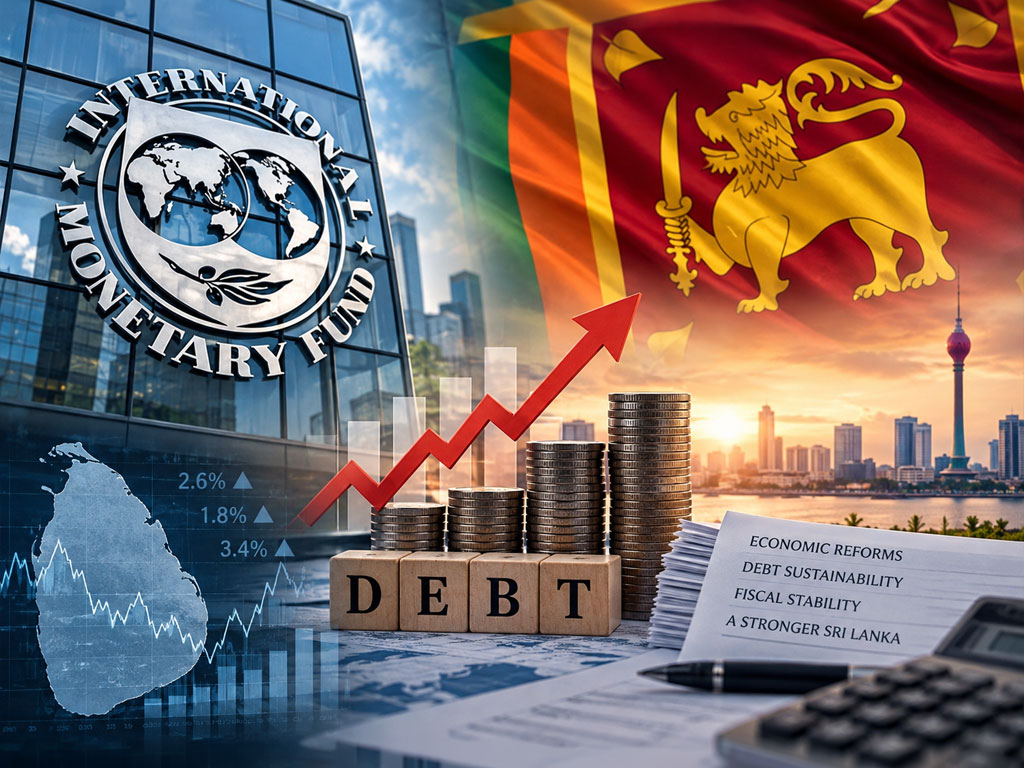
COLOMBO – Sri Lanka’s debt remains sustainable under the International Monetary Fund’s baseline assumptions, but the risks surrounding its ability to repay remain high, according to the IMF’s latest assessment.
The warning comes as the country moves closer to the end of its current IMF-supported programme and debate begins over whether further Fund assistance may be required after it concludes.
The IMF has repeatedly cautioned that debt sustainability remains vulnerable despite substantial progress. At a May 28 press briefing, IMF Mission Chief for Sri Lanka Evan Papageorgiou said debt restructuring was nearly complete and the country’s debt trajectory had improved significantly. However, he stressed that risks remained high.

Papageorgiou said the Fund’s baseline projections showed debt continuing to decline, provided Sri Lanka maintained strong economic policies and reforms. Those assumptions include a primary fiscal surplus, sustained economic growth and inflation remaining under control.
The IMF Executive Board reached a similar conclusion when completing the combined fifth and sixth reviews of Sri Lanka’s Extended Fund Facility in May. Its statement said debt restructuring was nearing completion but that “debt sustainability risks remain high.”
Against that backdrop, some academics in the economic and financial sectors have suggested that Sri Lanka may need further IMF support in 2027.
Government circles are also reported to have discussed the possibility. However, according to government sources, no decision has been taken to enter a new IMF lending programme in 2027.
President Anura Kumara Dissanayake met IMF representatives visiting Sri Lanka on Thursday morning, September 17.
During the discussions, the President told the IMF delegation that the government’s objective was to use the country’s economic gains to ease living conditions and improve the lives of the people.
The question of what follows the current programme is therefore likely to become increasingly important as Sri Lanka moves through the next phase of its recovery. For now, the government’s position remains that no decision has been made on another IMF programme, while the Fund continues to emphasise the need for policies capable of keeping debt on a sustainable downward path.