Ranga Dissanayake says Lasantha Wickrematunge’s killing was meant to intimidate others, urging society to protect those who expose wrongdoing.
COLOMBO — The assassination of senior journalist Lasantha Wickrematunge was intended not merely to eliminate one individual but to send a warning to journalists and professionals prepared to challenge political authority, corruption and powerful interests, according to Commission to Investigate Allegations of Bribery or Corruption Director General Ranga Dissanayake.
- Society must rally to defeat the message of intimidation sent by Lasantha Wickrematunge’s killing
- Ranga Dissanayake questions why families of victims should be left to pursue justice alone
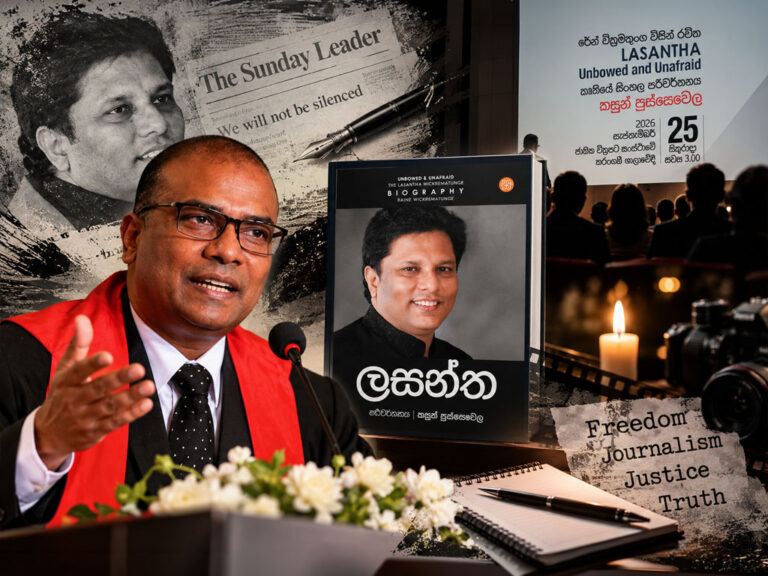
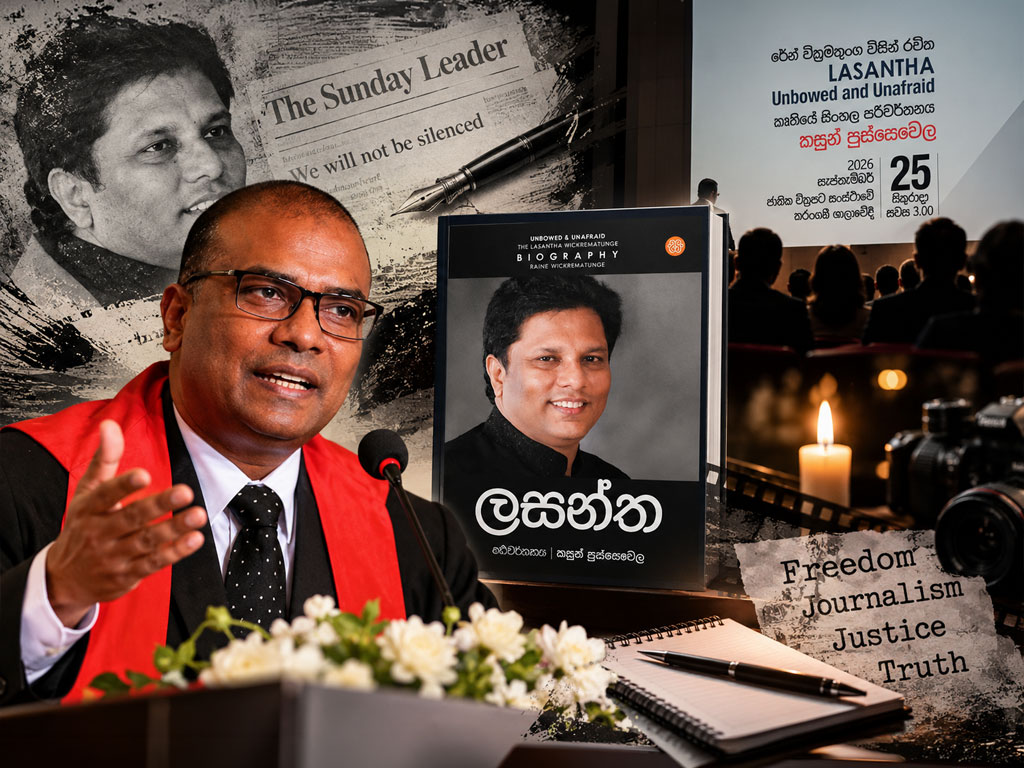
Dissanayake made the remarks at an event held on September 25 at the Tharangani Hall of the National Film Corporation to launch Noselunu Nonemunu Lasantha, the Sinhala translation of Raine Wickrematunge’s biography of the slain journalist.
The book was translated into Sinhala by journalist Kasun Pussewela. The event also included a screening of the documentary And Then They Came for Me.
Dissanayake argued that the message behind Wickrematunge’s assassination was aimed at discouraging others from challenging established power or attempting to bring about change.
Wickrematunge, the founding editor of The Sunday Leader, was assassinated in January 2009. His killing became one of Sri Lanka’s most prominent unresolved cases involving violence against journalists.

Pressure on Those Who Challenge Wrongdoing
Dissanayake said such intimidation was not unique to Wickrematunge’s case, arguing that Sri Lankan history contained other examples of individuals facing serious consequences after challenging established interests or alleged wrongdoing.
He referred to Professor Senaka Bibile and slain Customs officer Sujith Prasanna Perera while explaining how an attack on one individual could affect an entire professional community.
Perera, who served as an Assistant Superintendent of Customs, was shot dead in March 2001. He was later posthumously awarded Transparency International Sri Lanka’s National Integrity Award in 2010 for his work in investigating corruption and Customs offences.
Dissanayake said Perera’s killing had consequences beyond the loss of one officer, claiming that some Customs personnel subsequently left the country and others became fearful about pursuing investigations.
Such incidents, he argued, could also cause professionals and their families to question whether exposing wrongdoing was worth the potential risk to their lives.
Society’s Responsibility to Defeat a Culture of Fear
Dissanayake said society had a responsibility to resist the fear created by killings intended to silence those who challenge wrongdoing.
“Lasantha was not killed just to remove Lasantha. It was a message given to everyone else like Lasantha. If many more Lasanthas had emerged after the Lasantha killing, their message would have failed. But what happened was that after Lasantha’s killing, many went silent. Then the killers’ aim succeeds.”
He argued that the response to intimidation should be the emergence of more people willing to expose wrongdoing rather than the withdrawal of those who might otherwise speak out.
“More people like Lasantha need to emerge. But they are all heroes. This story cannot end every time with the hero dying. I, for one, stand on the position that the hero cannot be allowed to die, the hero must win this. The message to be taken from Lasantha is that from now on, heroes of Lasantha’s kind cannot be allowed to die, heroes must win.”
His remarks framed the consequences of Wickrematunge’s assassination as extending beyond journalism, arguing that intimidation succeeds when others respond to violence by withdrawing from public scrutiny or anti-corruption work.
Families Should Not Carry the Burden Alone
Dissanayake also questioned why the families of people killed or disappeared after exposing alleged wrongdoing should be expected to pursue justice largely on their own.
He cited Raine Wickrematunge, Lasantha Wickrematunge’s former wife, and Sandya Ekneligoda, wife of disappeared journalist Prageeth Ekneligoda, as examples of family members who have spent years seeking answers.
His comments distinguished the role of the criminal justice system from the wider responsibility of society.
While evidence in criminal cases must be gathered and tested through the courts, Dissanayake argued that the broader public must decide whether it will remain silent when people who expose wrongdoing face intimidation.
The September 25 event brought that argument back to Wickrematunge’s legacy through the Sinhala publication of his biography and the screening of And Then They Came for Me, more than 17 years after his assassination.