Political authenticity and accountability collide when claims of sincerity replace evidence, measurable performance and responsibility for results.
When authenticity becomes a substitute for accountability, trust risks becoming a political performance rather than something earned through evidence and results.
There is something almost comically modern about a powerful politician asking the public to trust him because he is showing them “the real me.”
Sri Lanka’s President has not offered the public an audited balance sheet of trust, a catalogue of measurable achievements, or a rigorous accounting of promises fulfilled and promises abandoned. Instead, he has offered something much softer and far more difficult to falsify: authenticity.
“This is the real me,” he says, in effect. Trust me because I am not manufacturing an image.
But here the political joke begins. Who authenticates the authentic self? The politician himself? The same tongue that tells the public it is sincere?
If the proof of sincerity is the speaker’s declaration of sincerity, politics enters a wonderfully convenient philosophical circle: I say I am genuine, therefore I am genuine, and because I am genuine you should trust me. The argument requires remarkably little evidence and an extraordinary amount of faith.

Authenticity Can Itself Become a Political Image
The psychoanalytic language lurking behind this is striking.
Donald Winnicott’s distinction between the “true self” and “false self” was developed to describe very different psychological phenomena, not presidential public relations. Yet the vocabulary is revealing.
A false self is a constructed presentation that conceals or protects something deeper. The political version turns this into a seductive proposition: do not judge the image because the image is false; wait for the real person to emerge.
But there is a delicious problem here. A politician can manufacture an image of being the politician who does not manufacture images.
“I am authentic” can itself become the most carefully manufactured image of all.
Research on political communication supports the broader proposition that perceptions of authenticity can be shaped by political preference, apparently unfettered speech and perceptions of strategic impression management. One study in Political Psychology, for example, found that partisan preferences influenced how respondents judged candidate authenticity and the behaviours they interpreted as signals of authenticity.
Research examining Donald Trump’s political communication has similarly explored how a discourse of authenticity, rather than factual validity alone, became an important element of his political appeal.
The lesson is not that President Anura Kumara Dissanayake is Trump, nor that their politics are equivalent.
The lesson is simpler and more uncomfortable: authenticity can itself become a political technology.
Sincerity Is Not the Same as Accountability
There is an even more serious question. What happens when authenticity becomes a substitute for accountability?
A government can be sincere and still be wrong.
A politician can be personally convinced of his own honesty and still make disastrous decisions. A leader can genuinely believe an explanation and still be explaining away failure.
Political psychology therefore offers a more useful test than asking whether a politician “feels sincere”. We should examine attribution.
When something succeeds, who receives credit?
When something fails, who accepts responsibility?
Does the leader say, “We got this wrong,” or does responsibility migrate towards predecessors, officials, institutions, conspirators, international circumstances, hostile interests and inherited problems?
None of those explanations is automatically false. Governments really do inherit crises. They encounter institutional constraints, international pressures and political resistance.
The intellectual test is whether responsibility is distributed consistently, or whether success is personalised while failure is externalised.
When Narrative Begins to Replace Evidence
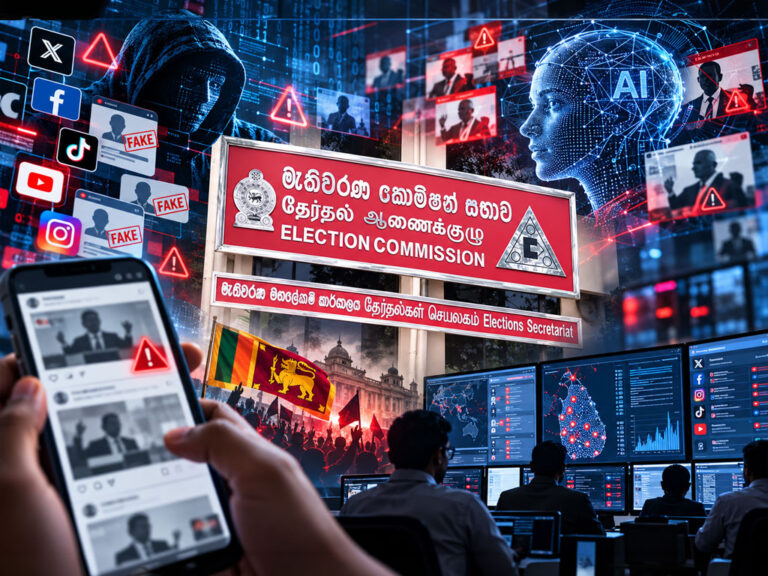
This is where the broader information environment becomes dangerous.
Propaganda does not have to consist entirely of fabricated statements. It can also work through selective framing, repetition, emotional identification and the gradual replacement of evidence with narrative.
Political psychology suggests that citizens are not simply passive recipients of political information. Partisan preferences and other motivations can affect how people assess political claims and whether they share hostile rumours.
Research published in the American Political Science Review, for example, has examined partisan motivations in the sharing of hostile political rumours, while also identifying other motivations that can drive people to circulate hostile claims against political elites.
Research into conspiracy theories points to another danger. An experimental study published in the Journal of Experimental Political Science found that exposure to conspiracy theories reduced participants’ trust in the domestic informational environment, even when those theories were unrelated to domestic politics. The researchers cautioned that an information environment saturated with conspiracy theories could undermine the credibility of political information.
The consequence is not merely that citizens may believe one false story. The deeper danger is that they become increasingly unable to agree on what counts as evidence.
That is where political comedy can become tragic.
A society saturated with manufactured narratives eventually produces citizens who defend politicians not because they can demonstrate what happened, but because they have already decided what must have happened.
Evidence becomes secondary.
Suspicion becomes evidence. Association becomes proof. A Facebook post becomes a psychological confession. A rumour becomes an explanation.
A political opponent becomes the presumed source of every failure.
Social-media personalities can become prosecutors, judges and historians simultaneously, often without having established the elementary fact that their allegation is true.
The Real Test of the ‘Real Me’
The real test of the “real me”, therefore, cannot be another declaration of authenticity.
It must be conduct under pressure.
When the government fails, does the leader accept responsibility where responsibility belongs?
When a promise cannot be fulfilled, is the failure acknowledged without theatrical escape?
When evidence contradicts a preferred narrative, does the narrative change?
When supporters circulate claims without evidence, are they corrected even when those claims are politically convenient?
When criticism is justified, is it answered with evidence rather than psychological warfare?
Those questions shift the argument away from personality and towards something citizens can scrutinise: conduct, evidence and measurable performance.
The tongue can declare truth. It can also declare sincerity.
Neither declaration constitutes proof.
A government cannot indefinitely ask citizens to believe in the purity of its intentions while postponing the harder question of measurable performance.
Eventually, the “real me” must leave the Facebook post and enter the record.
That record is where authenticity stops being a beautiful word and becomes a proposition that can actually be tested.
SOURCE:- SRI LANKA GUARDIAN