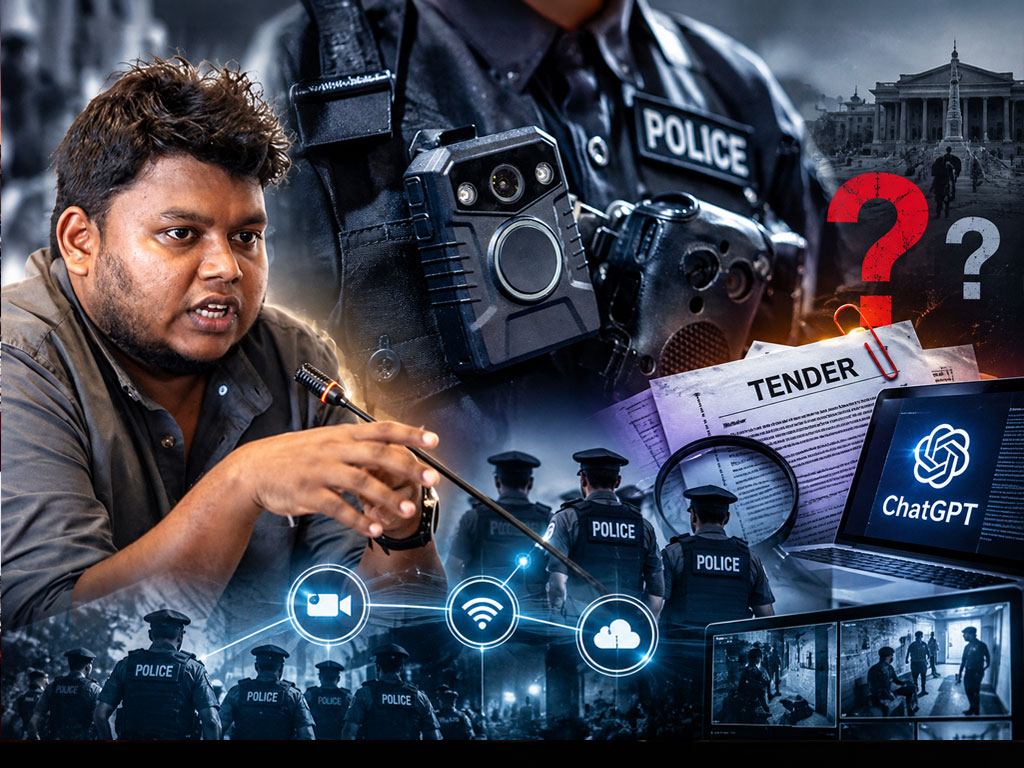
Sri Lanka Police body camera tender faces questions from Wasantha Mudalige over specifications, bid prices and alleged conflicts of interest.
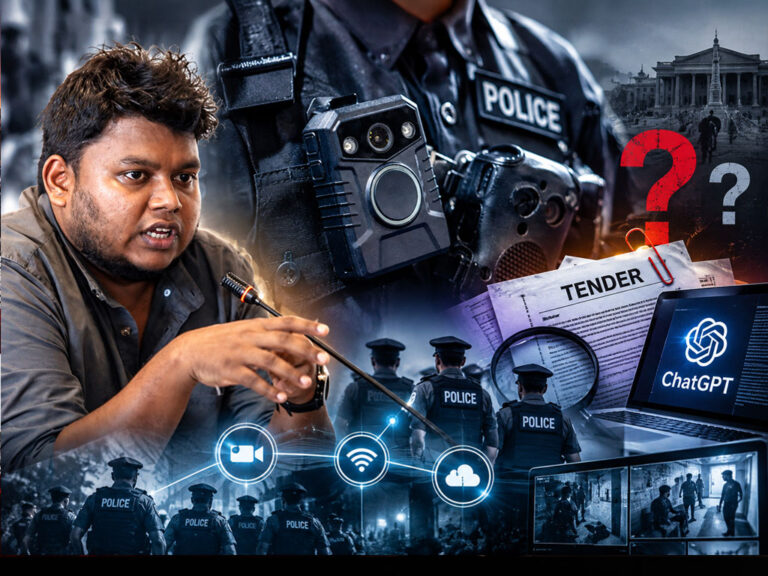
COLOMBO — The People’s Struggle Movement has raised allegations of irregularities, technical weaknesses and potential conflicts of interest in the procurement process for 500 body-worn cameras for Sri Lanka Police.
Wasantha Mudalige, addressing a media conference in Nugegoda on September 27, questioned the tender’s technical specifications and the wide variation in prices submitted by bidders. He also alleged that the Terms of Reference appeared to contain material generated using ChatGPT without adequate editing or technical scrutiny.
Sri Lanka Police has previously confirmed that procurement procedures are underway for body cameras, with 26 institutions submitting bids and 15 providing samples. Police said on September 17 that the tender remained under evaluation and that no decision had been made to award it.
The allegations made by Mudalige have not been independently established.

Questions Raised Over TOR and Use of ChatGPT
Mudalige alleged that the Terms of Reference prepared for the procurement showed signs of having been generated or copied using ChatGPT and published without sufficient editing.
He argued that procurement of technical equipment for law enforcement should be based on a detailed assessment of international standards and the operational requirements of Sri Lanka Police.
According to the People’s Struggle Movement, markings and lines allegedly associated with AI-generated material remained in the document, which it cited as evidence of inadequate scrutiny.
The movement did not, in the material supplied to The Morning Telegraph, provide a technical or forensic analysis establishing that ChatGPT had generated the document. The claim should therefore be treated as an allegation rather than an established finding.
Bid Prices Range From Rs. 5 Crore to Rs. 36 Crore
Mudalige also questioned what the movement described as a sevenfold difference between competing bids, ranging from Rs. 5 crore to Rs. 36 crore.
He argued that such a wide price range could indicate ambiguity in the technical specifications provided to bidders.
The movement further pointed to what it described as significantly different bids from Sri Lanka Telecom and its subsidiary Mobitel, claiming SLT had submitted a bid of Rs. 17 crore while Mobitel had submitted one of Rs. 6 crore.
Those figures are allegations presented by the People’s Struggle Movement and have not been independently verified by The Morning Telegraph.
The official Sri Lanka Police website maintains a public section containing procurement and tender notices.
Questions Over 500-Camera Pilot Project
The movement also questioned why the procurement was limited to 500 cameras when the operational requirements of the Police Department would potentially be considerably larger.
Mudalige raised concerns that an initial small-scale procurement could eventually place the successful supplier in a favourable position for future supply, maintenance or service contracts.
He characterised this as a possible “camel’s nose in the tent” strategy, in which a company could secure an initial contract at a comparatively low price before benefiting from larger contracts later.
No evidence establishing that such a strategy forms part of the current procurement process was presented in the supplied material.
The movement also questioned the emphasis on cameras worn by officers in the field while calling for CCTV systems inside police stations as an additional safeguard against alleged assaults and torture in custody.
Conflict-of-Interest Allegation Raised
Questions were also raised about data transmission and internet connectivity required for the body-camera programme.
The People’s Struggle Movement alleged that companies connected to Dr. Hans Wijayasuriya, who has been involved in advising the government’s digitalisation programme, were linked to the project, creating what the movement described as a potential conflict of interest.
The supplied material does not identify the companies involved, specify their corporate relationship to Wijayasuriya or provide documentary evidence establishing the alleged conflict.
The Morning Telegraph therefore cannot independently substantiate that allegation from the information presently available.
The movement called on authorities to suspend the tender and subject the procurement to an independent technical review before beginning a new, transparent procurement process.
For its part, Sri Lanka Police said earlier this month that the body-camera procurement had attracted 26 bids, with 15 bidders submitting samples for evaluation. Police stressed at that stage that the Tender Evaluation Committee had not selected a supplier.
With the procurement still under evaluation, the allegations raised by the People’s Struggle Movement place renewed attention on the tender’s technical specifications, evaluation process and the need for authorities to publicly address questions surrounding the competing bids.