By Dwayne Ferreira.
Global lender forecasts modest economic growth but warns that rising oil prices, excessive borrowing and a possible artificial intelligence investment correction could trigger renewed financial instability.
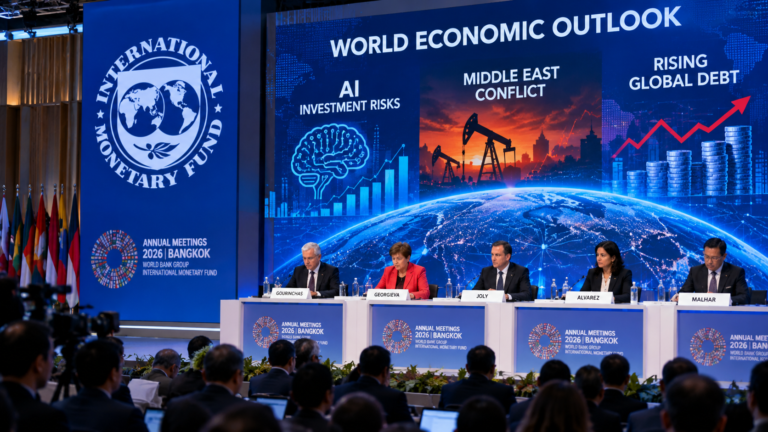
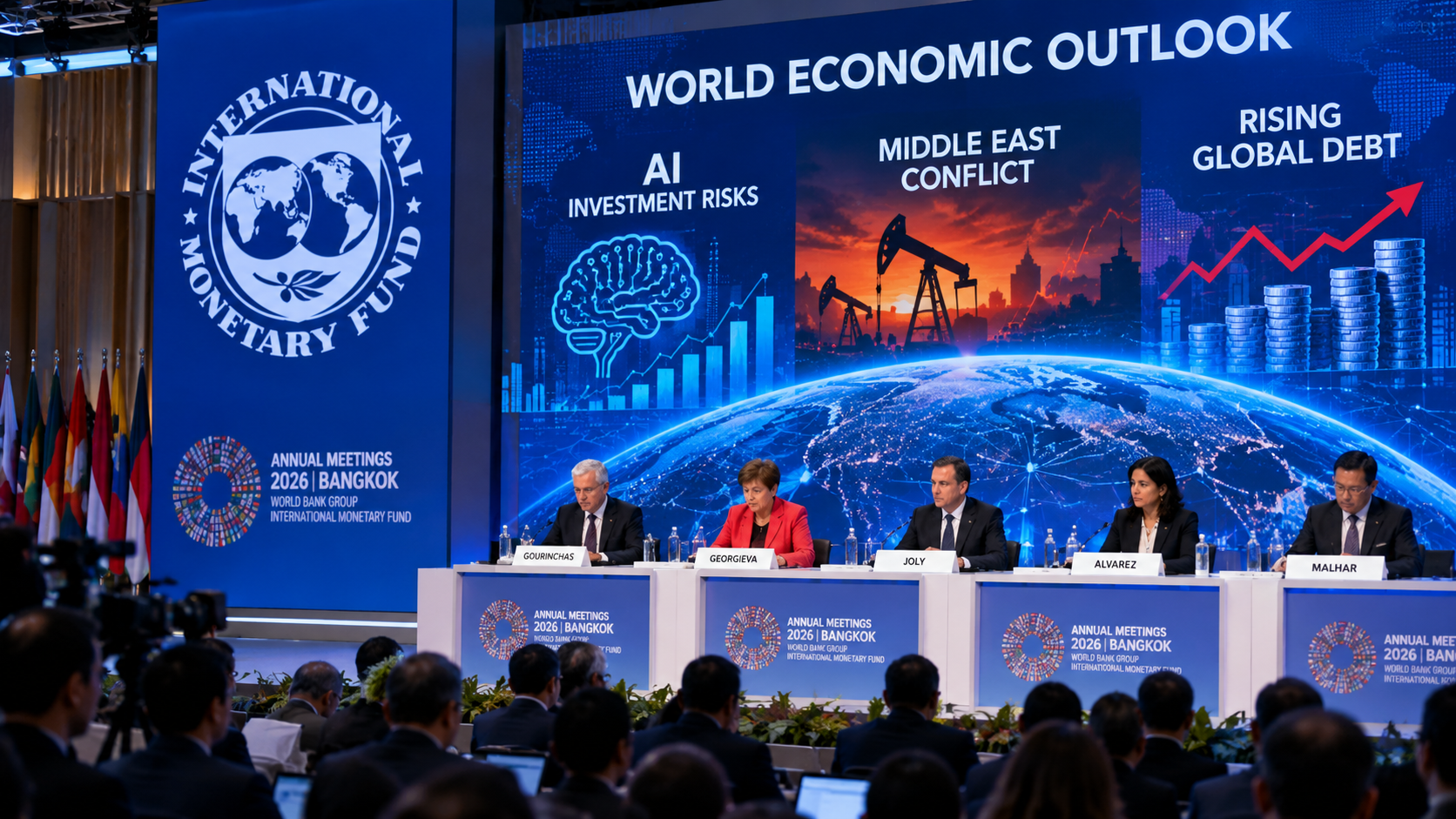
BANGKOK – The International Monetary Fund has issued a warning over mounting risks to the global economy, identifying the continuing Middle East conflict, increasing government debt and the possibility of a sharp correction in artificial intelligence investments as major threats to financial stability.
The warning comes despite the IMF projecting global economic growth of 3.1 percent in 2026, slightly higher than its earlier estimate of 3.0 percent.
In its latest World Economic Outlook, released during the IMF and World Bank annual meetings in Bangkok, the Fund also projected global growth of 3.4 percent in 2027.

However, the relatively positive forecasts were accompanied by serious concerns over the sustainability of current investment trends and the effects of prolonged geopolitical conflict.
Artificial Intelligence Boom Carries Financial Risks
One of the IMF’s central concerns involves the enormous investments being channelled into artificial intelligence.
Technology companies and investors have committed substantial resources to data centres, computer chips, energy infrastructure and AI-related services.
The investment boom has helped support economic activity despite rising energy costs and geopolitical uncertainty.
However, the IMF warned that financial markets could face significant disruption if expectations surrounding AI-related profits prove overly optimistic.
A sharp reassessment of valuations could trigger falling share prices, reduced investment and broader financial instability.
The concern is particularly significant because AI-related companies have become increasingly influential in major international stock markets.
A sudden reversal in investor sentiment could therefore have consequences extending well beyond the technology sector.
Middle East Conflict Threatens Oil Prices
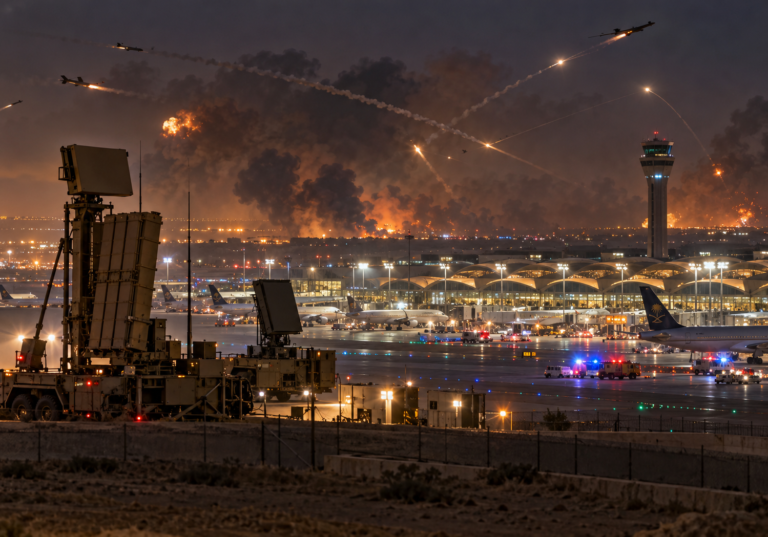
The continuing Middle East conflict represents another major threat to global economic stability.
Energy markets remain vulnerable to disruption involving major oil-producing countries and strategically important shipping routes.
The Strait of Hormuz, through which substantial volumes of international energy shipments ordinarily pass, has become a particularly important factor in economic forecasts.
The IMF’s projections assume that conditions in the region will gradually improve.
However, a prolonged conflict resulting in oil prices remaining above $130 per barrel into early 2027 could reduce projected global growth for that year by approximately half a percentage point.
Higher oil prices typically increase transportation, manufacturing and electricity costs.
For countries dependent on imported energy, the consequences can include rising inflation, pressure on foreign exchange reserves and reduced household purchasing power.
Rising Debt Creates Another Major Concern
The IMF also highlighted the dangers associated with growing government and corporate debt.
Many economies continue to face substantial borrowing requirements at a time when financing costs remain elevated.
Higher interest rates can make it increasingly expensive for governments to service existing debt or obtain new funding.
When combined with weak economic growth, these pressures may limit spending on infrastructure, education, healthcare and essential public services.
Developing economies can be especially vulnerable because they often have more limited financial resources to absorb external shocks.
The IMF’s warning reinforces concerns that economic stability cannot be assessed through growth figures alone.
Debt sustainability, investor confidence and access to financing remain equally important.
What Does This Mean for Sri Lanka?
Although the IMF’s latest projections concern the global economy, the risks identified by the Fund are particularly relevant to Sri Lanka.
The country remains exposed to fluctuations in international oil prices, global interest rates and external financing conditions.
A prolonged Middle East conflict could increase the cost of imported fuel, placing renewed pressure on transport expenses and the domestic cost of living.
Higher global borrowing costs could also complicate financial conditions for developing economies.
Meanwhile, a major correction in technology investment could affect global demand, financial markets and business confidence.
Sri Lanka’s ongoing economic recovery makes it important for policymakers to monitor these developments carefully.
External shocks can undermine domestic stability even when local economic indicators appear to be improving.
Global Economy Faces Uncertain Road Ahead
The IMF’s latest assessment presents a mixed picture.
On one hand, the global economy continues to demonstrate resilience, supported partly by strong investment in new technologies.
On the other, the combination of geopolitical conflict, expensive energy, rising debt and possible financial-market corrections creates an unusually challenging environment.
The central concern is that several risks could emerge simultaneously.
A sharp decline in technology stocks, combined with another surge in oil prices and worsening debt conditions, could place significant pressure on international markets.
For households, businesses and governments, the practical consequences could include higher prices, reduced investment and slower economic growth.
The IMF’s warning is therefore a reminder that the apparent strength of global markets does not necessarily guarantee long-term economic stability.
For Sri Lanka and other developing economies, protecting financial resilience will remain crucial as international uncertainty continues.