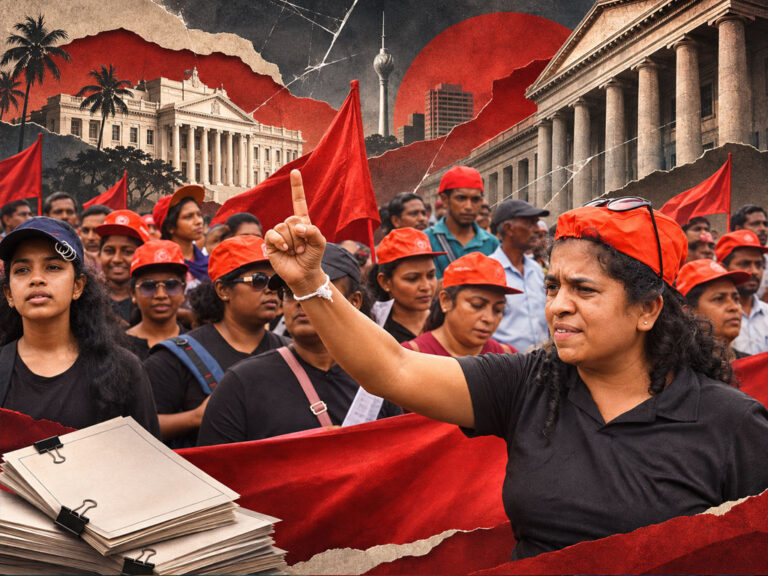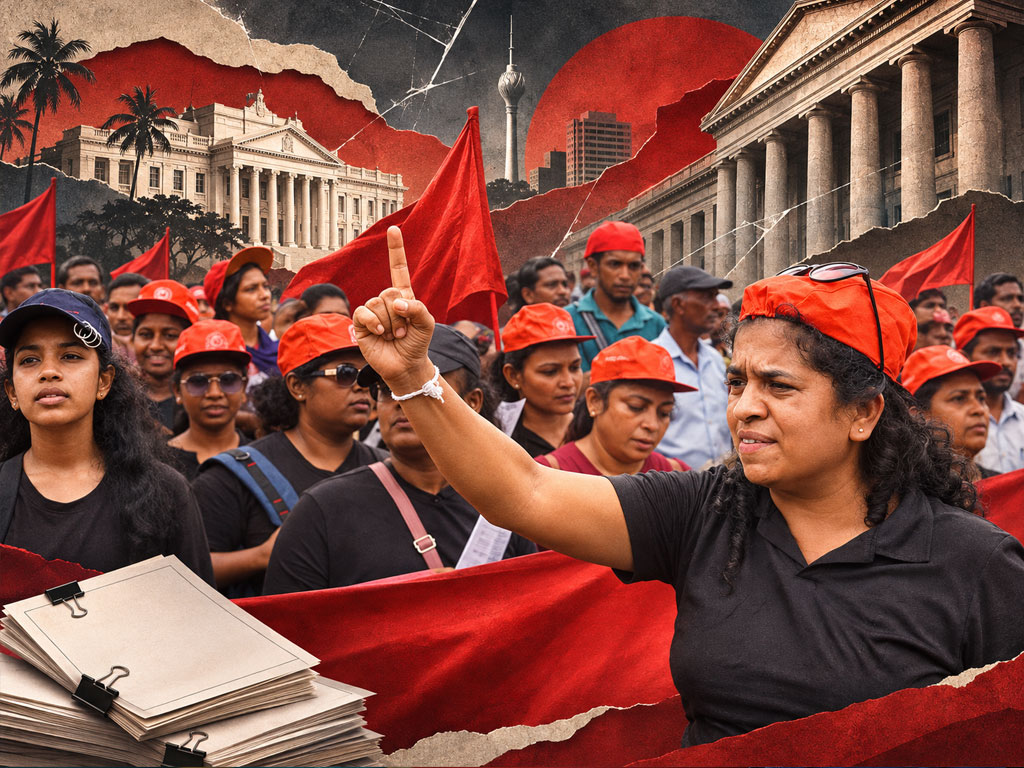
COLOMBO, November 7, 2026 — Unions accuse the Government of failing to honour election commitments and warn of further industrial action unless longstanding grievances are resolved.
Development Officers across Sri Lanka are preparing for an island-wide strike on Monday, November 9, over unresolved salary disparities, stalled promotions, unclear responsibilities and concerns that public-sector restructuring could gradually weaken their service.
The planned industrial action follows years of complaints from graduate officers employed in ministries, district secretariats, divisional secretariats and other government institutions.
Trade union representatives accuse successive administrations of failing to establish a satisfactory professional framework for Development Officers, despite repeated assurances that their grievances would be addressed.
Some union activists have also alleged that broader efforts to reduce public-sector expenditure could result in the gradual elimination of Development Officer positions through restricted recruitment and natural attrition.
However, claims that the International Monetary Fund (IMF) has specifically directed Sri Lanka to reduce its public-service workforce to 750,000, or ordered the abolition of the Development Officers’ Service, have not been independently established.

Fears Over the Future of the Development Officers’ Service
Development Officers fear that the authorities are pursuing policies that could progressively diminish their role within the public administration.
Union representatives have identified several areas of concern:
– Recruitment and replacement: Allegations that restrictions on recruitment and the failure to replace departing officers could gradually reduce the workforce.
– Undefined responsibilities: The absence of a sufficiently clear and consistent framework of duties, which unions argue prevents graduate officers from receiving appropriate professional recognition.
– Career progression: Complaints concerning lengthy promotion procedures, the absence of a higher grade and disparities in remuneration.
– Proposed service statutes: Allegations that proposals intended to establish improved career structures have remained unresolved despite being submitted to the authorities.
– Unfulfilled political promises: Claims that commitments made during election campaigns have not translated into practical solutions.
These allegations require careful distinction from established administrative policy.
The Ministry of Public Administration’s official records show that notices concerning Development Officer vacancies, appointments, confirmations and promotions have continued to be issued during 2026.
Consequently, the claim that recruitment or appointments have been completely halted cannot be treated as an established fact without additional evidence.
Nevertheless, the existence of administrative procedures does not necessarily mean that the underlying grievances have been resolved.
Unions Cite Years of Unresolved Grievances
The Joint Development Officers’ Centre confirmed in October that an island-wide strike would be held on November 9.
Its General Secretary, Dhammika Munasinghe, said Development Officers had repeatedly brought their problems to the attention of the authorities without receiving satisfactory solutions.
Among the issues identified were the absence of clearly defined duties, promotion delays, salary disparities and difficulties concerning permanent appointments.
According to the union, some officers face waiting periods of approximately 10 years between promotions, while the lack of a higher grade further restricts their career prospects.
The concerns extend beyond remuneration.
Development Officers argue that their academic qualifications and responsibilities should be properly reflected in the structure of the public service.
They also maintain that their contribution to district administration, community development and the implementation of government programmes has not received adequate institutional recognition.
Proposed SLDS and SLEDOS Statutes Remain a Major Demand
A central demand concerns the proposed Sri Lanka Development Service (SLDS) and Sri Lanka Economic Development Officers’ Service (SLEDOS) frameworks.
Union representatives claim that draft proposals have been prepared and presented to senior government authorities, including the President, relevant ministers and ministry secretaries.
They argue that formalising these frameworks would help address several longstanding concerns.
Their proposed reforms include:
- A clearly defined list of official duties.
- A salary structure reflecting graduate qualifications and professional responsibilities.
- A formal promotion scheme.
- The creation of a higher service grade.
- Greater consistency in appointments and career advancement.
The unions allege that delays in implementing these proposals have contributed to frustration among Development Officers.
The precise administrative status of the proposed statutes, including whether they have been formally rejected or remain under consideration, requires confirmation from the relevant ministries.
IMF Restructuring Claims Require Clarification
Concerns about the future of the Development Officers’ Service have also become entangled with the country’s economic reform programme.
Some union activists allege that fiscal austerity measures associated with Sri Lanka’s IMF-supported programme are encouraging the Government to reduce public-sector employment.
Their central concern is that restrictions on recruitment, combined with retirement and other departures, could reduce the number of Development Officers without an explicit decision to abolish the service.
The allegations include a claim that the IMF has imposed a ceiling of 750,000 employees on Sri Lanka’s public service.
However, the publicly available IMF material reviewed for this article does not substantiate that specific numerical ceiling or establish a requirement to eliminate the Development Officers’ Service.
The IMF has emphasised fiscal sustainability and improved public financial management, but decisions about the structure and staffing of individual government services require separate examination.
Attributing a particular workforce reduction or the abolition of a service directly to the IMF would therefore be premature without documentary evidence.
The Government should clarify whether any proposed reforms would affect existing appointments, future recruitment, promotion opportunities or the long-term status of Development Officers.
Trade Unions Prepare for November 9 Action
According to the supplied report, several trade union organisations are involved in the campaign or have been identified as supporting the grievances.
They include:
- Economic Development Officers’ Association.
- Joint Development Officers’ Centre.
- Government Development Officers’ Association.
- All Ceylon Trade Union Alliance, including Development Officer associations representing the Northern and Eastern Provinces.
The extent of each organisation’s formal participation in the November 9 strike has not been independently confirmed.
Nevertheless, the Joint Development Officers’ Centre has publicly announced the planned industrial action.
The campaign seeks to secure negotiations with the Government on employment conditions, salary structures and the future of the service.
Five Principal Demands
According to the supplied union account, the campaign centres on five demands.
1. Protect the Development Officers’ Service
Unions want assurances that the Government will not pursue policies that could progressively eliminate Development Officer positions or weaken the service through workforce reductions.
2. Implement the SLDS and SLEDOS Statutes
They are demanding formal service frameworks incorporating appropriate salary structures, clearly defined responsibilities, promotion procedures and higher grades.
3. Introduce an Interim Allowance of Rs. 25,000
The unions are seeking an interim monthly allowance of Rs. 25,000 through the 2027 Budget to help officers cope with living costs and economic pressures.
4. Provide Concessionary Motorcycles
Development Officers engaged in field duties are requesting access to motorcycles at concessionary prices to support their official responsibilities.
5. Protect Trade Union Rights
The unions are demanding the withdrawal of legislation they regard as restrictive of trade union activity and labour rights, including measures introduced under counterterrorism provisions.
This final demand reflects the unions’ position and should not be interpreted as an established finding that any particular law was enacted specifically to suppress their activities.
Government Says Salary Reforms Are Being Considered
The Government has previously acknowledged broader concerns surrounding public-sector salaries and pensions.
On September 24, Prime Minister Dr. Harini Amarasuriya told Parliament that steps were being taken to address longstanding salary anomalies and develop a sustainable framework for public officers and pensioners.
She referred to the establishment of the Commission on Salaries and Pensions of Public Officers through Extraordinary Gazette No. 2494/05, dated June 22, 2026.
The commission is responsible for examining structural reforms and making recommendations concerning the public service.
According to the Prime Minister, the commission is expected to submit its recommendations to the President within one year, while quarterly progress reports will also be provided.
That process offers a potential avenue for addressing the Development Officers’ grievances, although it remains unclear whether their specific proposals will be incorporated into the commission’s recommendations.
Warning of Further Industrial Action
Union representatives have indicated that the November 9 strike is intended as an initial demonstration of dissatisfaction rather than an immediate attempt to bring the entire public administration to a halt.
They warn that failure to obtain meaningful commitments could lead to more prolonged industrial action.
The consequences could extend beyond Development Officers themselves.
These employees perform administrative and development-related functions across government institutions, including work associated with district and divisional administration.
Prolonged disruption could therefore affect the delivery of some public services, although the actual impact would depend on participation levels and the duration of any industrial action.
For the Government, the immediate challenge is to address the unions’ demands while clarifying its plans for public-sector restructuring.
For Development Officers, the dispute concerns more than an allowance or a promotion.
It involves the professional identity, career progression and long-term security of a service whose members say they have waited years for meaningful reform.
With the scheduled strike approaching, the central question is whether the Government and union representatives can reach an agreement before the dispute escalates into sustained industrial action.