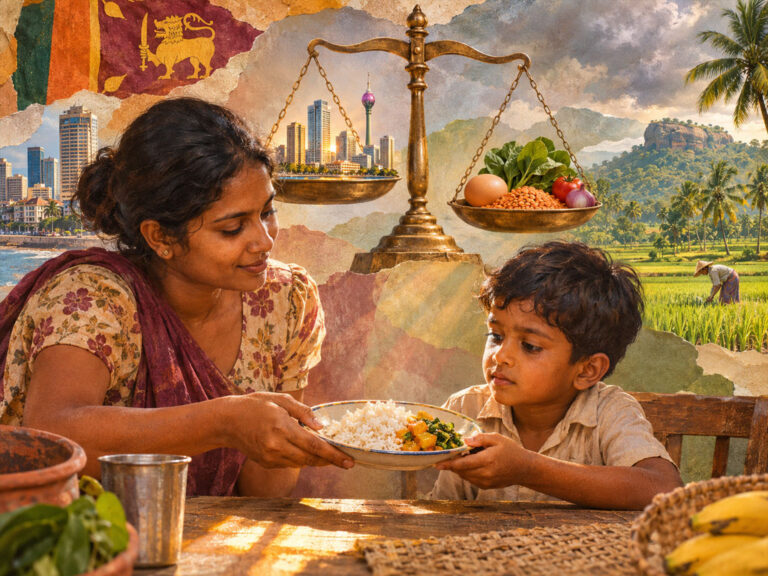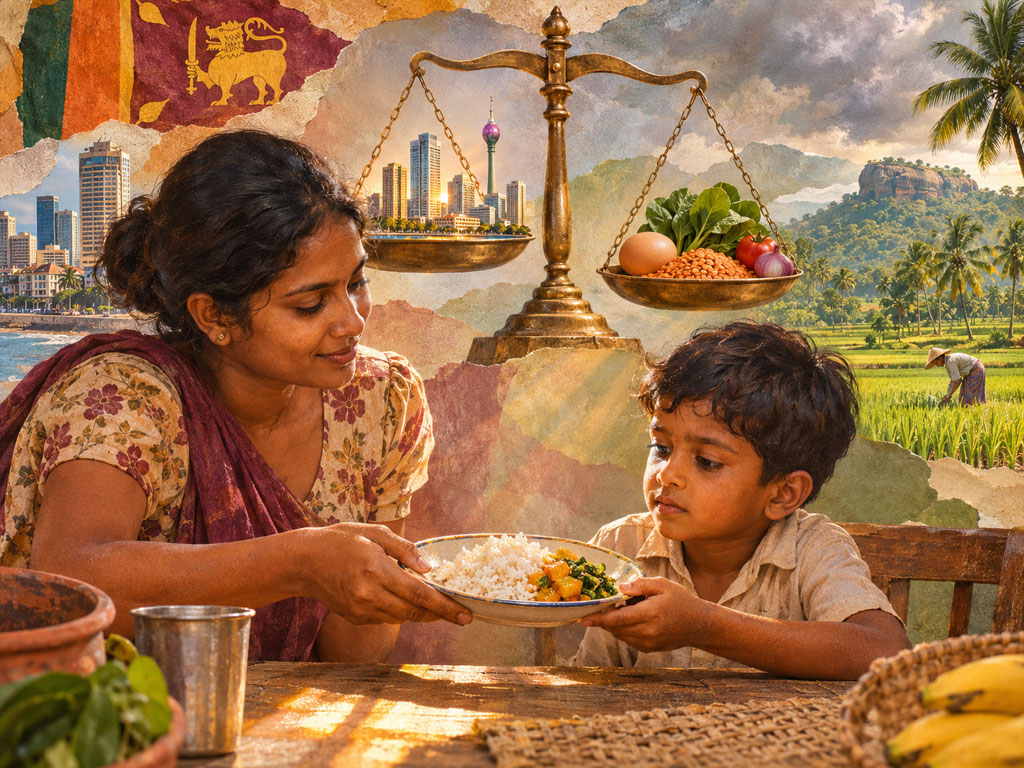
COLOMBO — Despite improving economic indicators, poverty, inadequate nutrition and the lingering effects of natural disasters continue to threaten the health and development of Sri Lanka’s children.
Sri Lanka’s recovery from its worst economic crisis in decades has yet to deliver sufficient relief to many vulnerable households, leaving thousands of children exposed to nutritional deficiencies that could affect their health, education and future economic opportunities.
Although the country’s economy has returned to pre-crisis output levels, household incomes and living standards have recovered more slowly. Rising food and energy costs, weakened purchasing power and the consequences of recent natural disasters continue to strain family budgets.
The World Bank’s October 2026 Sri Lanka Development Update estimated that poverty declined to 16.9% in 2025, down from its 2023 peak. Nevertheless, a substantial share of the population remains poor or vulnerable to falling into poverty following another economic shock.
For children growing up in financially insecure households, the consequences extend well beyond immediate hunger.

The Alarming Reality Behind the Statistics
Data from Sri Lanka’s Ministry of Health, international development agencies and humanitarian organisations illustrate the continuing challenge.
– Child malnutrition: The Ministry of Health’s Family Health Bureau reported that 10.1% of children under five experienced stunting in 2025, while 8.6% experienced wasting and 16.1% were underweight.
– Persistent poverty: The World Bank estimated Sri Lanka’s poverty rate at 16.9% in 2025. Its October 2026 assessment also indicated that approximately two-fifths of the population remained poor or economically vulnerable.
– Declining labour income: Real labour incomes fell by more than 40% between 2019 and 2023. Although earnings have subsequently recovered to some extent, they have not fully returned to pre-crisis levels.
– Children affected by natural disasters: UNICEF initially estimated that more than 275,000 children were affected by Cyclone Ditwah in late 2025. Subsequent assessments placed the number significantly higher as the scale of the disaster became clearer.
These figures reflect different measures and reporting periods. They nevertheless reveal how economic insecurity, nutritional deficiencies and environmental disasters can reinforce one another.
Sri Lanka has recorded modest improvements in several child nutrition indicators. However, the persistence of underweight, stunting and wasting demonstrates that economic recovery alone has not eliminated the underlying risks.
A Nutrition Crisis With Lasting Health Consequences
Poor nutrition during pregnancy, infancy and early childhood can have consequences extending into adulthood.
Insufficient access to protein, essential vitamins and minerals can impair physical growth and cognitive development. Severe nutritional deficiencies may also increase children’s vulnerability to illness and interfere with their ability to learn.
Pregnant and breastfeeding mothers face particular risks when household resources are insufficient to maintain a balanced diet.
These concerns are especially serious among low-income families who must divide limited resources between food, housing, transportation, education and healthcare.
Where nutritious food becomes unaffordable, households may increasingly depend on cheaper, energy-dense meals that do not provide adequate dietary diversity.
The result can be a form of nutritional deprivation commonly described as hidden hunger, in which individuals consume sufficient calories but remain deficient in essential micronutrients.
Such deficiencies are not always immediately visible. Their effects, however, can accumulate over time.
Emergency Nutritional Assistance
UNICEF and Sri Lanka’s Ministry of Health have implemented nutritional assistance programmes for children affected by acute malnutrition, particularly following Cyclone Ditwah.
During the emergency response, UNICEF supported the distribution of BP-5 fortified food rations to children experiencing moderate acute malnutrition.
BP-5 provides concentrated energy and essential nutrients during emergencies when ordinary food supplies or supplementary feeding arrangements are disrupted.
For children with severe acute malnutrition, UNICEF has supported treatment using specialised ready-to-use therapeutic food, including BP-100.
UNICEF’s June 2026 humanitarian report stated that 7,500 children with moderate acute malnutrition received BP-5 emergency rations during the peak displacement period in December 2025.
The same report identified 2,180 children with severe acute malnutrition during the reporting period, of whom 1,903 had been enrolled in treatment.
These interventions demonstrate the importance of coordinated humanitarian assistance. They also underline the need for sustained nutritional support after the immediate emergency has passed.
Economic Analysis: The Hidden Cost of Childhood Malnutrition
Child malnutrition is not solely a public health problem. It is also a long-term economic challenge.
Children who experience significant nutritional deprivation during critical developmental stages may face disadvantages in education, employment and productivity later in life.
For an economy seeking stronger investment, higher productivity and a more skilled workforce, these consequences deserve particular attention.
Two areas are especially important:
– Human capital development: Inadequate nutrition during early childhood can interfere with healthy physical and cognitive development. Without appropriate support, affected children may encounter disadvantages that extend into their schooling and working lives.
– Household food consumption: Families experiencing reduced purchasing power may struggle to afford protein-rich foods, dairy products, vegetables and other essentials. Cheaper diets can meet immediate hunger needs without necessarily providing balanced nutrition.
The World Bank has cautioned that Sri Lanka’s broader recovery remains uneven, with real wages and labour-market participation yet to recover fully.
Consequently, improving national economic output does not automatically mean that vulnerable families can afford healthier meals.
Nor can emergency food distributions alone address the structural causes of nutritional insecurity.
Why Social Protection Must Accompany Economic Recovery
Sri Lanka’s economic stabilisation has provided an important foundation for recovery.
However, lasting progress must also be measured through improvements in household welfare, childhood development and access to essential services.
Several policy priorities warrant urgent consideration:
1. Strengthening school meal programmes: Expand access to nutritious school meals, prioritising communities with high poverty and malnutrition rates.
2. Supporting pregnant and breastfeeding mothers: Improve the targeting and delivery of nutritional assistance, supplements and maternal health services.
3. Protecting household purchasing power: Strengthen social protection for families struggling with food costs and inadequate incomes.
4. Improving nutritional surveillance: Maintain regular monitoring of childhood growth and nutritional deficiencies to identify vulnerable children before conditions deteriorate.
5. Connecting nutrition with disaster preparedness: Ensure that emergency response systems can maintain nutritional assistance, maternal healthcare and school feeding when disasters interrupt normal services.
6. Supporting sustainable livelihoods: Help vulnerable households rebuild earning capacity so that improved nutrition becomes financially sustainable rather than dependent entirely on relief programmes.
Such measures would require careful funding, implementation and monitoring. Their effectiveness would depend on reaching the households most in need.
Protecting Sri Lanka’s Next Generation
Economic recovery should ultimately be judged not only by national output, fiscal performance or reserve levels, but also by improvements in people’s daily lives.
For Sri Lanka’s children, adequate nutrition is fundamental to healthy development and future opportunity.
The available evidence does not suggest that every nutritional indicator is deteriorating. Some have improved. Nevertheless, the continuing prevalence of stunting, wasting and underweight among children demonstrates that considerable work remains.
Sri Lanka now faces the challenge of translating macroeconomic stability into meaningful improvements in household living standards.
Protecting children from preventable nutritional deficiencies is central to that task.
The decisions made today on food security, maternal healthcare, school nutrition and social protection will influence not only the wellbeing of the current generation but also the country’s long-term economic potential.